

Why Summer Heat and Drought Hit Gardens So Hard
When temperatures climb above 90°F for days at a stretch and rainfall disappears, even well-established gardens start to struggle. Heat stress causes plants to close the tiny pores in their leaves - called stomata - to slow water loss, which also slows photosynthesis and growth. At the same time, soil moisture evaporates faster than roots can replenish it, especially in beds without mulch or organic matter to act as a buffer.
The result is wilting, blossom drop, poor fruit set, and in severe cases, plant death. Understanding the mechanics of heat and drought stress helps you intervene at the right moments, rather than after damage has already set in. The strategies below work together - no single fix is enough on its own, but combining several of them can make a dramatic difference in how your garden performs through a tough summer.
Water Smarter, Not More Often
Frequent shallow watering is one of the most common summer mistakes. It trains roots to stay near the soil surface, where they're most vulnerable to heat. Instead, water deeply and less often - slow, thorough watering that penetrates 6 to 8 inches down encourages roots to follow moisture deeper into the soil, where temperatures stay cooler and water lasts longer.
Time your watering for early morning. This gives leaves time to dry before peak heat, reducing fungal disease risk, and means less water is lost immediately to evaporation. Avoid evening watering in humid climates where foliage stays wet overnight.
For efficient delivery, consider switching to a drip system or soaker hoses. These deliver water directly to the root zone at a slow rate, minimizing runoff and surface evaporation. Learn more about how different systems compare in our article on drip irrigation vs. sprinkler systems. And if you're concerned about overdoing it, our guide on why overwatering kills more gardens than drought explains how to read the signs.
Mulch Is Your Most Powerful Tool
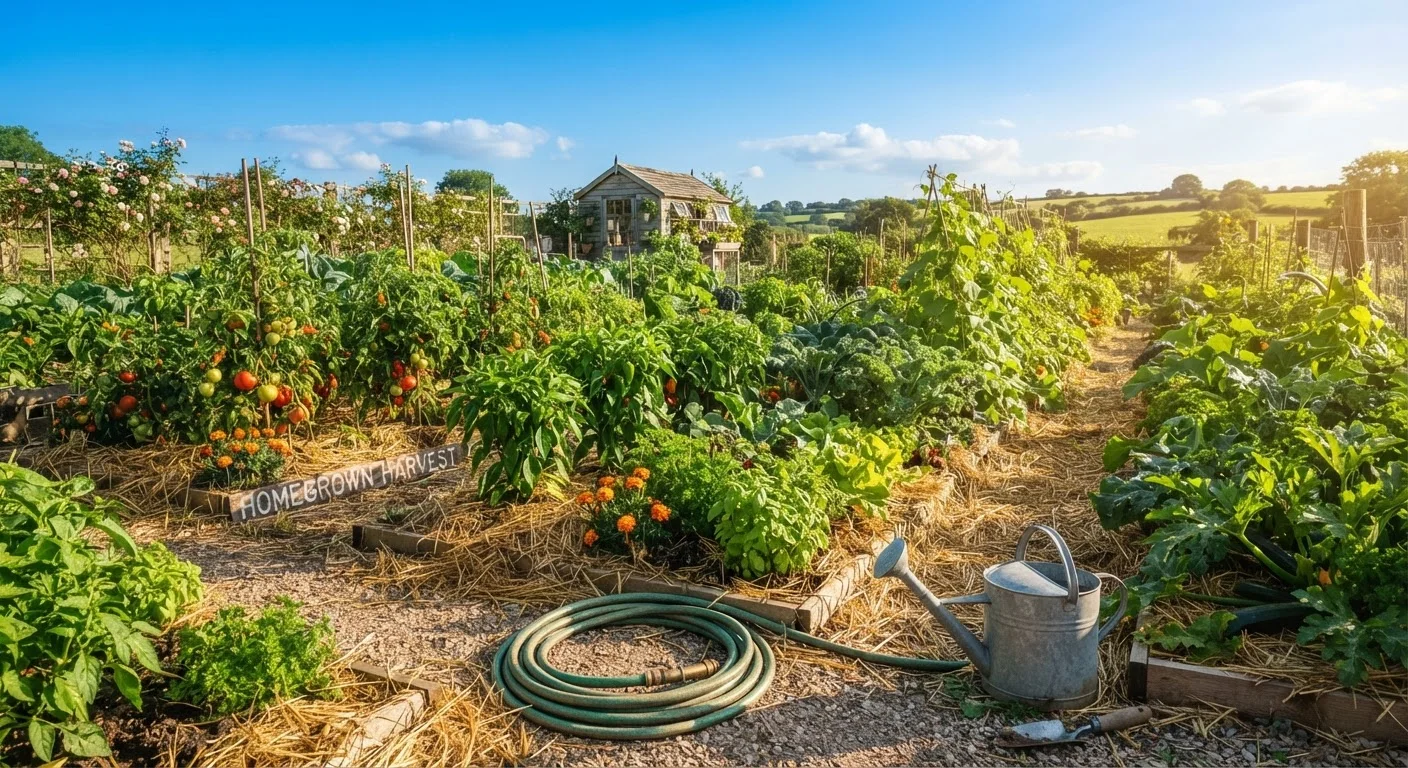
A 2-3 inch layer of organic mulch - straw, wood chips, shredded leaves, or untreated grass clippings - does more to protect a summer garden than almost any other intervention. It shades the soil surface, which can reduce soil temperature by 10°F or more on a hot day. It also dramatically slows evaporation, keeping moisture available to roots for longer between waterings.
Apply mulch after the soil has had a chance to warm in spring, and top it up mid-season as it breaks down. Keep it a few inches away from plant stems to prevent rot. For a detailed breakdown of mulch types and application depth, see our guide on mulching your garden beds the right way.
As organic mulch decomposes, it also feeds soil microbes and gradually improves the soil's ability to retain moisture - a compounding benefit for future seasons. If your soil is sandy, compacted, or otherwise struggling, addressing its structure is a parallel priority; our article on soil pH and plant health covers related fundamentals.
Water deeply and infrequently rather than in small daily doses.
Deep watering drives root growth downward into cooler, more consistently moist soil. Shallow watering keeps roots near the surface, where heat and evaporation cause the most damage.
Apply a 2-3 inch organic mulch layer over all exposed soil in beds.
Mulch dramatically cuts evaporation from the soil surface and keeps root zones cooler during peak heat. It also suppresses weeds that compete with plants for limited water.
Use shade cloth over the most heat-sensitive crops during heat waves.
Crops like lettuce, cilantro, and spinach bolt or go bitter quickly when exposed to intense sun and heat. Temporary shade cloth reduces leaf temperature and extends harvest windows without permanently reducing light.
Group container plants together and move them to afternoon shade during extreme heat.
Containers heat up far faster than ground soil because all sides are exposed to the sun. Clustering pots creates a shared humid microclimate and significantly slows moisture loss.
Choose heat- and drought-tolerant varieties suited to your region before the season starts.
Variety selection is the most cost-effective adaptation strategy. Heat-tolerant cultivars are bred to set fruit and maintain growth at temperatures that cause standard varieties to stall.
Protect Plants from Direct Heat and Plan Ahead
When a heat wave arrives, temporary shade cloth (rated 30-50% light reduction) stretched over row hoops can prevent scorch on heat-sensitive crops like lettuce, spinach, and herbs. Remove or vent it on cooler days so plants don't become starved of light. Full-shade placement under a tree is rarely ideal - most vegetables need substantial direct sun - but dappled afternoon shade on south- or west-facing beds can meaningfully reduce stress.
Planning ahead is equally important. Before summer arrives, select varieties bred for heat and drought tolerance. Many seed suppliers label these clearly, and cooperative extension offices in your state often publish regionally tested variety lists. Succession planting - sowing crops every two to three weeks rather than all at once - also means that if one planting is devastated by heat, the next is only just getting established.
When to Accept Plant Loss and Replant
Not every plant can be saved in a severe drought. If a crop has wilted beyond recovery or bolted past its useful harvest stage, it may be more practical to remove it, refresh the soil with compost, and replant with a fast-maturing fall crop. Holding on to a dead or unproductive plant wastes water and garden space that could be productive.
If you garden in a small space and are weighing these strategies against container options, our guide on small-space gardening covers moisture management in containers specifically.
10°F+
Soil temperature reduction under organic mulch
Research from land-grant university extension programs consistently shows mulched beds run significantly cooler at root depth compared to bare soil on hot days.
50%
Water savings possible with drip vs. overhead irrigation
The U.S. Environmental Protection Agency has noted that drip systems can use significantly less water than conventional sprinklers by delivering water directly to the root zone.
The content on this site is for informational purposes only and is not a substitute for professional advice. Always consult a qualified professional for guidance specific to your situation.