

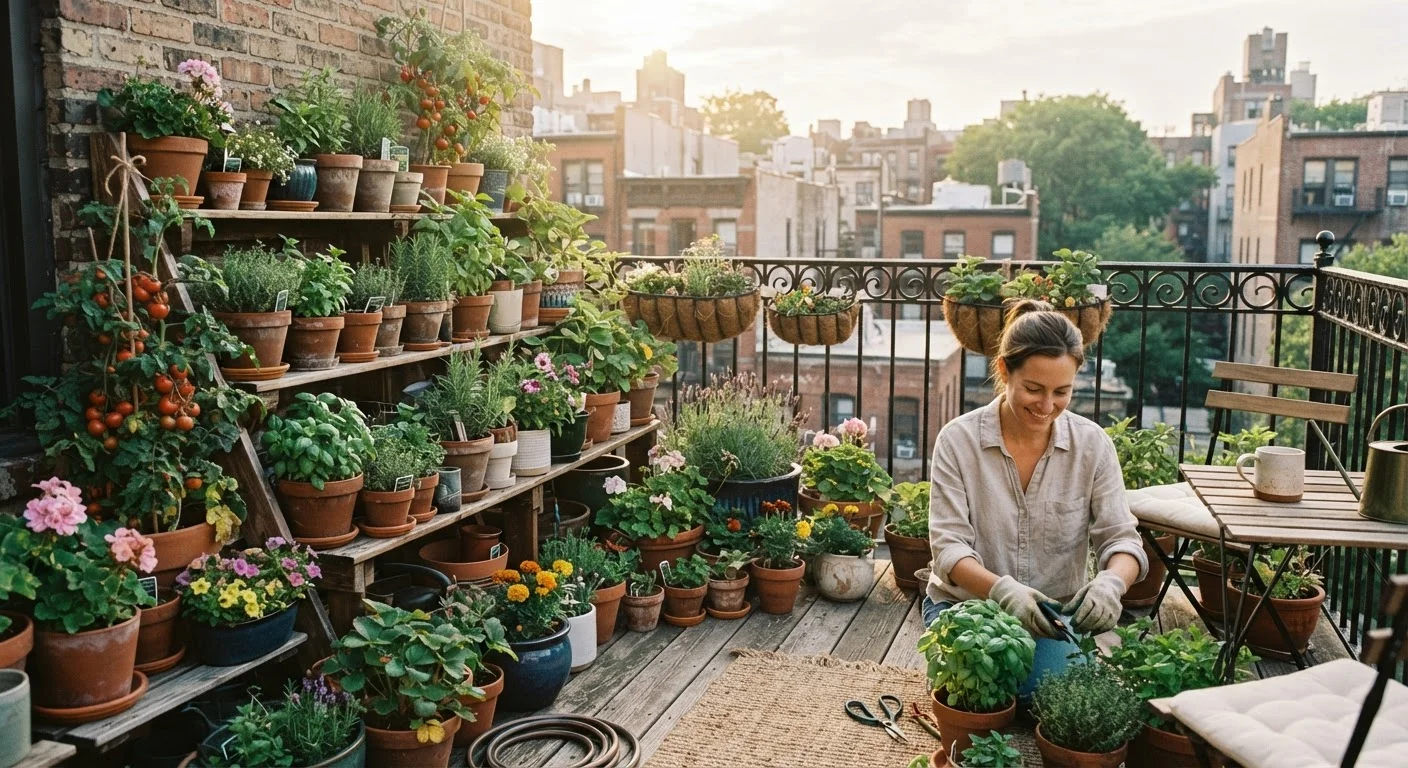
Why Small Spaces Can Still Support Serious Gardens
A patio, balcony, or narrow side yard isn't a gardening limitation - it's a design challenge with real solutions. Millions of American renters and homeowners grow food, flowers, and herbs in spaces measured in square feet rather than acres. The difference between a thriving container garden and a cluttered mess of struggling plants almost always comes down to planning: understanding your light, choosing the right containers, and selecting plants suited to compact growing conditions.
If you're new to growing in tight quarters, it helps to start with a clear-eyed look at what you're working with. Measure your usable floor and wall area, note which direction your space faces, and observe how shadows move across it through the day. That information shapes every decision that follows. For context on how permanent structures like paved surfaces and raised borders interact with planting areas, see our guide on hardscaping in a home garden.
The strategies below address the most common challenges small-space gardeners face - and give you a practical framework for getting the most from every inch.
Map your light before you plant anything
Light is the single most important variable in any garden, and in small urban spaces it's often inconsistent. A south-facing balcony may receive six or more hours of direct sun - enough for tomatoes and peppers. A north-facing patio hemmed in by a fence or building wall may get filtered light at best, which suits shade-tolerant herbs like mint, chives, and parsley, along with lettuce and other leafy greens.
Spend a full day noting when and where direct sun hits your space before spending money on plants or containers. Many gardeners overestimate how much sun they receive. A space that feels bright may be delivering only two to three hours of direct light - enough for some plants, but not others. Match your selections to actual conditions rather than ideal ones.
Overestimating available sunlight is one of the most common and avoidable small-space gardening mistakes.
Choose containers sized for the root system, not the shelf
Container size directly affects how well a plant can develop and how often you'll need to water. Undersized pots restrict root growth, dry out rapidly, and stress plants - especially in summer heat. As a general rule, most vegetables need a minimum of 12 inches of depth; tomatoes, squash, and eggplant do better with 16 to 18 inches or more.
Material matters too. Terracotta is breathable and attractive but loses moisture quickly, which can be a problem in hot, dry stretches. Plastic and glazed ceramic retain moisture longer. Regardless of material, every container must have adequate drainage holes. Waterlogged roots are a leading cause of container plant failure. For strategies on keeping plants productive through difficult weather, see our article on keeping a garden productive through a hot, dry summer.
Undersized containers stress roots, accelerate moisture loss, and reduce yields - size up whenever space allows.
Go vertical to multiply your growing area
Walls, railings, and fences represent untapped growing space in most small gardens. Vertical structures - trellises, wall-mounted pocket planters, tiered shelving, and railing-hung boxes - can effectively double or triple the number of plants a compact area supports without adding to its footprint.
Vining crops like cucumbers, pole beans, and small-fruited squash climb readily with minimal guidance and produce abundantly in a narrow vertical footprint. Strawberries, lettuce, and herbs do well in stacked or wall-mounted planters. When attaching anything to a wall or railing, verify that the structure can support the weight of wet soil and mature plants - saturated containers are significantly heavier than empty ones.
Vertical growing structures can multiply your plant capacity without adding a single square foot of floor space.
Select compact and dwarf varieties deliberately
Standard vegetable varieties were often bred for open field production, not 12-inch pots. Compact and dwarf cultivars (plant varieties developed through selective breeding) are specifically developed to produce well in restricted root zones. Many seed catalogs and plant tags identify these varieties with terms like "patio," "bush," "dwarf," or "compact."
Compact cherry tomato varieties, for example, can produce prolifically in containers where a full-sized beefsteak would struggle. Dwarf pepper and eggplant types stay manageable without sacrificing fruit quality. Even ornamental plants come in scale-appropriate sizes - dwarf ornamental grasses, compact flowering perennials, and miniature roses all suit container life better than their full-sized counterparts. If you're just beginning to grow food, our beginner vegetable garden guide walks through plant selection and setup from the ground up.
Compact and dwarf varieties are purpose-bred for containers - standard field varieties often underperform in pots.
Water consistently and use soil that supports drainage
Containers dry out faster than in-ground beds - sometimes within a single hot day - because the root zone is limited and exposed on all sides to air and heat. Inconsistent watering leads to blossom drop in fruiting plants, tip burn in leafy greens, and general decline across most species. Checking moisture daily (not just when plants look wilted) is a habit worth building early.
Potting mix - not garden soil - belongs in containers. Garden soil compacts in pots, restricts drainage, and can introduce pests and disease. A quality potting mix provides the airy, well-draining structure roots need. Some gardeners add perlite (a lightweight volcanic mineral) to improve drainage further, particularly for herbs and succulents that dislike wet conditions. Feeding with a balanced slow-release fertilizer at planting, supplemented with liquid fertilizer during the growing season, replaces nutrients that regular watering flushes from containers.
Containers dry out far faster than ground beds - daily moisture checks are non-negotiable during warm months.
Group plants strategically to simplify care
Placing plants with similar water and light requirements together makes maintenance more efficient and reduces the risk of inadvertently overwatering drought-tolerant plants or neglecting thirsty ones. A grouping of Mediterranean herbs - rosemary, thyme, oregano - thrives with less frequent watering and full sun. Basil, on the other hand, needs consistent moisture and performs best alongside other warm-season crops with similar needs.
Grouping containers also creates a microclimate: clustered pots retain slightly more humidity around foliage, which can benefit moisture-loving plants and reduce heat stress during summer. It's a low-effort design choice that pays off in healthier plants and less reactive maintenance. For more on pairing plants with complementary needs, explore our article on companion planting logic.
Grouping plants by water and light needs cuts maintenance time and creates beneficial microclimates in small spaces.
Putting It All Together
Small-space gardening rewards intentionality. When you can't rely on sheer acreage, every container placement, plant selection, and watering decision carries more weight. The good news is that constraints often push gardeners toward smarter choices - fewer, healthier plants instead of overcrowded beds, vertical interest instead of wasted wall space, and varieties genuinely suited to where they're growing.
Once you're comfortable managing a container setup, you may find yourself curious about more advanced growing strategies. Companion planting principles apply just as well in containers as in ground beds, and pairing plants thoughtfully can improve yields even in limited space. And if you're considering expanding your growing area with a raised structure, our raised beds vs. in-ground gardens comparison covers what each approach demands in terms of soil, cost, and upkeep.
Soil Refresh Matters Each Season
Container soil breaks down over time, losing structure and nutrient content. At the start of each growing season, refresh containers by removing the top few inches of old mix and replacing it with fresh potting mix, or repot entirely if roots have become tightly bound. This simple step dramatically improves plant performance without requiring new containers.
Start with two or three well-chosen containers and expand only once those are thriving. Overcommitting in a small space leads to maintenance overload and plant stress - both of which are avoidable with a measured start.
The content on this site is for informational purposes only and is not a substitute for professional advice. Always consult a qualified professional for guidance specific to your situation.