

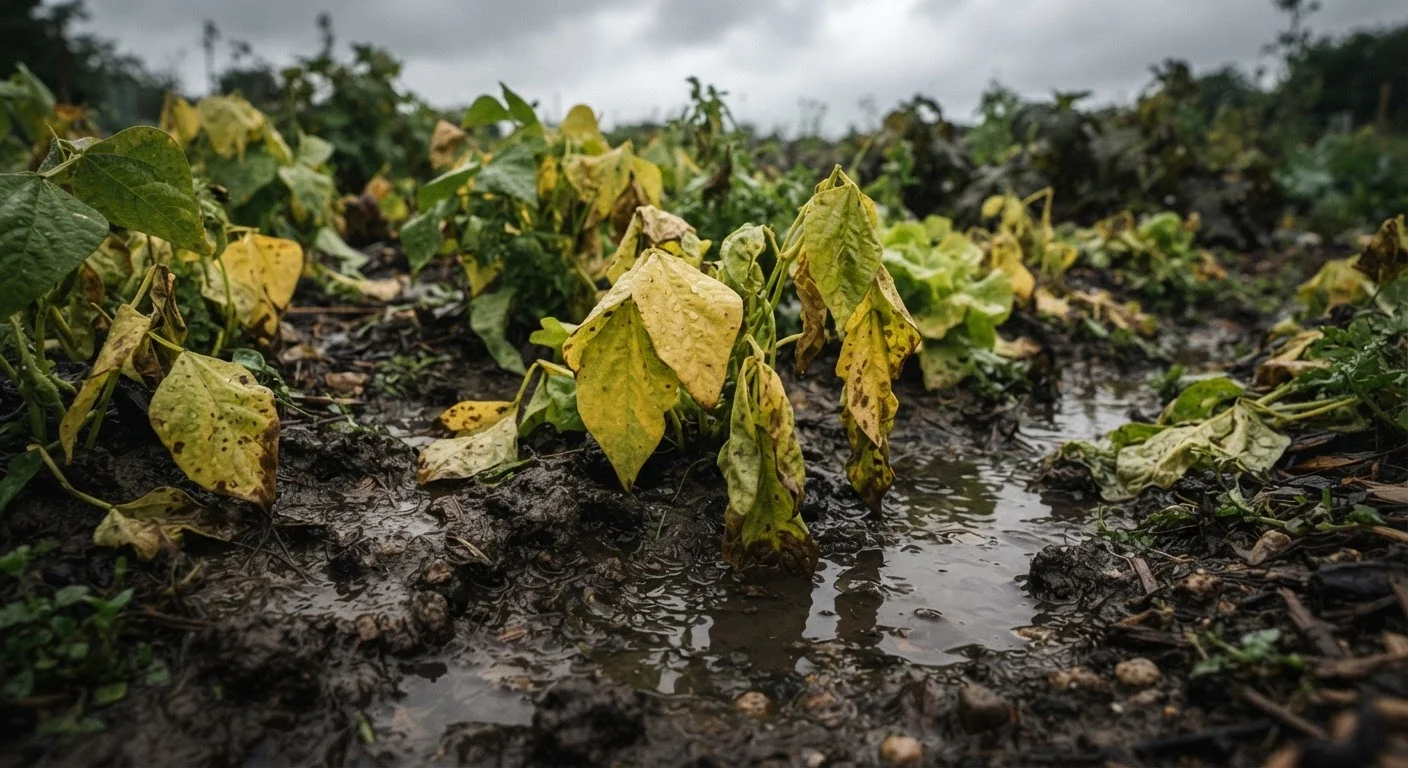
The Counterintuitive Truth About Too Much Water
Most gardeners fear drought. They watch forecasts, drag hoses across the yard at the first sign of dry weather, and set automatic timers to water on a fixed schedule regardless of what the soil actually needs. This instinct is understandable - wilting plants look distressed - but it leads to the single most common cause of plant death in home gardens: overwatering.
When soil stays saturated for extended periods, air pockets in the root zone collapse. Roots need oxygen just as much as they need moisture, and without it, they suffocate. Waterlogged roots also become vulnerable to Phytophthora and Pythium - soil-borne fungi that cause root rot, breaking down root tissue and cutting off a plant's ability to absorb water or nutrients. The cruel irony is that a plant suffering from root rot often looks like it needs more water: drooping leaves, yellowing foliage, stunted growth. Many gardeners respond by watering more, accelerating the damage.
Understanding how water actually moves through soil - and what roots require to thrive - is the foundation of smarter garden care. See our guide to soil health for a deeper look at how the root environment affects overall plant performance.
Common Overwatering Mistakes and How to Avoid Them
Overwatering rarely happens all at once. It accumulates through habits that feel responsible but don't account for what plants actually experience underground.
Watering on a fixed daily schedule regardless of weather or soil conditions.
Why it happens: Timers and routines feel dependable, and gardeners worry that missing a day will harm plants.
Responding to wilting by immediately adding more water.
Why it happens: Wilting is visually associated with thirst, so the reflex is to water. But wilting can also mean roots are too damaged to uptake water at all.
Using pots or garden beds with inadequate drainage.
Why it happens: Aesthetic containers often lack drainage holes, and dense clay soil compacts easily, preventing water from percolating through.
Applying the same watering volume to all plants, ignoring their individual water needs.
Why it happens: A single-hose or sprinkler approach treats the entire garden uniformly, even though succulents, herbs, and vegetables have very different moisture requirements.
Watering at the wrong time of day, leaving foliage wet overnight.
Why it happens: Evening watering feels convenient after a workday, but it means moisture lingers on leaves and in the soil surface far longer than during daytime hours.
Improving your watering approach also means thinking about the infrastructure around your plants. Proper mulching, for instance, helps regulate soil moisture so you need to water less frequently. Our guide to mulching garden beds explains the right depth and materials to use without inadvertently trapping excess moisture against stems.
How to Read Your Soil Before You Water
The most reliable watering tool you own costs nothing: your index finger. Push it two inches into the soil near the plant's root zone. If the soil feels moist at that depth, the plant does not need water yet. Only when it feels dry at that depth should you water. For most vegetables and annual flowers, watering is typically needed every two to four days in warm weather - but that interval changes based on rain, humidity, container size, and soil composition.
~50%
Of landscape water use is wasted through overwatering or runoff
According to the U.S. Environmental Protection Agency, about half of outdoor water use in the United States is lost to inefficient irrigation practices.
2 inches
Soil depth to test before deciding to water
Extension services consistently recommend the two-inch finger test as the most practical and reliable method for home gardeners to assess soil moisture.
Container plants dry out faster than in-ground beds because there is less soil volume to buffer moisture fluctuations. Raised beds fall somewhere in between - they drain better than heavy clay soils but may dry out faster than native soil in very hot conditions. If you're weighing planting methods, our comparison of raised beds versus in-ground gardens walks through the drainage trade-offs of each approach.
Automated irrigation systems carry their own risk: they water on a schedule, not on demand. If you use one, calibrate it seasonally and override it after significant rainfall. Our article on drip irrigation versus sprinkler systems covers how to configure each type for efficient, responsive watering.
Don't Confuse Recovery Time With Ongoing Neglect
Once you've identified overwatering, pulling back on water is correct - but allow the plant time to stabilize before assuming it has recovered. Root rot damage can be severe even after soil conditions improve. If a plant continues to decline despite drier soil, gently inspect the roots: healthy roots are white or tan and firm, while rotted roots are brown, mushy, or have a foul odor. Severely affected plants may not recover, and removal is sometimes the most practical choice to protect surrounding plants.
The content on this site is for informational purposes only and is not a substitute for professional advice. Always consult a qualified professional for guidance specific to your situation.