

Why pH Is the Hidden Controller of Plant Health
You can water faithfully, apply fertilizer on schedule, and still watch your plants underperform. The reason is often invisible: soil pH. This single number determines whether the nutrients already present in your soil - nitrogen, phosphorus, iron, and a dozen others - are actually accessible to plant roots or effectively locked away.
Think of soil pH as a gate. When the pH is in the right range for your plants, the gate opens and nutrients flow freely. When pH drifts too far in either direction, that gate closes - and it doesn't matter how much you feed your plants. They simply can't absorb what they need. This is why understanding pH is fundamental before reaching for fertilizer.
6.0-7.0
Optimal pH range for most garden plants
According to soil science guidelines from land-grant university extension programs, this range maximizes availability of the widest range of plant nutrients.
13
Essential nutrients affected by soil pH
Of the 17 nutrients essential to plant growth, 13 are mineral nutrients whose availability in the soil solution is directly influenced by pH level.
3-6 months
Typical time for lime to fully adjust pH
University extension soil management guides note that lime takes several months to react fully in soil, which is why fall application for spring gardens is commonly recommended.
How to Test Your Soil pH
Testing soil pH is straightforward and doesn't require a laboratory. Here are your main options:
- Home test kits: Available at garden centers, these use color-indicator chemicals or digital probes to give a reading in minutes. They're affordable and accurate enough for most home gardeners.
- Cooperative Extension lab tests: Your state's land-grant university cooperative extension service typically offers mail-in soil testing at low cost. These tests return a detailed report with specific amendment recommendations - well worth it for a new garden bed or persistent problem area.
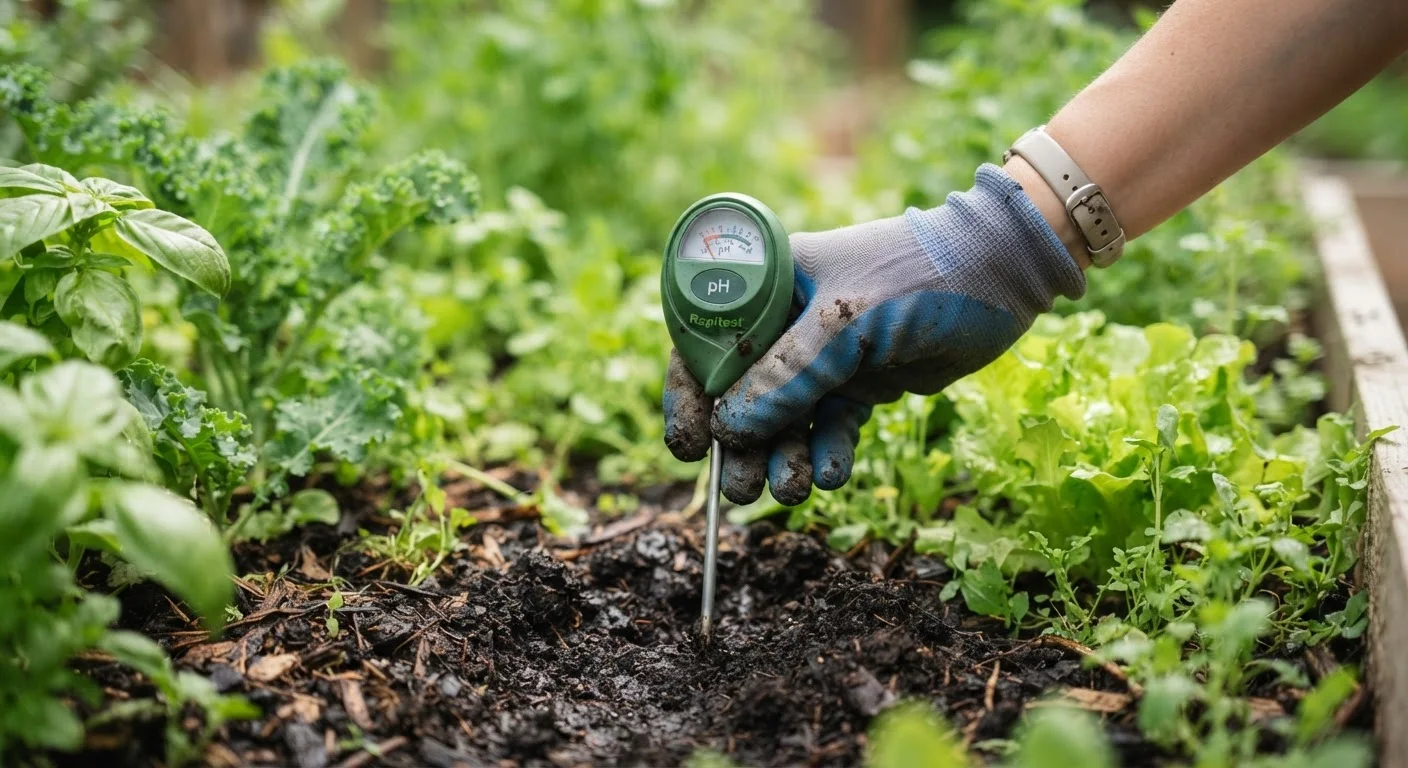
- Electronic pH meters: Probe-style meters offer quick, reusable readings. Calibrate them regularly for reliable results.
When collecting soil samples, take small scoops from several spots across the bed at a depth of 4-6 inches, then mix them together. Testing a single spot can give a misleading picture of your overall soil conditions.
Test Before You Amend
Never add lime or sulfur based on guesswork. Over-correcting pH can cause new deficiencies just as damaging as the original problem. A soil test takes the guesswork out and tells you exactly how much amendment your soil actually needs - saving both money and plant health.
What pH Range Do Your Plants Actually Need?
Most common garden plants - vegetables, lawn grasses, and popular flowers - thrive in soil with a pH between 6.0 and 7.0. But there are important exceptions worth knowing:
- Acid-loving plants (blueberries, azaleas, rhododendrons, gardenias): prefer pH 4.5-5.5
- Most vegetables (tomatoes, peppers, squash, lettuce): do well at pH 6.0-6.8
- Lawns (most turf grass species): prefer pH 6.0-7.0
- Brassicas (cabbage, broccoli, kale): tolerate slightly higher pH up to 7.5, which also helps suppress clubroot disease
Before planting anything new, look up its preferred pH range. Grouping plants with similar requirements in the same bed simplifies long-term soil management considerably - a principle that aligns well with thoughtful companion planting strategies.
How to Raise or Lower Soil pH
Once you know your pH reading, correcting it is manageable - though patience is required. Soil chemistry changes slowly, and gradual adjustments are safer than aggressive ones.
To raise pH (make soil less acidic):
Apply agricultural lime (ground limestone). Calcitic lime adds calcium; dolomitic lime adds both calcium and magnesium. Follow your soil test's recommended rate - over-liming can push pH too high and create a new set of deficiencies. Work lime into the top 6 inches of soil when possible, and allow several months for it to take full effect.
To lower pH (make soil more acidic):
Apply elemental sulfur, which soil bacteria convert to sulfuric acid over time. This process is slow - plan ahead by amending in fall for spring planting. For raised beds or containers, incorporating acidic organic matter like pine bark can also help maintain lower pH over time.
Adding compost regularly doesn't dramatically swing pH in either direction, but it does buffer the soil - meaning pH becomes more stable and resistant to sudden shifts. This makes organic matter one of the most versatile tools in any gardener's approach, complementing practices like proper mulching that also protect soil health from the surface down.
Common Nutrient Problems Tied to pH
Certain deficiency symptoms are closely linked to pH being out of range:
A gardener adds iron-rich fertilizer to yellowing blueberry bushes but sees no improvement.
A homeowner's vegetable garden produces stunted tomatoes despite regular watering and fertilizing.
Azaleas planted along a house foundation turn yellow and fail to bloom in a suburban yard.
A lawn shows patchy, pale green areas that don't respond to nitrogen fertilizer applications.
If you notice persistent yellowing between leaf veins on otherwise healthy-looking plants, pH-related iron or manganese lockout is a strong suspect. Correcting pH is often more effective than applying supplemental micronutrient sprays, which treat symptoms rather than the underlying cause. Similarly, if phosphorus is visually deficient - shown by purplish leaf undersides in young plants - soil pH above 7.5 or below 5.5 is frequently responsible, since phosphorus availability peaks in the 6.0-7.0 range.
Understanding these connections also helps you read fertilizer labels more critically - knowing that nutrients on the bag still need the right soil conditions to actually reach your plants.
Frequently Asked Questions
Yellowing leaves, poor growth despite regular watering and fertilizing, and plants that consistently fail in one area of your yard are common signs. A soil test is the only reliable way to confirm pH is the culprit, since these symptoms can also stem from other issues like overwatering.
Testing every two to three years is a reasonable baseline for most home gardens. If you've recently added amendments like lime or sulfur, test again after six to twelve months to track the change. Soil conditions shift gradually, so frequent annual testing isn't always necessary.
pH adjustments take time - typically several months for lime or sulfur to fully react in the soil. For immediate help, choose plant varieties suited to your current pH, and work on longer-term correction over the off-season. Rushing the process by over-applying amendments can harm plants.
These are popular home remedies but have very limited effect on soil pH at garden scale. Coffee grounds add a small amount of organic matter, but won't meaningfully acidify soil. For reliable results, use agricultural lime or elemental sulfur, following soil test recommendations.
Yes. Heavy rainfall gradually leaches calcium and magnesium from soil, making it more acidic over time. This is why gardeners in high-rainfall regions often need to add lime periodically to maintain the right pH range for their plants.
No. While most vegetables and ornamentals prefer a pH of 6.0-7.0, acid-loving plants like blueberries, azaleas, and rhododendrons thrive in the 4.5-5.5 range. Always research the specific pH preference of your target plants before adjusting soil.
The content on this site is for informational purposes only and is not a substitute for professional advice. Always consult a qualified professional for guidance specific to your situation.