

Our Verdict
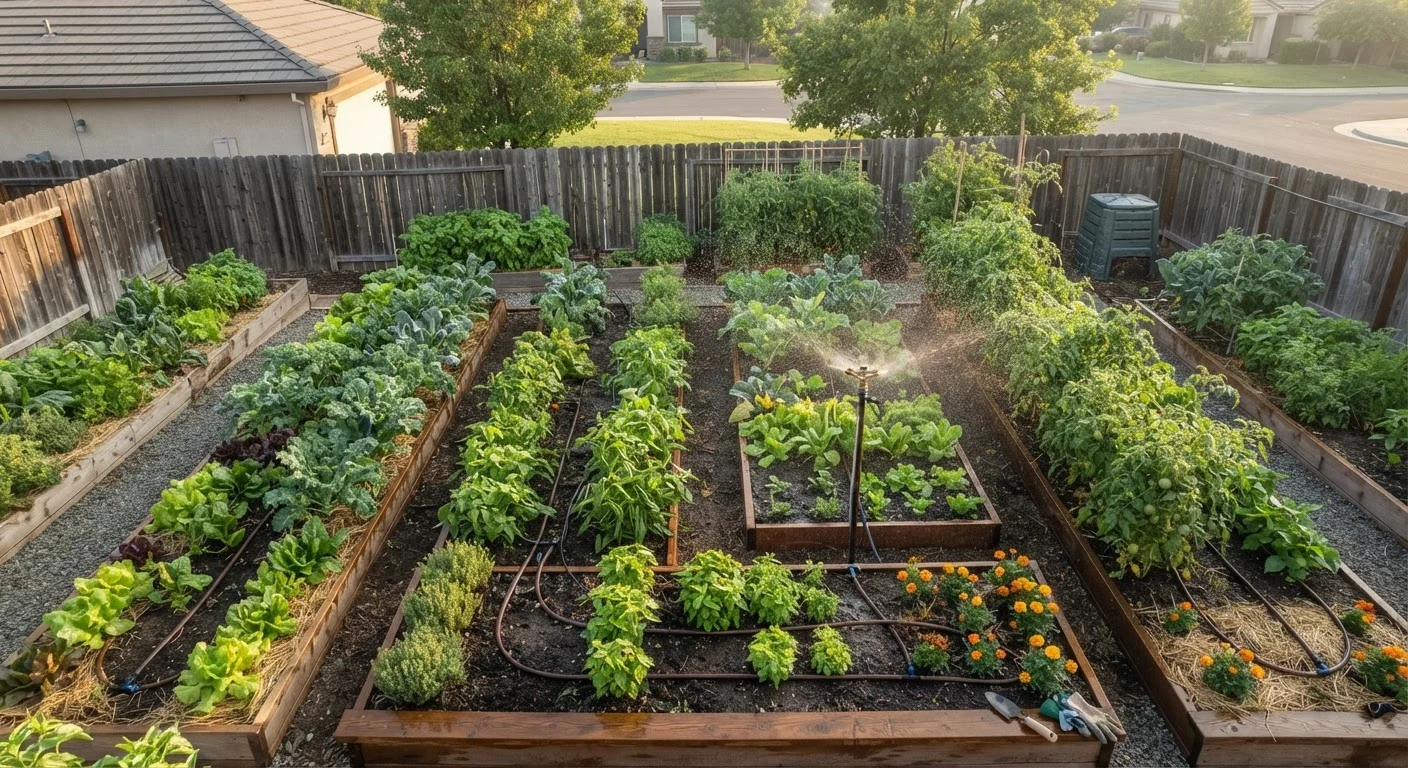
Drip irrigation excels in raised beds, vegetable gardens, and water-restricted areas where precision delivery matters. Sprinkler systems are better suited to lawns, large ground-level beds, and situations where even, broad coverage is the priority. Most home gardens benefit from understanding both approaches - and some benefit from using both in different zones.
| Best for | Recommended |
|---|---|
| Vegetable gardens and raised beds | Drip Irrigation |
| Lawns and large open planting areas | Sprinkler Systems |
| Gardeners in drought-prone or water-restricted regions | Drip Irrigation |
| Mixed yards with turf and garden beds | Combination of Both |
How Each System Delivers Water
Understanding how these systems work helps clarify which fits your garden. Drip irrigation uses a network of low-pressure tubing and emitters placed at or near soil level to deliver water slowly and directly to a plant's root zone. Because water goes where roots are, very little is lost to evaporation or runoff.
Sprinkler systems disperse water through the air in a broadcast pattern - much like natural rainfall. Rotating heads, pop-up risers, and fixed sprays each cover different radius sizes, making them well-suited to wide, open areas. However, overhead watering also wets foliage, which can encourage some fungal diseases if plants stay damp overnight.
If you're working with a vegetable garden or raised beds, see how your irrigation choice pairs with planting style in our guide on raised beds vs. in-ground gardens.
Water Efficiency and Conservation
Water efficiency is often the deciding factor, especially in regions with summer restrictions or rising utility costs. Drip systems can reduce water use substantially compared to overhead sprinklers - research from land-grant university extension programs consistently shows drip irrigation using 30-50% less water for comparable plant yields, because water is applied slowly and directly rather than broadcast across open ground.
Sprinklers lose water to wind drift and evaporation before it reaches the soil, particularly on hot or breezy days. They can also over-water areas between plants where roots don't reach, contributing to weed germination in the process.
30-50%
Water savings with drip vs. sprinklers
University extension research consistently finds drip irrigation reduces water use by 30-50% compared to overhead watering for comparable plantings.
50%
Water lost to evaporation from sprinklers
According to the EPA's WaterSense program, conventional sprinkler systems can lose up to 50% of water to evaporation, wind, and runoff.
For gardens already under heat stress, pairing the right irrigation approach with other moisture-conservation strategies makes a real difference. Our article on keeping a garden productive through a hot, dry summer outlines complementary techniques.
Setup, Cost, and Maintenance
Neither system is plug-and-play, but their complexity differs in character rather than degree.
Drip irrigation requires careful layout planning - mapping emitter placement to individual plants and calculating flow rates. The components (tubing, emitters, pressure regulators, filters) are relatively inexpensive, and many homeowners install basic systems themselves over a weekend. Ongoing maintenance involves checking emitters for clogging and adjusting tubing as plants grow or change seasonally.
Sprinkler systems, especially in-ground versions, generally require trenching, backflow prevention devices, and zone controllers. Professional installation is common and adds to upfront costs. Above-ground oscillating or hose-end sprinklers are cheaper and require no installation, but they offer far less control over coverage and timing.
Both systems benefit from timer controllers, which automate watering schedules and prevent the single most damaging watering mistake homeowners make. Learn more about why overwatering kills more gardens than drought and how automation helps you avoid it.
| Drip Irrigation | Sprinkler Systems | |
|---|---|---|
| Water Efficiency | High - targeted root-zone delivery | Moderate - evaporation and drift losses |
| Best Suited For | Beds, vegetables, containers | Lawns, large open areas |
| Foliage Wetting | Minimal - reduces disease risk | High - can promote fungal issues |
| Upfront Setup | Moderate - planning-intensive | Higher - may need professional install |
| DIY Friendliness | Good for surface/raised-bed installs | Easier above-ground; harder in-ground |
| Coverage Area | Limited to emitter placement | Broad, even broadcast coverage |
| Weed Promotion | Low - water stays at root zones | Higher - wets soil between plants |
Matching the System to Your Garden
No single system suits every yard. Consider these scenarios:
- Vegetable and herb beds: Drip irrigation is the clear fit. Precise delivery keeps foliage dry, reduces disease pressure, and delivers consistent moisture to root zones - critical for fruiting plants like tomatoes and peppers.
- Lawns and turf areas: Sprinklers are the practical choice. Drip tubing across a lawn is impractical to install, maintain, or mow around.
- Ornamental borders and shrubs: Either works. Drip is more efficient; sprinklers are simpler when beds contain many plants of similar water needs.
- Container gardens: Drip emitters on timers are well-suited here, delivering measured water to individual pots without overflow.
Many homeowners find that a zoned approach - drip for beds and sprinklers for turf - makes the most practical sense. Water-wise plant choices also reduce how hard your system has to work, as explored in our piece on native vs. non-native plant trade-offs.
Start Small, Then Expand
If you're new to drip irrigation, begin with a single raised bed or a row of vegetable plants using a simple hose-end drip kit. Once you're comfortable with emitter spacing and pressure settings, expanding to additional zones becomes much more straightforward. Adding a battery-powered timer from the start makes it easier to regulate watering consistency without daily attention.
The content on this site is for informational purposes only and is not a substitute for professional advice. Always consult a qualified professional for guidance specific to your situation.