

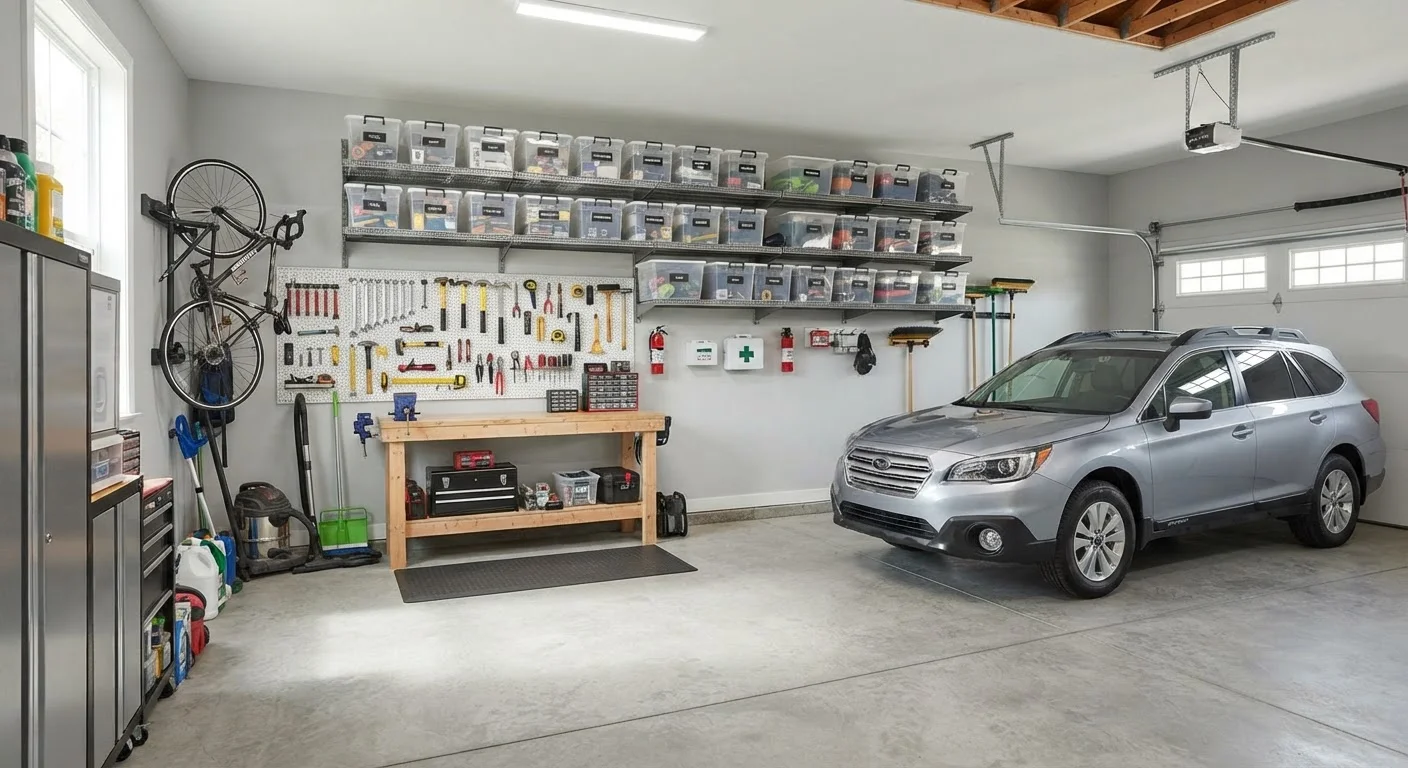
Why Garages Become Catch-All Spaces
The garage is typically the first and last place you pass through at home, which makes it a natural drop zone for anything without a clear home inside the house. Sports gear, holiday decorations, half-finished projects, and mystery boxes all accumulate gradually - so gradually, in fact, that many homeowners don't notice the creep until there's no room left to park.
Understanding this pattern matters because the solution isn't just a weekend of cleaning. It's designing a space with intentional systems. If you've been tackling organization room by room, the garage is often saved for last - and for good reason. It's big, it's complicated, and it holds items from nearly every category of home life. Our room-by-room decluttering guide can help you build the mindset before you tackle this larger challenge.
The good news: once organized well, garages tend to stay organized longer than interior spaces - because the systems you set up there can be more robust, and the consequences of letting things slide (not being able to park, tripping over clutter) are immediately visible.
Clutter Patterns Apply Here Too
Garages tend to accumulate clutter for the same reasons any room does - items arrive without a designated home. If you want to understand the broader patterns behind disorganization before diving in, this starter overview of home organization covers the core concepts that make any space easier to manage long term.
What You'll Need Before You Start
Gather your materials before you begin. Having the right supplies on hand prevents mid-project store runs that derail momentum.
What you will need
Wall-mounted shelving or shelving units
Creates vertical storage to keep floor space clear and items organized by category.
Pegboard with hooks
Keeps frequently used hand tools and garden implements visible and easily accessible.
Sturdy plastic bins with lids
Protects stored items from moisture and dust while allowing stackable, labeled storage.
Label maker or adhesive labels
Ensures every bin and shelf zone is clearly marked so the system is self-explanatory.
Ceiling-mounted storage rack
Utilizes overhead space for bulky seasonal items that are rarely accessed.
Utility cabinet or lockable storage
Safely stores chemicals, sharp tools, or other hazardous materials away from children.
Step-by-Step: Reclaiming Your Garage
Follow these steps in order. Skipping ahead - especially skipping the empty-out phase - is one of the most common reasons garage organization attempts fail. For a broader look at how organizing principles apply across every area of your home, see the end-to-end home organization guide.
Empty the garage completely
Move every single item out of the garage - ideally onto the driveway. This step is non-negotiable. You cannot accurately assess what you have, what you need, or how to arrange the space until you can see the floor and walls clearly.
Group items loosely into categories as you move them out: tools, sports equipment, automotive supplies, holiday decorations, gardening gear, and miscellaneous. Don't make final decisions yet - just get everything out and loosely sorted.
Sort into Keep, Donate, Trash, and Relocate
With everything visible, go through each category and make decisions. Ask yourself: Do I use this? Does it belong in the garage specifically, or has it just landed here? Is it in usable condition?
- Keep - items that genuinely belong in the garage and get used
- Donate or sell - functional items you no longer need
- Trash or recycle - broken, expired, or unusable items
- Relocate - things that belong inside the house or another storage area
Be rigorous about the Relocate pile. Garages often hold things that drifted there because there was no better place - but the answer is to create a better place, not to let the garage absorb everything indefinitely.
Define your zones before you put anything back
Before a single item re-enters the garage, sketch out a basic zone plan. Common zones for most garages include: automotive and vehicle care, gardening and outdoor tools, sports and recreation, seasonal and holiday storage, and workshop or DIY supplies.
Place high-frequency items at accessible heights near the garage entry. Seasonal and rarely used items go up high or toward the back. Hazardous materials - fertilizers, solvents, paints - should be stored in a locked cabinet or clearly separated area, especially in households with children.
Install storage infrastructure
Now install the shelving, pegboards, hooks, and cabinets your zone plan requires. Wall-mounted shelving is generally more flexible than freestanding units and keeps the floor clear. Pegboards work especially well for tools because you can see everything at a glance without digging through drawers.
If your garage has unused ceiling height, overhead racks can store bulky items like seasonal decorations, camping gear, or luggage without consuming any wall or floor space. When deciding between open shelving and enclosed cabinets, consider your specific needs - our guide to open shelving versus closed cabinets walks through the trade-offs clearly.
Return items by zone and label everything
Bring back only the items from your Keep pile, placing each directly into its assigned zone. Bin items that aren't immediately grab-and-go - and label every bin clearly. Labels should describe contents specifically: "Holiday Lights" beats "Misc Seasonal."
As you put things away, make note of anything that still lacks a logical home. These items need a decision - not a random shelf placement. Avoid the habit that created the problem in the first place: assigning items a zone because there was space, rather than because it made sense.
Do a final walkthrough and establish ground rules
Once everything is in place, do a slow walkthrough. Can you move through the space comfortably? Can you reach items in each zone without moving other things? Is there a clear path to park a vehicle if that's a goal?
Establish a simple household rule: anything entering the garage gets assigned a zone immediately - not set on the floor temporarily. "Temporarily" is how the dumping-ground cycle restarts. If your household struggles with this across the home in general, the pattern behind recurring clutter is worth understanding - the same psychology applies to garages.
Maintaining the System Over Time
The real test of any organization system is whether it holds up six months later. Two habits make the biggest difference: everything gets returned to its zone after use, and the garage gets a quick reassessment every season.
A seasonal sweep - even 20 minutes - catches the early signs of drift before they become a full reset. Move summer gear to accessible spots in spring, and rotate holiday decorations toward the front in fall. This also connects naturally to outdoor upkeep; if you store composting supplies or garden tools in your garage, a resource like our guide to composting approaches can help you decide what equipment actually belongs in your space.
It's also worth being honest about whether your garage is doing double or triple duty. If it's also a workshop, a home gym, or a mudroom entry point, each function needs its own dedicated zone - otherwise, those areas will bleed into each other and collapse the system. And if you're parking a car there, a functional garage has real vehicle benefits too: how parking location affects your vehicle is worth understanding as motivation to keep that floor space clear.
The content on this site is for informational purposes only and is not a substitute for professional advice. Always consult a qualified professional for guidance specific to your situation.