

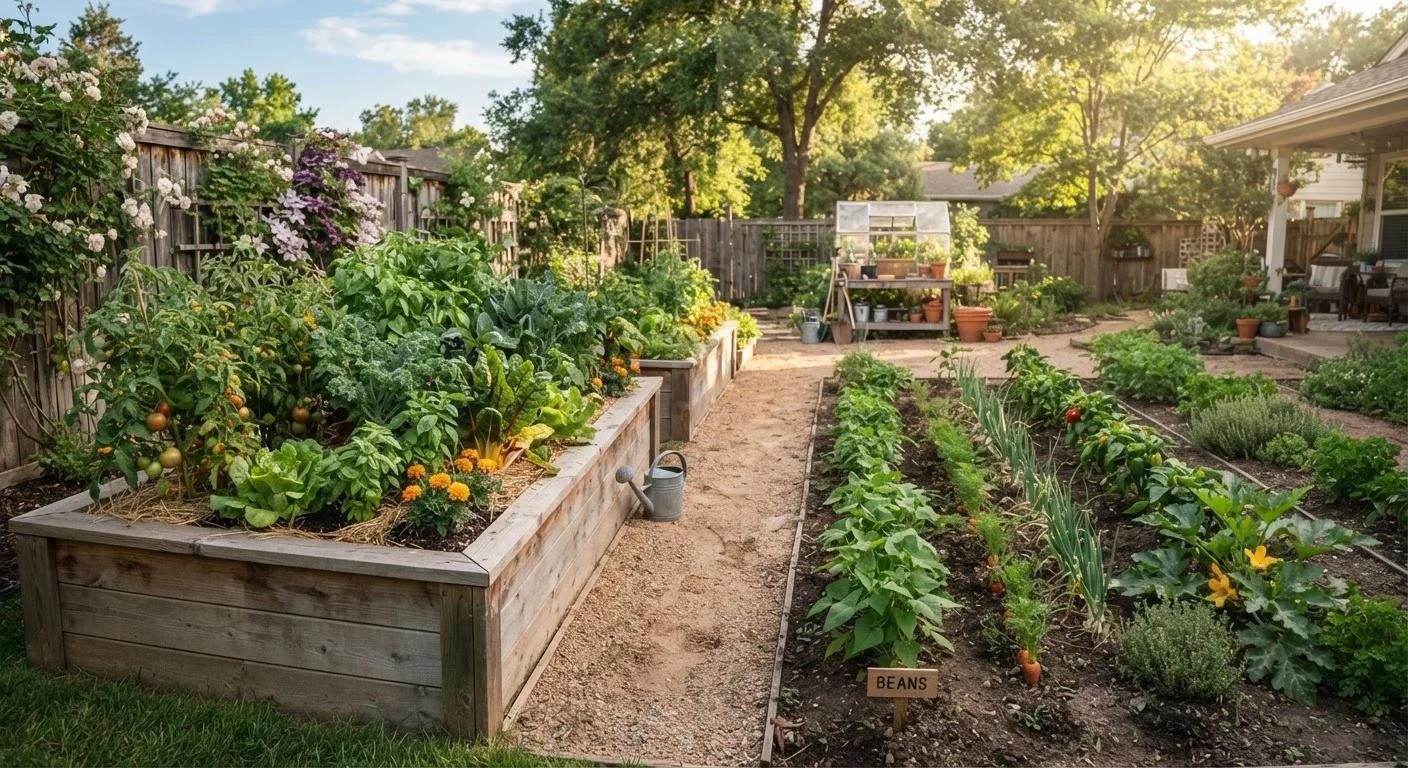
Option A
Raised Beds
The controlled, accessible growing environment.
Best for: Gardeners dealing with poor native soil, limited mobility, or wanting precise drainage and season control.
Option B
In-Ground Gardens
The traditional, scalable approach to growing.
Best for: Gardeners with ample space and workable native soil who want to grow at larger scale with lower upfront cost.
Soil: The Core Difference Between These Two Approaches
The most significant divide between raised beds and in-ground gardens is control over the growing medium. With a raised bed, you build or purchase a soil mix - typically a blend of topsoil, compost, and an aerating material like perlite or coarse vermiculite. This gives you a reliable, well-draining foundation from day one, regardless of what lies beneath.
In-ground gardening means working with what your yard already has. That can be an advantage if your native soil is loamy and fertile. More often, American homeowners contend with compacted clay, sandy soil that drains too fast, or heavy clay that drains too slowly. Improving in-ground soil takes time: repeated additions of compost and organic matter are needed over multiple seasons before structure meaningfully improves.
One nuance worth noting: raised beds do require ongoing soil maintenance. The growing mix settles and depletes nutrients season after season. Annual topping-up with compost is essential to maintain productivity. If you're curious how compost fits into either setup, see our guide to backyard composting and worm bins for practical options.
| Criterion | Raised Beds | In-Ground Gardens |
|---|---|---|
| Upfront cost | Moderate to high | Low |
| Soil control | Complete - custom mix | Limited by native soil |
| Drainage | Excellent by design | Depends on native soil |
| Season extension | Earlier spring warmup | Stable but slower to warm |
| Scalability | Limited by build cost | Easy to expand |
| Weed pressure | Reduced | Higher, ongoing |
| Accessibility (ergonomics) | High - adjustable height | Requires bending to ground |
| Best crop types | Compact vegetables, herbs | Sprawling, deep-rooted crops |
Cost, Setup, and Long-Term Maintenance
Upfront costs diverge sharply between these two methods. Building and filling raised beds - materials for the frame plus a quality soil mix - represents a real investment. Larger or more numerous beds multiply that cost quickly. In-ground gardens, by contrast, require little more than basic tools, seeds or transplants, and the labor to prepare the soil.
Over time, the cost gap narrows. In-ground gardeners often spend more on soil amendments, pest management, and weed control because the open ground invites both. Raised beds have natural advantages: the defined edges slow some weed encroachment, and elevated soil is less prone to compaction from foot traffic. However, the frame itself eventually weathers - untreated wood may need replacing after several years depending on climate and wood species.
4×8 ft
Most common starter raised bed size
A 4×8-foot bed is widely recommended because a gardener can reach the center from either side without stepping on the soil.
6-12 inches
Minimum recommended raised bed depth
Most vegetable crops need at least 6 inches of root depth; deeper beds of 12 inches or more support a wider range of plants.
3-5 years
Typical lifespan of untreated wood frames
Untreated lumber in contact with moist soil typically begins to degrade within a few growing seasons, depending on wood species and climate.
Watering habits also differ between setups. Raised beds drain efficiently but can dry out faster, especially in hot climates. In-ground plots hold moisture longer but risk waterlogging in poorly drained yards. For both setups, understanding irrigation options can make a meaningful difference - our comparison of drip irrigation and sprinkler systems covers the trade-offs clearly. Also, well-applied mulch helps regulate soil moisture in either method - see how to mulch garden beds correctly for practical guidance.
Climate, Season Length, and Crop Suitability
Raised beds warm up earlier in spring because the soil mass is above ground and exposed to air on multiple sides. In northern climates, this can add two to four weeks to the growing season - meaningful for crops like tomatoes, peppers, and early greens. In extremely hot southern climates, this same quality can be a drawback, causing root zones to overheat in summer without careful mulching.
In-ground gardens maintain more stable soil temperatures across seasons. This thermal mass suits some root crops and cool-season vegetables that prefer consistent, moderate conditions. Sprawling crops - winter squash, corn, and indeterminate tomatoes that will sprawl - tend to perform better in-ground where space isn't bounded by a frame.
If you're new to vegetable growing and deciding which method to start with, our beginner's guide to starting a vegetable garden walks through planning decisions for either setup. And if space is genuinely tight, small-space gardening strategies may offer a third path worth considering.
A Note on Soil Contamination
If your yard is in an older urban or suburban neighborhood, or was previously used for industrial or agricultural purposes, the native soil may contain lead or other contaminants. Testing through your local cooperative extension service is advisable before planting edibles in-ground. Raised beds filled with clean, sourced growing mix offer a practical way to sidestep this concern while results are pending or if contamination is confirmed.
The content on this site is for informational purposes only and is not a substitute for professional advice. Always consult a qualified professional for guidance specific to your situation.