

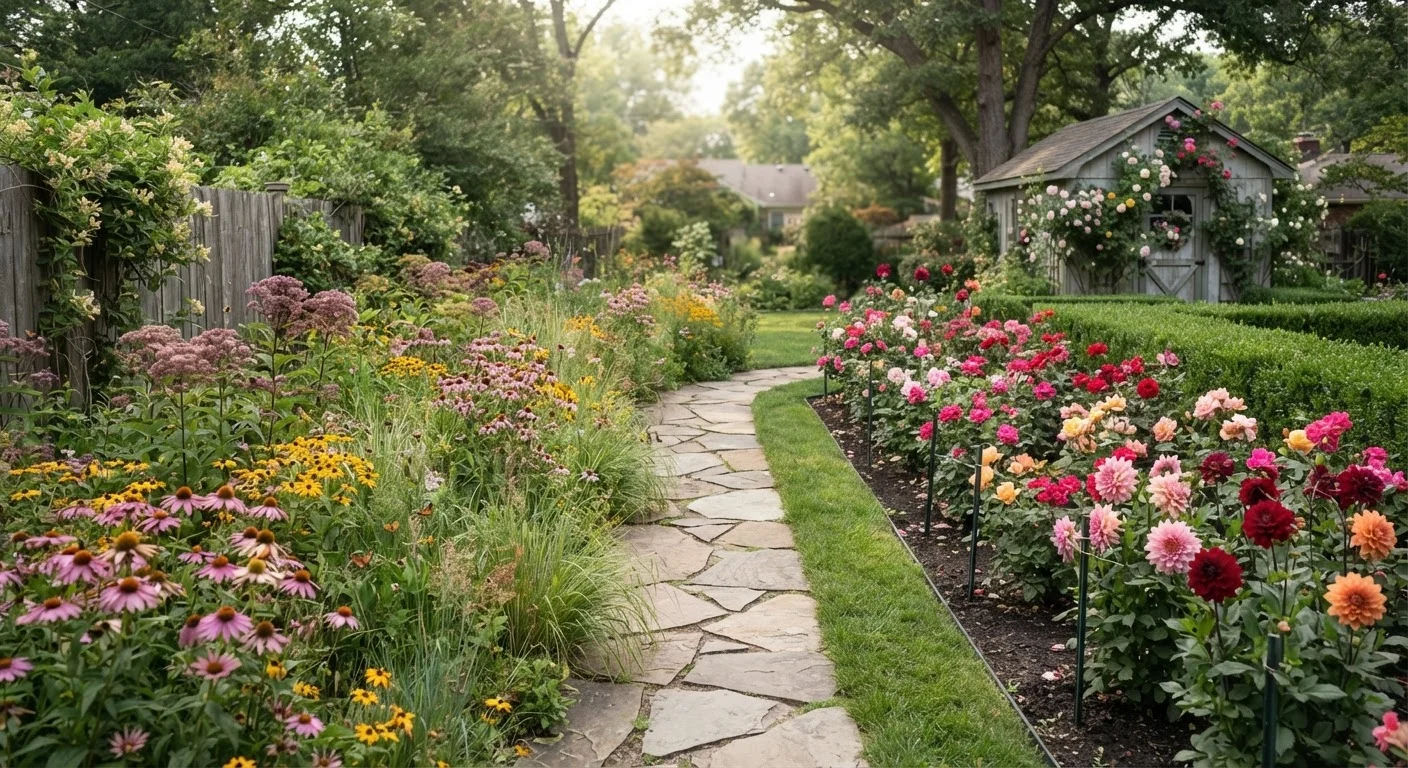
Option A
Native Plants
The ecologically rooted, low-intervention choice.
Best for: Gardeners who want lower long-term maintenance, wildlife habitat support, and plants naturally suited to local soils and rainfall.
Option B
Non-Native Ornamentals
The versatile, design-forward option with wider variety.
Best for: Gardeners seeking specific colors, forms, or seasonal interest not easily achieved with locally native species alone.
What Sets Native and Non-Native Plants Apart
A native plant is one that occurred naturally in a specific region before European settlement - it evolved in place alongside local soils, rainfall patterns, insects, and animals. A non-native ornamental is any plant introduced from another region or country, typically selected for visual qualities like flower color, form, or extended bloom time.
The distinction matters more than it might first appear. Plants that evolved in your region are already calibrated to its conditions. They don't need your soil amended to a different pH or your hose turned on every other day. Non-native plants, by contrast, come with varying degrees of care requirements depending on how different their native habitat is from yours.
It's worth noting that "non-native" doesn't automatically mean "invasive." Invasive plants are a specific subset - non-native species that spread aggressively and displace existing ecosystems. The vast majority of non-native ornamentals in American gardens are simply well-behaved plants that stay where you put them. Understanding this distinction helps you make more nuanced choices rather than defaulting to all-or-nothing thinking.
Water, Soil, and Maintenance: The Practical Reality
Water use is one of the clearest areas where native plants have a measurable edge. Because they evolved under local precipitation patterns, established native plants typically need little to no supplemental irrigation beyond their first one to two growing seasons. This can translate into real savings in both time and resources - something worth considering if you're already thinking about your irrigation setup for other garden areas.
Non-native ornamentals vary widely. Some - like many Mediterranean herbs - are actually quite drought-tolerant once established. Others, particularly tropical or temperate-woodland imports, may need consistent moisture, amended soil, or winter protection that their native counterparts don't require.
| Criterion | Native Plants | Non-Native Ornamentals |
|---|---|---|
| Water needs (established) | Low - adapted to local rainfall | Varies - often moderate to high |
| Soil amendment required | Rarely needed | Often beneficial or required |
| Wildlife and pollinator value | High - supports specialist species | Low to moderate - mainly generalists |
| Invasive risk | None by definition | Varies - most are non-invasive |
| Design variety | Growing, but regionally limited | Extensive global palette |
| Long-term maintenance | Lower once established | Higher on average |
| First-year establishment care | Moderate watering needed | Moderate to high watering needed |
| Availability at nurseries | Improving but still limited | Widely available |
Fertilizing follows a similar pattern. Natives are typically adapted to the nutrient levels already present in regional soils. Heavy fertilization can actually harm some native species or encourage excessive foliage at the expense of flowers. Non-native ornamentals, particularly those bred for showy blooms, often benefit from regular feeding throughout the growing season.
Pest and disease pressure is another practical consideration. Native plants have generally developed natural defenses against local insects and pathogens. Non-native ornamentals - especially highly hybridized cultivars - can sometimes be more susceptible to regional pests or fungal issues, though this is not a universal rule.
Wildlife Value and Ecological Function
This is where native plants hold their strongest advantage. Native plants have co-evolved with local insects, birds, and mammals over thousands of years. Native oaks, for example, are known to support hundreds of moth and butterfly species as larval hosts - a role that non-native ornamentals simply cannot replicate. Research from entomologist Doug Tallamy and colleagues has highlighted that many specialist insects can only complete their life cycles on specific native plant species.
Pollinators are a particularly relevant concern for home gardeners. While generalist bees will visit many flowering plants regardless of origin, specialist pollinators - including many native bee species - depend on the specific chemical compounds, bloom timing, and pollen structure of native flowers. Non-native ornamentals may attract some generalist visitors but offer far less value to the broader food web.
Native Cultivars: A Middle-Ground Option
Many nurseries now sell "nativars" - cultivated varieties of native species bred for enhanced flower color, compact size, or extended bloom. These retain many of the native plant's ecological benefits while offering more predictable garden performance. However, some research suggests that heavily altered nativars (especially those with double flowers or altered petal color) may be less useful to specialist pollinators than straight native species. When possible, look for nativars with minimal floral modification.
That said, a garden composed entirely of native plants is not always necessary or realistic. Even a modest increase in native plantings within an otherwise conventional yard can meaningfully improve local habitat connectivity. The goal for many gardeners is a thoughtful mix - using natives where ecological function matters most (especially in larger beds and borders) and selecting non-natives carefully where design goals call for it. This pairs naturally with how you approach other structural garden decisions, such as whether to use raised beds or in-ground planting for food crops.
Design Flexibility and Aesthetic Trade-offs
Non-native ornamentals win on sheer variety. The global palette of plants available to American gardeners includes species from every continent, offering color combinations, textures, fragrances, and structural forms that native-only planting simply cannot always match. This makes non-natives especially useful for specific design goals: formal symmetry, extended tropical-look borders, or winter interest from plants not native to your zone.
Native plants, however, are gaining significant ground in the design world. Contemporary naturalistic planting design - sometimes called the "new perennial" movement - has demonstrated that native species can create gardens of genuine beauty and complexity. Native grasses, coneflowers, asters, and milkweeds, for instance, offer seasonal interest from spring bloom through winter seed heads.
One underappreciated advantage of natives is their adaptability to regional microclimates. A native plant chosen for your specific state or ecoregion may thrive in conditions - heavy clay, seasonal drought, late frosts - that would struggle a non-native alternative. Consider pairing plants thoughtfully; companion planting principles can apply equally well whether you're working with native or non-native species.
The content on this site is for informational purposes only and is not a substitute for professional advice. Always consult a qualified professional for guidance specific to your situation.