

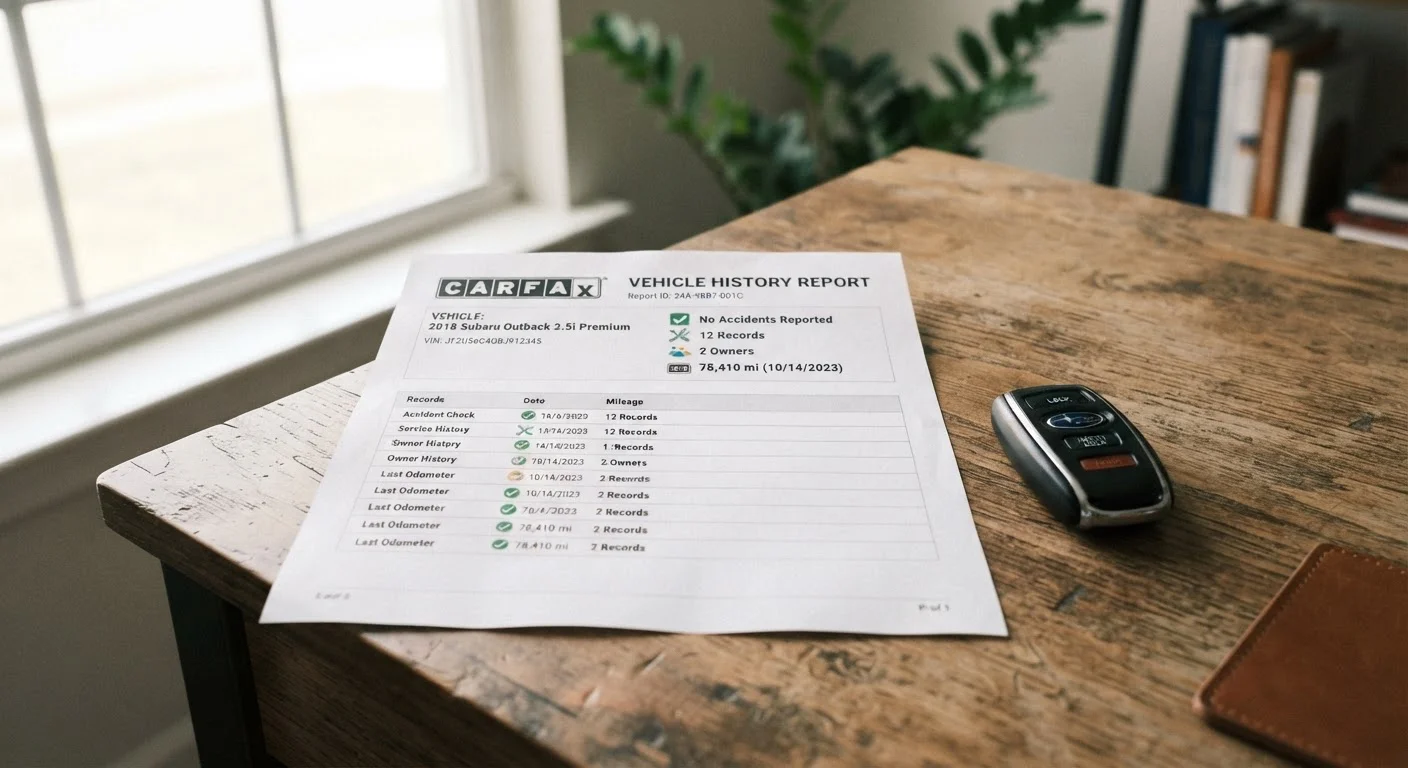
What a Vehicle History Report Actually Contains
A vehicle history report aggregates data from state DMVs, insurance companies, auto auctions, repair facilities, and other sources to build a paper trail for a specific vehicle, identified by its VIN. Understanding what each section covers - and where its data comes from - is the first step to reading one accurately.
Title history is often the most consequential section. It shows every state where the vehicle has been registered and flags any branded titles. A salvage title means an insurance company declared the vehicle a total loss at some point. A rebuilt or reconstructed title means it was repaired and passed a state inspection afterward. Flood, hail, and lemon-law buyback designations also appear here. These brands can limit your ability to obtain financing or standard insurance coverage, and they typically reduce resale value significantly.
Accident and damage records are drawn from insurance claims and collision repair shops that report to national databases. A reported accident will usually describe the severity (minor, moderate, or severe), the area of impact, and whether airbags deployed. However, not every collision is reported - cash repairs made outside an insurance claim often leave no trace in the report.
Odometer readings are recorded each time a vehicle is registered, inspected, or serviced at a reporting facility. The report lists these readings chronologically. If mileage decreases between entries or jumps implausibly, that is a red flag for potential odometer rollback, which is illegal under federal law.
Ownership history shows how many owners the vehicle has had and in which states. A high number of owners in a short time can indicate recurring problems. Geographic history also matters - vehicles from coastal or high-salt regions may carry hidden corrosion risk. See our guide to buying from private sellers vs. dealerships for context on how ownership source affects what you know going in.
Service and maintenance records appear when repairs were performed at shops that report to the database. Consistent oil changes, recalls completed on schedule, and regular maintenance entries suggest the vehicle was cared for. Large gaps in service history are worth investigating - though they may simply reflect an owner who used a non-reporting shop.
How to Work Through a Report Step by Step
What you will need
Locate and verify the VIN
Before purchasing a report, confirm the VIN on the physical vehicle matches what the seller has provided. Check the dashboard (visible through the windshield on the driver's side), the driver's door jamb sticker, and the title or registration document. All three should match. A mismatch can indicate a title swap or other irregularity.
Check the title status first
Navigate directly to the title history section. Confirm the title is clean - meaning it carries no salvage, rebuilt, flood, fire, or lemon-law designation. If any brand is present, research what that specific designation means in the state where it was issued, as definitions vary. A rebuilt title is not automatically disqualifying, but it requires additional scrutiny and disclosure to insurers and future buyers.
Review the accident and damage entries
Read each accident entry carefully. Note the reported severity, the area of the vehicle affected, and whether structural damage is mentioned. Minor impacts to bumpers differ significantly from reported frame or airbag involvement. For any moderate or severe entry, ask the seller for repair documentation and consider having the repair quality assessed during a professional inspection.
Trace the odometer readings
List the odometer entries in chronological order and verify that mileage increases consistently over time. Calculate the average annual mileage across the vehicle's life - roughly 12,000-15,000 miles per year is typical for U.S. drivers. Significantly higher averages may indicate heavy commercial use. Any reading that decreases from a prior entry is a serious red flag requiring explanation.
Assess ownership and use history
Note the number of reported owners, the states where the vehicle was registered, and whether it was ever listed as a fleet, rental, or lease vehicle. Fleet and rental use often means higher mileage cycles, but it can also mean more consistent documented maintenance. Rental and fleet vehicles are sometimes serviced regularly; however, they may also have experienced harder use by many different drivers.
Evaluate service record coverage
Review the service history entries and note whether major scheduled maintenance items appear - oil changes, timing belt or chain service, brake work - at intervals that align with the manufacturer's recommendations. Consistent entries from a single shop often indicate an owner who kept up with maintenance. Sparse records don't always mean neglect, but they increase uncertainty and warrant a more thorough pre-purchase inspection.
Reports Have Meaningful Gaps
No vehicle history report captures every event in a car's life. Accidents repaired privately without an insurance claim, maintenance performed at non-reporting shops, and mechanical failures that never prompted a documented repair will not appear. A clean report should raise your confidence - but it is not a substitute for a hands-on inspection by a qualified mechanic. Treat any report as one input among several, not a final answer.
Once you have reviewed the report, use it as a tool - not a verdict. A vehicle with a minor reported fender-bender that was professionally repaired may be a sound purchase. A vehicle with a clean report but deferred maintenance could cost far more to own. Always follow a history report review with a pre-purchase inspection by an independent mechanic, which can surface problems no database will show. If the report flags repairs you don't fully understand, learning how to read a repair estimate can help you evaluate any work that was documented.
Comparing a used vehicle's history report to its asking price is also part of smart evaluation. Our overview of new vs. used car trade-offs explains how documented history - or the absence of it - factors into the real cost of ownership.
The content on this site is for informational purposes only and is not a substitute for professional advice. Always consult a qualified professional for guidance specific to your situation.