

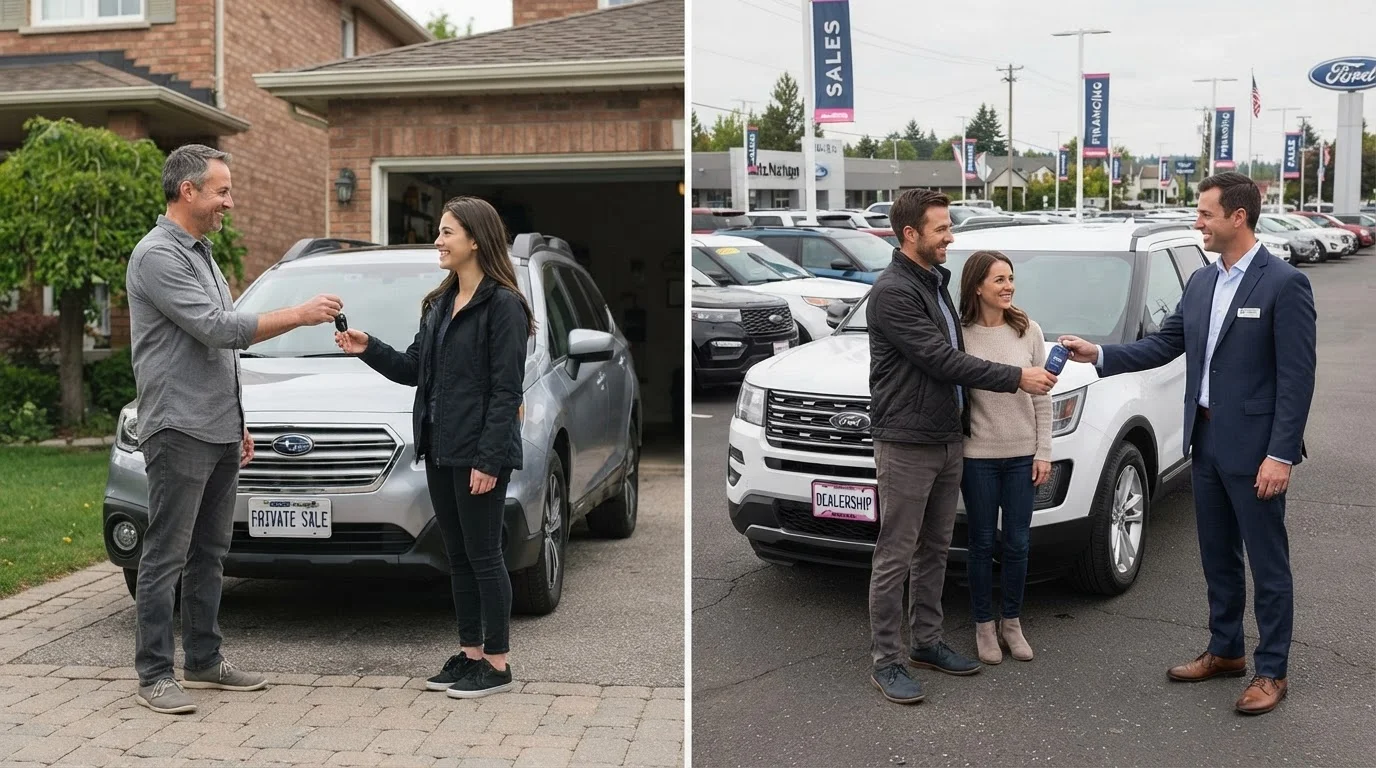
Our Verdict
Neither channel is universally superior - the right choice depends on your risk tolerance, budget, and how much hands-on research you're prepared to do. Private sales can yield genuine savings for prepared buyers; dealerships offer more structure and recourse for those who value peace of mind.
| Best for | Recommended |
|---|---|
| Budget-conscious buyers comfortable with due diligence | Private Seller |
| Buyers who want warranty coverage or certified vehicle options | Dealership |
| Those needing financing arranged at the point of sale | Dealership |
| Buyers purchasing a well-documented single-owner vehicle | Private Seller |
Price and Negotiation Dynamics
Private sellers generally list used vehicles below dealership asking prices. Without overhead costs - lot maintenance, staff salaries, reconditioning programs - individual owners can often accept lower offers. That said, some sellers price emotionally, attaching personal value to a car that market data doesn't support.
Dealerships build reconditioning, inspection, and administrative costs into their prices. Those costs are real, but they're also negotiable to varying degrees. Dealers also have more flexibility to offset the vehicle price through other parts of the deal, such as financing terms or trade-in valuations. If you're trading in a vehicle, review how trade-in offers are calculated before walking in - the numbers aren't standardized and can affect the overall value of your deal.
With a private seller, what you see on the listing is essentially the full transaction. There's no finance manager, no add-on products, and no back-and-forth on trade value. That simplicity can work in your favor, provided you've done your pricing research using tools like vehicle valuation guides and comparable listings in your area.
| Criterion | Private Seller | Dealership | |
|---|---|---|---|
| Typical asking price | Generally lower | Higher, reflects overhead | |
| Warranty availability | Almost never included | As-is or CPO options available | |
| Consumer legal protections | Minimal - largely as-is | FTC rules, state protections apply | |
| Financing at point of sale | Rarely; buyer arranges externally | Standard part of transaction | |
| Vehicle inspection process | None; buyer's responsibility entirely | Reconditioning done, CPO inspection available | |
| Negotiation flexibility | Direct; simpler transaction | More variables; finance/trade-in interplay | |
| Title and paperwork | Buyer handles DMV process | Dealer typically handles transfer |
Legal Protections and Consumer Rights
This is where the two channels diverge most sharply. Dealerships selling used vehicles are regulated businesses subject to federal and state consumer protection laws. Depending on your state, implied warranty protections may apply even to used cars sold without an explicit warranty. The FTC's Used Car Rule requires dealers to display a Buyers Guide on every used vehicle disclosing warranty terms - or the lack thereof.
Private sales are almost universally "as-is" transactions. Once you hand over payment, the legal recourse available to you is limited. Some states offer narrow protections against outright fraud - a seller who knowingly conceals a salvage title, for instance - but these cases are difficult and costly to pursue. Understanding your state's specific rules before you buy privately is essential.
"As-Is" Sales Offer Limited Recourse
When a private seller - or a dealer selling without any warranty - uses the term "as-is," it carries legal weight. In most states, you accept the vehicle in its current condition and take on all repair costs the moment the sale is final. Even if a serious defect appears within days, you generally cannot compel the seller to contribute to repairs unless you can prove intentional concealment of a known defect. Always complete a pre-purchase inspection before signing anything.
Certified Pre-Owned (CPO) programs offered by franchise dealerships add another layer: manufacturer-backed warranties that extend coverage beyond the original term. CPO vehicles typically undergo multi-point inspections, though the standards vary by manufacturer. This option simply doesn't exist in the private market.
Financing and Payment Logistics
Financing a dealership purchase is relatively straightforward - the dealer arranges the loan as part of the transaction. However, dealer-arranged financing isn't always the most cost-effective option. It's worth comparing dealer rates against those from your own bank or credit union before committing. See our overview of financing through a dealer versus your own lender for a more detailed breakdown.
Private purchases are more complex. Most sellers want cash or a cashier's check. Some buyers obtain a pre-approved auto loan from their bank or credit union that can be applied to a private sale - this is possible but requires confirming the lender's policies, as not all institutions finance private transactions or vehicles above a certain age or mileage threshold.
For a full walkthrough of every stage in the purchase process, the car-buying process from start to finish covers budgeting, paperwork, and the sequence of decisions you'll face regardless of which channel you choose.
Due Diligence: What You Must Do Either Way
Regardless of the seller type, two steps are non-negotiable. First, pull a vehicle history report using the VIN. These reports can surface title issues, reported accidents, odometer discrepancies, and previous use as a rental or fleet vehicle. Knowing how to read a vehicle history report - and what such reports can't tell you - is as important as running one in the first place.
Second, have the vehicle inspected by an independent, qualified mechanic before purchase. This applies even to dealer-certified vehicles. A pre-purchase inspection typically costs between $100 and $200 and can identify mechanical issues that neither the seller nor a history report would reveal. No seller - private or commercial - should be trusted to self-certify condition.
Always Get an Independent Inspection
Even a vehicle sold with a dealer certification or CPO label benefits from an independent mechanic's review. Choose a shop with no connection to the seller, and ask for a written report. If a seller refuses to allow an inspection, treat that as a serious warning sign and walk away.
Before visiting any seller, do your preparation. Research and decisions made before you arrive significantly shape the outcome of any car purchase, whether you're meeting a private owner or walking onto a dealership lot.
The content on this site is for informational purposes only and is not a substitute for professional advice. Always consult a qualified professional for guidance specific to your situation.