

Our Verdict
The Great Smoky Mountains deliver on their promise - ancient forests, jaw-dropping scenery, and accessible trails - but they do so on their own terms, which include serious crowds, no reservations system, and a gateway tourism economy that takes adjustment. With the right expectations and a bit of planning, the Smokies reward almost every kind of traveler.
Best for families, first-time national park visitors, and road-trippers who can plan around peak weekends and explore beyond Clingmans Dome Road.
Why the Smokies Draw 12 Million Visitors a Year
No other national park in the country sees more visitors than Great Smoky Mountains. Straddling the Tennessee-North Carolina border, the park covers over 520,000 acres of some of the most biologically diverse temperate forest on Earth. It's home to more tree species than all of northern Europe combined, and its ancient Appalachian ridgelines - worn smooth by hundreds of millions of years of erosion - create that iconic hazy blue silhouette recognized across America.
Critically, the park charges no entrance fee, which removes a barrier that keeps visitors away from parks like Zion or Grand Canyon. Combined with its proximity to major eastern cities - it's within a day's drive of roughly a third of the US population - that free access turns the Smokies into the rare national park that genuinely belongs to everyone. If you're matching parks to your travel style, see America's national parks matched to traveler types for a broader picture.
No entrance fee - genuinely free to visit
Great Smoky Mountains is one of the only major US national parks that charges no admission, making it accessible to families and budget travelers who might otherwise skip national parks entirely.
Extraordinary biodiversity above almost any US park
The park's UNESCO World Heritage designation reflects its staggering ecological richness - over 19,000 documented species, including more than 100 native tree species and one of the world's best examples of temperate old-growth forest.
Reliable, frequent wildlife sightings
Black bears are commonly spotted, particularly in Cades Cove and along the Roaring Fork Motor Nature Trail. Elk, reintroduced to Cataloochee Valley, are regularly seen grazing at dawn and dusk.
Dramatic seasonal variety across a single park
From spring wildflower blooms to peak fall foliage to snow-quiet winter trails, the Smokies offer meaningfully different experiences depending on when you visit.
Accessible trails at multiple difficulty levels
The park has easy, paved walks suitable for strollers and wheelchairs alongside serious backcountry routes. It's one of the most genuinely multi-ability parks in the US system.
The Real Costs: Crowds, Traffic, and Tourist Infrastructure
Here's the honest trade-off: that accessibility brings crowds on a scale that can genuinely overwhelm a visit if you haven't planned around it. Cades Cove Loop Road, one of the park's most popular drives, regularly backs up for miles on fall weekends. Parking at Laurel Falls trailhead - the most-visited trail in any US national park - fills before 9 a.m. on busy days. Clingmans Dome, the park's highest point, can feel more like a theme park than wilderness in peak season.
The commercial strip in Gatlinburg, Tennessee - the primary gateway town - is a full-tilt tourism economy of go-karts, pancake houses, and souvenir shops. That's either charming or exhausting, depending on your expectations. Visitors who arrive hoping for a quiet mountain escape and stumble into Gatlinburg traffic on a July Saturday often leave frustrated.
Peak-season crowds are severe and unavoidable
With over 12 million annual visitors and no timed-entry system, the park's most popular areas become genuinely congested on fall and summer weekends, with traffic jams that can extend for miles.
No reservation system means no crowd control
Unlike parks such as Zion or Rocky Mountain, the Smokies have not implemented timed-entry permits, so popular trailhead parking lots fill early and there's no guaranteed access to key sites.
Gateway towns lean heavily commercial
Gatlinburg and Pigeon Forge are dense tourism corridors that many visitors find jarring in contrast to the natural beauty of the park itself - expect traffic, chain attractions, and resort pricing.
Wildlife encounters require careful visitor behavior
Bear activity near trails and picnic areas is common. Park rules require keeping at least 50 yards from bears, and food storage requirements are strictly enforced - violations can result in fines.
12M+
Annual park visitors
The National Park Service consistently records over 12 million visits per year at Great Smoky Mountains, making it the most-visited US national park by a wide margin.
800+
Miles of trails in the park
Despite the concentration of visitors on a handful of popular routes, the park contains more than 800 miles of maintained trails, offering significant room to find solitude.
19,000+
Documented species in the park
Great Smoky Mountains holds UNESCO World Heritage status partly due to its documented biodiversity of over 19,000 species across flora, fauna, and fungi.
Timing Your Visit: Seasons Make a Dramatic Difference
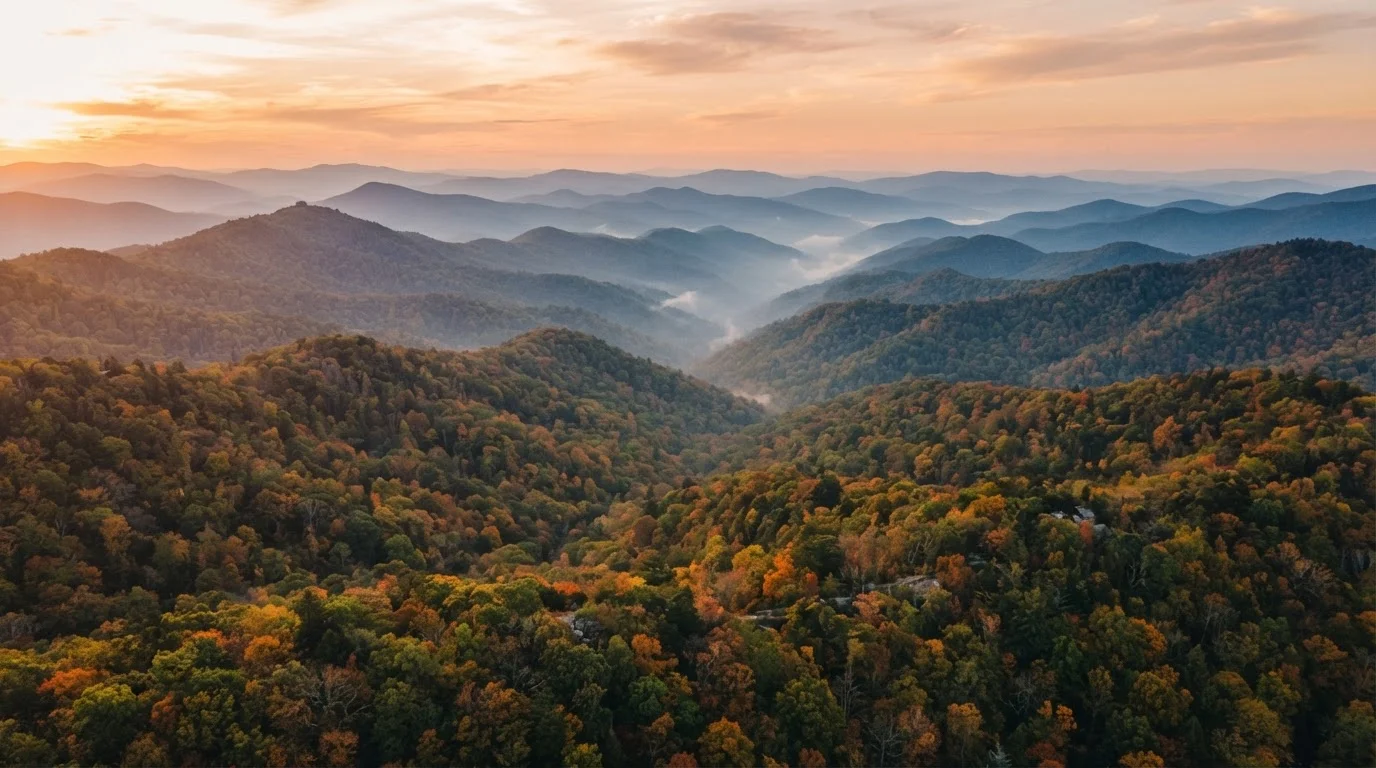
The Smokies shift personality by season more dramatically than almost any US park. Spring (mid-April through May) brings the famous wildflower bloom - over 1,500 flowering plant species including trillium, fire pink, and lady's slipper orchids - drawing dedicated hikers and photographers. Fall (mid-October through early November) delivers one of the finest leaf-peeping displays in North America, when the park's diverse tree mix ignites in reds, oranges, and golds across the ridgelines.
Both seasons also bring the park's heaviest visitation. Winter is genuinely underrated: Clingmans Dome Road closes December through March, which naturally thins crowds, and snow-dusted ridge trails offer a starkly beautiful experience with far fewer people. Summer means heat, humidity, and peak crowds - though early-morning hikes into the backcountry can still feel gloriously empty.
Bear Safety Is Non-Negotiable
The Smokies have one of the densest black bear populations of any US national park, with an estimated 1,500 bears living within park boundaries. Bears that become food-conditioned from improper human food storage often have to be euthanized. Always store food in provided bear boxes or a hard-sided vehicle, never in a tent. Keep 50 yards of distance at all times and never approach or feed bears under any circumstances.
For planning essentials before any national park visit, read this national park planning checklist - it covers reservations, fuel gaps, and logistics that first-timers often miss.
Finding Space: The Smokies Beyond the Main Corridor
The park is far larger than most visitors ever explore. The vast majority of traffic concentrates on a handful of routes: Newfound Gap Road, Cades Cove, and the Laurel Falls area. But the park contains over 800 miles of trails, including remote sections in the Cataloochee Valley (on the North Carolina side) where elk roam open meadows and weekday visits feel genuinely solitary.
Cataloochee is also home to restored historic structures - barns, a church, and a schoolhouse - that give the valley a layered cultural depth most visitors never encounter. The Smokies sit within the broader context of Appalachian heritage; understanding the American South's regional history helps frame what you're seeing in these communities and landscapes.
If you're drawn to the solitude and scenery but could do without the crowds entirely, US state parks that rival national parks in the surrounding region offer dramatic Appalachian terrain with a fraction of the foot traffic.
The content on this site is for informational purposes only and is not a substitute for professional advice. Always consult a qualified professional for guidance specific to your situation.