

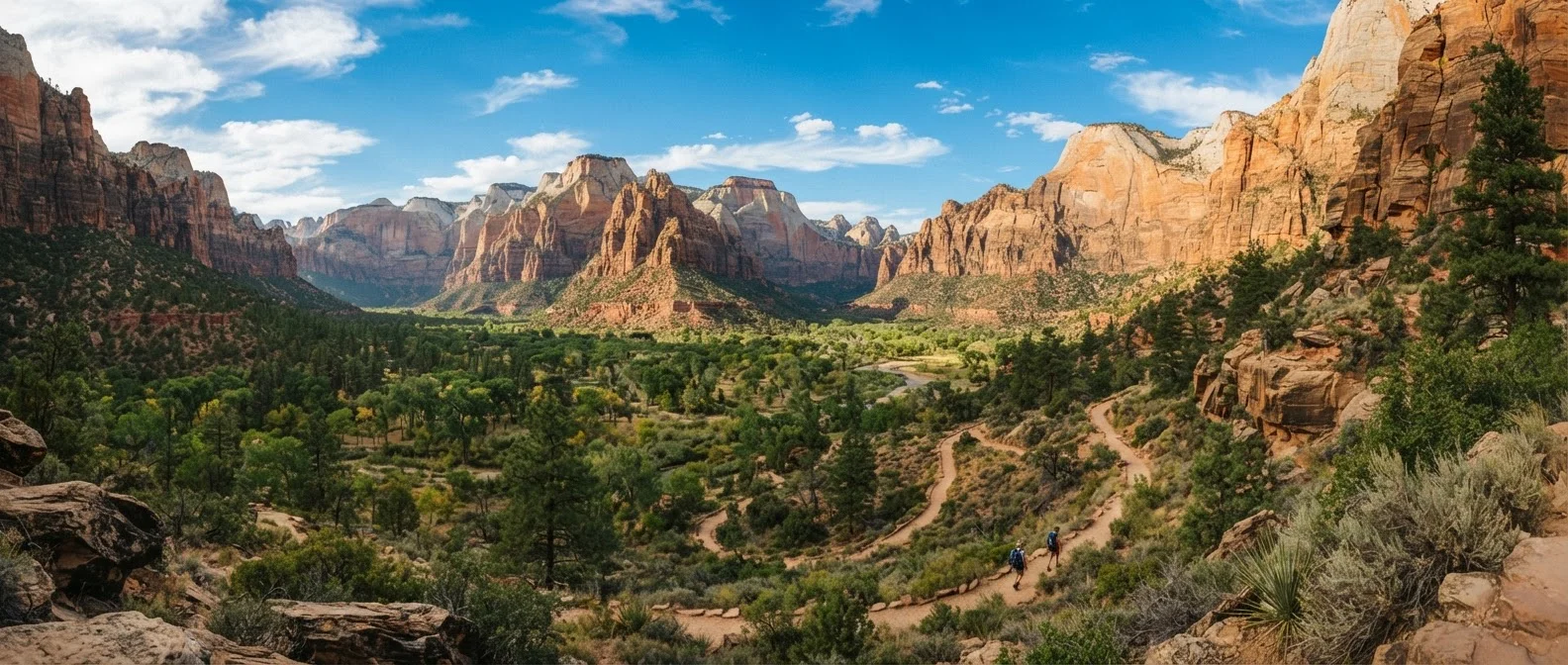
The Underrated Case for State Parks
Every summer, millions of Americans queue for timed-entry permits at Zion, Yosemite, and the Smokies. The national parks are iconic for good reason - but the crowds, reservation headaches, and parking scrambles have become part of the experience in ways that aren't always welcome. If you've felt that tension firsthand, our planning checklist for national park visitors is worth a read before your next trip.
The quieter truth? Dozens of state parks across the country deliver equally breathtaking scenery, well-maintained trails, and genuine wilderness - at a fraction of the entry cost and without the logistical gauntlet. These parks don't always make it onto national travel lists, but they absolutely deserve a spot on yours. Below are eight standout examples that consistently surprise visitors with their scale and beauty.
Check Annual Pass Options Early
Many states offer annual passes that cover entry to all state parks system-wide - often at a cost that pays for itself in just two or three visits. If you're planning multiple stops in one state, looking into these passes before your first visit can save meaningful money over single-day fees.
Eight State Parks Worth the Journey
Palo Duro Canyon State Park, Texas
Dubbed the "Grand Canyon of Texas," Palo Duro Canyon drops roughly 800 feet into the Texas Panhandle, revealing layers of red, orange, and purple rock carved over millions of years by the Prairie Dog Town Fork of the Red River. At about 120 miles long, the canyon is the second-largest in the United States. Trails range from easy scenic strolls to strenuous backcountry routes, and an outdoor amphitheater hosts a long-running musical drama each summer. The park is far less crowded than its Arizona counterpart and remains genuinely awe-inspiring.
Palo Duro's 800-foot canyon walls rival the Grand Canyon in drama - without the crowds.
Custer State Park, South Dakota
Sharing the Black Hills with Mount Rushmore and Badlands National Park, Custer State Park spans nearly 71,000 acres of pine-covered hills, pristine lakes, and open grasslands. One of the largest free-roaming bison herds in the world lives here - around 1,300 animals - and the Wildlife Loop Road offers some of the most accessible large-mammal viewing in North America. The park also has excellent fishing, swimming beaches, and a network of scenic byways. Many visitors find it more rewarding than the nearby national landmarks.
Custer's free-roaming bison herd and open grasslands make it one of the continent's premier wildlife destinations.
Baxter State Park, Maine
Home to Mount Katahdin - the northern terminus of the Appalachian Trail - Baxter State Park in northern Maine is deliberately managed as a wilderness preserve. There are no paved roads inside, RVs and large trailers are restricted, and visitor numbers are limited. That intentional restraint keeps the experience raw and memorable. The Knife Edge trail along Katahdin's ridgeline is one of the most exhilarating ridge walks in the eastern United States. Reserve your vehicle permit well in advance; they fill months ahead during peak season.
Baxter's strict visitor limits and wild management keep the Katahdin experience genuinely remote.
Goblin Valley State Park, Utah
Utah tends to get overshadowed by its "Mighty Five" national parks, but Goblin Valley offers something those parks can't match: acres of otherworldly mushroom-shaped sandstone formations, called hoodoos, clustered so densely you can wander freely among them. The valley floor is open for exploration - not just trail-bound viewing. Stargazing here is exceptional, as the park sits in a designated Dark Sky area. Crowds are a fraction of what you'd find at nearby Arches or Canyonlands, making it ideal for families and photography enthusiasts.
Goblin Valley lets you roam freely among thousands of sandstone hoodoos under some of Utah's darkest skies.
Anza-Borrego Desert State Park, California
California's largest state park - and the largest state park in the contiguous US - Anza-Borrego covers more than 600,000 acres of the Sonoran Desert east of San Diego. The landscape shifts from palm oases to slot canyons to open bajadas carpeted with wildflowers after winter rains. The park is also an International Dark Sky Park, making it one of Southern California's premier stargazing destinations. Unlike Yosemite or Joshua Tree, Anza-Borrego rarely requires advance reservations for day use, and dispersed camping is permitted in many areas.
At over 600,000 acres, Anza-Borrego is the largest state park in the contiguous US - and largely crowd-free.
Ricketts Glen State Park, Pennsylvania
Sometimes called Pennsylvania's most beautiful park, Ricketts Glen features 22 named waterfalls along its Falls Trail - a roughly seven-mile loop through old-growth forest. Waterfalls range from cascading ribbons to dramatic 94-foot drops. The park sits within a National Natural Landmark designation and protects some of the oldest trees in the northeastern US. It draws far fewer visitors than comparable Appalachian destinations, including the Great Smoky Mountains, making for a quieter, more immersive forest experience.
Twenty-two named waterfalls and old-growth forest make Ricketts Glen one of the East's most stunning state parks.
Chugach State Park, Alaska
Sitting right on the edge of Anchorage, Chugach State Park is one of the largest state parks in the country at nearly half a million acres. Glaciers, alpine lakes, wildlife-rich valleys, and dramatic summit views are all accessible within a short drive of a major city - an almost unmatched combination. The park sees far less foot traffic than Denali National Park, yet offers comparable alpine scenery and genuine backcountry solitude. Bear awareness and proper preparation are essential; the park's rangers provide detailed guidance.
Chugach delivers glacier and alpine scenery rivaling Denali - just minutes from downtown Anchorage.
Cheaha State Park, Alabama
Sitting atop Cheaha Mountain - Alabama's highest point at 2,413 feet - this compact but rewarding park offers panoramic views across the Talladega National Forest. The Pinhoti Trail passes through, connecting hikers to a broader network that extends into Georgia. Rock-strewn overlooks, seasonal wildflowers, and a historic stone observation tower built by the Civilian Conservation Corps in the 1930s give the park a layered appeal. Entry fees are modest, and it remains one of the Southeast's most underappreciated hiking destinations.
Cheaha's summit views and CCC-built stone tower make it Alabama's most overlooked outdoor destination.
Conditions and Access Can Change
Trail closures, seasonal road restrictions, and campsite reservation requirements vary by park and year. Always verify current conditions on each park's official state website before heading out. Some parks - particularly those in Alaska and the rural West - have limited or no cell coverage, so downloading offline maps in advance is strongly recommended.
Planning Your State Park Adventure
State parks share some planning fundamentals with their federal counterparts: popular sites still fill up on summer weekends, some require advance campsite reservations, and trail conditions vary by season. Always check the specific park's official website for current hours, fees, and any permit or reservation requirements before you go.
If you're weighing a regional outdoor trip more broadly, our comparison of the Mountain West and Pacific Northwest can help you match a region to your travel style. And if you're still drawn to the national parks experience, matching parks to traveler type can point you toward the right fit - crowds and all.
State parks are one of America's most underused travel resources. Explore one this year and you may find yourself wondering why it took so long.
The content on this site is for informational purposes only and is not a substitute for professional advice. Always consult a qualified professional for guidance specific to your situation.