

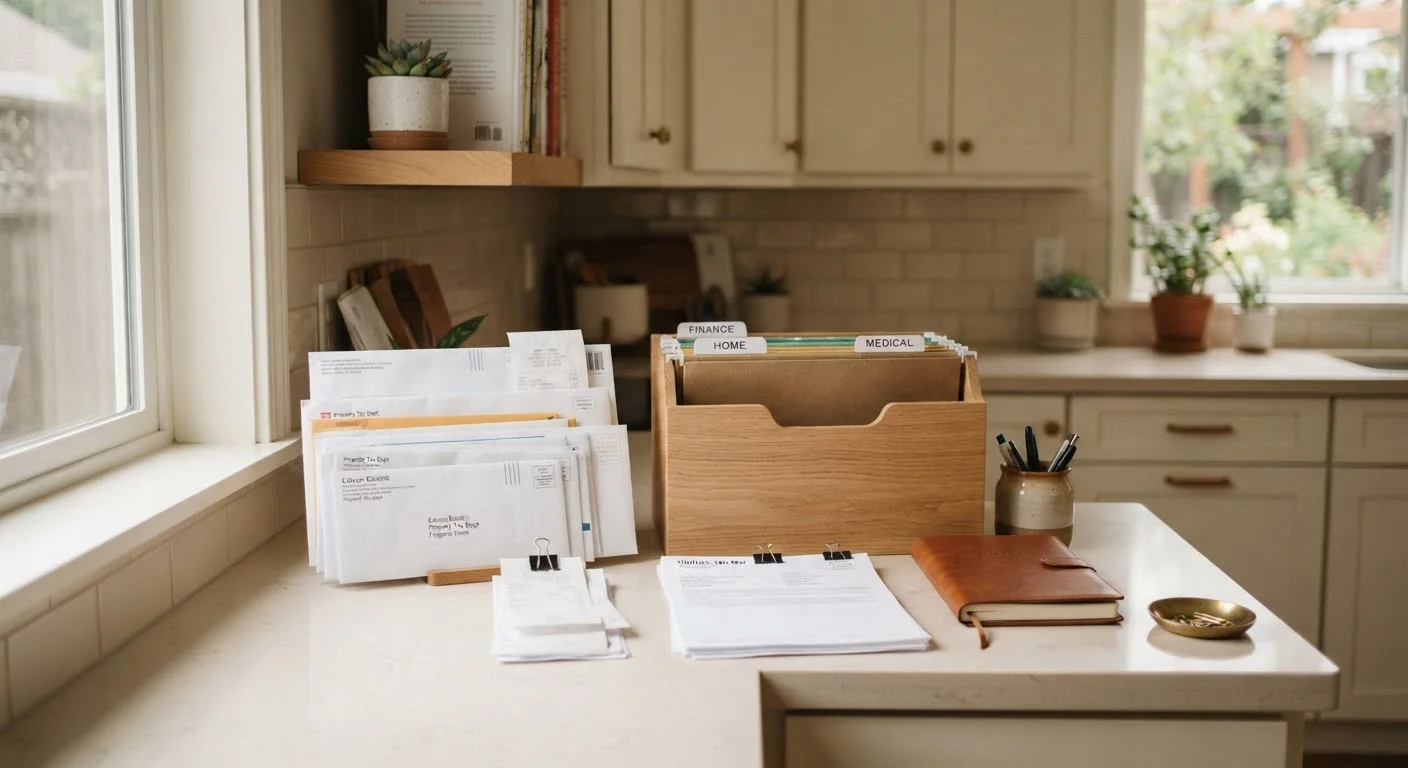
Why Paper Piles Up in the First Place
Paper clutter is uniquely stubborn because it arrives continuously and often feels too important to discard without careful review. Unlike other clutter categories, paper carries perceived risk - toss the wrong thing and you might miss a bill, void a warranty, or lose a document you need later. That anxiety, more than any organizational failure, is what lets paper accumulate.
The main sources are predictable for most households: daily mail (much of it unsolicited), utility bills, bank statements, receipts, school communications, medical records, product manuals, and owner's information packets. Add holiday cards, catalogs, takeout menus, and community flyers, and the volume becomes substantial fast.
What makes it worse is that paper doesn't stay where it lands. A piece of mail set on the kitchen counter to "deal with later" gets shuffled under a notebook, migrates to a junk drawer, and eventually disappears into a pile. Understanding this drift is the first step toward managing it - a theme explored more broadly in our article on why junk drawers keep coming back.
What You Actually Need to Keep
General guidance suggests keeping tax returns and supporting documents for at least several years, active insurance policies, and legal documents like deeds or wills indefinitely. Most utility bills, pay stubs, and routine receipts can be discarded after a short period once you've confirmed accuracy. Because retention needs vary by situation, consult a financial or legal professional if you're unsure about specific documents.
Best Practices for Managing Household Paper
The approaches that work best share a common logic: reduce what enters, sort immediately, and review regularly. Here are the core practices that well-organized households use to stay ahead of paper buildup.
Create a single paper landing zone near your home's entry point.
Paper that lacks a designated spot gets set down randomly and then forgotten. A dedicated tray or basket near the front door or mail slot gives every incoming paper one home, making sorting easier and preventing the drift that leads to multi-room pileups.
Sort mail immediately - never set it down unsorted.
The moment mail enters the home is the easiest time to make a decision about it. Deferring that decision multiplies the time spent later, because you'll re-read and re-evaluate each piece. Immediate sorting shrinks the pile before it forms.
Opt out of paper statements, bills, and catalogs wherever possible.
The most effective way to manage paper clutter is to prevent it from arriving. Electronic statements, paperless billing, and catalog opt-out services reduce incoming volume at the source - without requiring any ongoing sorting effort.
Establish a simple retention schedule and stick to it.
Indecision about what to keep is one of the biggest drivers of accumulation. Having clear, general guidelines - such as keeping tax-related documents for several years and discarding most receipts after a month - removes the hesitation that causes paper to stack up indefinitely.
Schedule a short monthly paper review session.
Even a well-managed system produces backlog. A 15-20 minute monthly session to process the 'To File' tray, shred outdated documents, and clear any strays keeps the system from degrading. Infrequent attention allows small accumulations to become overwhelming ones.
Digitize documents you need to keep but rarely reference.
Warranties, manuals, insurance policy documents, and medical records take up physical space but are consulted infrequently. Scanning and storing them digitally - with clear file naming - preserves access while freeing up physical storage. Many manufacturers also post current manuals on their websites.
Quick Actions You Can Take Today
You don't need a full overhaul to make progress. A few targeted actions can interrupt the cycle of accumulation right away.
For a broader look at how paper fits into whole-home organization, see our room-by-room decluttering guide. And if you want to build paper review into a recurring habit, the seasonal declutter checklist includes a dedicated paperwork section to revisit every few months.
The content on this site is for informational purposes only and is not a substitute for professional advice. Always consult a qualified professional for guidance specific to your situation.