

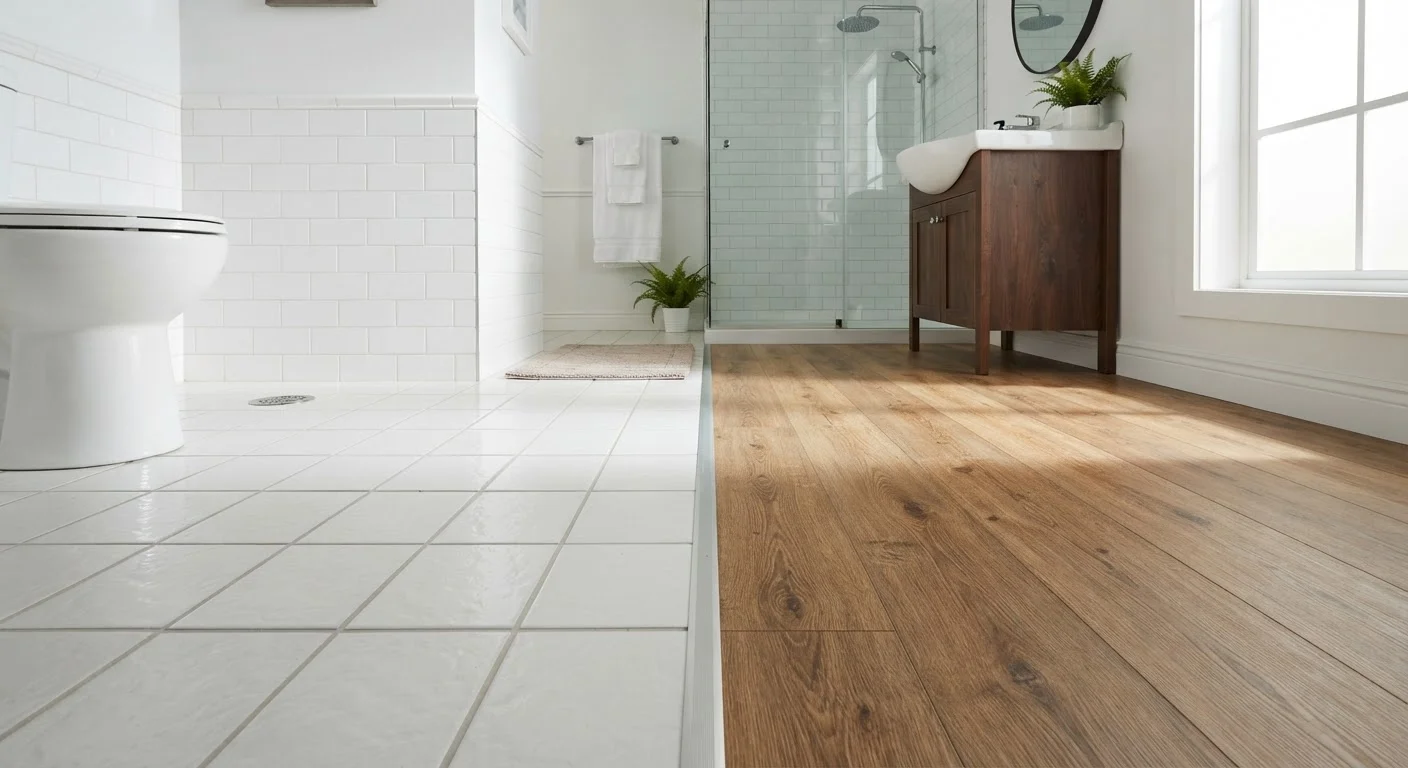
Option A
Ceramic / Porcelain Tile
The time-tested, fully waterproof classic.
Best for: Homeowners prioritizing long-term durability and complete water impermeability in bathrooms, showers, and laundry rooms.
Option B
Luxury Vinyl Plank (LVP)
The flexible, DIY-friendly modern alternative.
Best for: Homeowners seeking a warmer look, easier installation, and comfort underfoot in moderately wet spaces like laundry rooms and powder baths.
Water Resistance: Where Each Material Actually Stands
The most critical distinction between tile and LVP in wet spaces is how each handles water - and that difference matters more than most homeowners realize before a purchase.
Ceramic and porcelain tile are inherently impervious to water at the tile surface itself. The vulnerability, when one exists, lies in the grout. Unsanded and sanded grout is porous and must be sealed periodically - typically every one to three years depending on use and product - to prevent moisture infiltration, mold growth, and staining. For shower floors and walls, epoxy grout is a more durable alternative that resists moisture without annual sealing. See our guide to grout, sealant, and mortar for a full breakdown of these materials.
Luxury vinyl plank, by contrast, is water-resistant rather than waterproof. Individual planks are made from a composite vinyl core that repels water effectively in everyday splash situations. However, water that penetrates the seams between planks - particularly in floating floor installations - can reach the subfloor and cause swelling, mold, or structural damage over time. For this reason, LVP is generally not recommended as the primary floor surface in shower enclosures or anywhere pooling water is expected.
| Criterion | Ceramic / Porcelain Tile | Luxury Vinyl Plank (LVP) |
|---|---|---|
| Waterproofing level | Fully waterproof (tile surface) | Water-resistant, not waterproof |
| Shower/wet zone suitability | Yes, including shower floors | Not recommended for shower enclosures |
| DIY installation ease | Moderate to difficult | Easier, click-lock systems |
| Subfloor requirements | Rigid, no flex tolerated | Flat but tolerates minor flex |
| Comfort underfoot | Hard and cold without heat | Softer, closer to room temperature |
| Lifespan (well maintained) | 30-50+ years | 15-25 years typical |
| Maintenance | Grout sealing required periodically | Low maintenance; avoid steam mops |
| Repair ease | Individual tiles replaceable | Planks replaceable if not glued |
Installation, Cost, and Subfloor Requirements
Installation is where these two materials diverge significantly in terms of difficulty and cost.
Tile installation requires a stable, rigid subfloor - typically cement backer board over a structurally sound base. Flexion in the subfloor will crack tile and grout over time, so addressing any subfloor weakness before laying tile is essential. The process involves setting mortar, precisely placing tiles, allowing cure time, and then grouting - a multi-day process that most homeowners hire out to a professional tiler. Labor costs vary considerably by region and tile complexity.
LVP installs faster and forgives more subfloor imperfection. Most click-lock LVP systems float above the subfloor without adhesive, meaning a single determined DIYer with basic tools can complete a laundry room or bathroom floor in a day. However, a flat subfloor still matters - LVP manufacturers typically specify no more than 3/16 inch of variation over a 10-foot span to avoid clicking or gapping at joints.
12-20 mils
Recommended LVP wear layer for wet areas
Flooring industry guidance generally suggests a minimum 12-mil wear layer for residential wet spaces, with 20 mils preferred in high-traffic bathrooms.
1-3 years
Typical grout resealing interval for tile floors
Most standard cement-based grout in high-use bathrooms benefits from resealing every one to three years to maintain moisture resistance.
3/16 inch
Max subfloor variance LVP manufacturers allow
Most LVP manufacturers specify no more than 3/16 inch of variation over a 10-foot span to prevent joint gapping and clicking sounds.
From a materials cost standpoint, both categories span a wide range depending on quality tier. Understanding how materials and finishes signal long-term durability can help you evaluate whether a lower-priced option in either category will hold up to your specific household demands.
Long-Term Performance and Maintenance
A floor in a wet space doesn't just need to look good at installation - it needs to perform reliably for years under humidity, cleaning products, and daily foot traffic.
Porcelain tile, the denser cousin of standard ceramic, is widely regarded as one of the most durable residential flooring materials available. It resists scratching, staining, fading, and heat. Individual damaged tiles can usually be replaced without pulling up the entire floor - a significant advantage if a heavy object is dropped. The trade-off is comfort: tile is hard underfoot and can feel cold, particularly in winter months. Radiant in-floor heating systems are compatible with tile and can address the temperature issue, though they add installation complexity and cost.
LVP has improved dramatically in wear-layer thickness over the past decade. Quality LVP carries a wear layer - the clear protective coat over the printed design - measured in mils (thousandths of an inch). Residential wet-area applications generally benefit from a wear layer of at least 12 mils, with 20 mils offering better longevity in high-traffic spaces. LVP can be scratched by heavy furniture or pet claws and may dent under concentrated point loads. It also has a practical upper temperature limit and should not be used with high-temperature steam mops.
For homeowners thinking beyond individual rooms, managing moisture at the structural level is equally important. Our overview of basement waterproofing methods covers how water intrusion at the foundation level can affect finished floors throughout the home.
A Note on Floating vs. Glued-Down LVP
In bathrooms and laundry rooms, some installers recommend fully adhering LVP to the subfloor rather than floating it. Glue-down installation eliminates the seam gaps that allow water to travel to the subfloor, offering meaningfully better moisture protection. However, glued LVP is significantly harder to remove later. Discuss both options with a flooring professional before committing, especially in full bathrooms.
The content on this site is for informational purposes only and is not a substitute for professional advice. Always consult a qualified professional for guidance specific to your situation.