

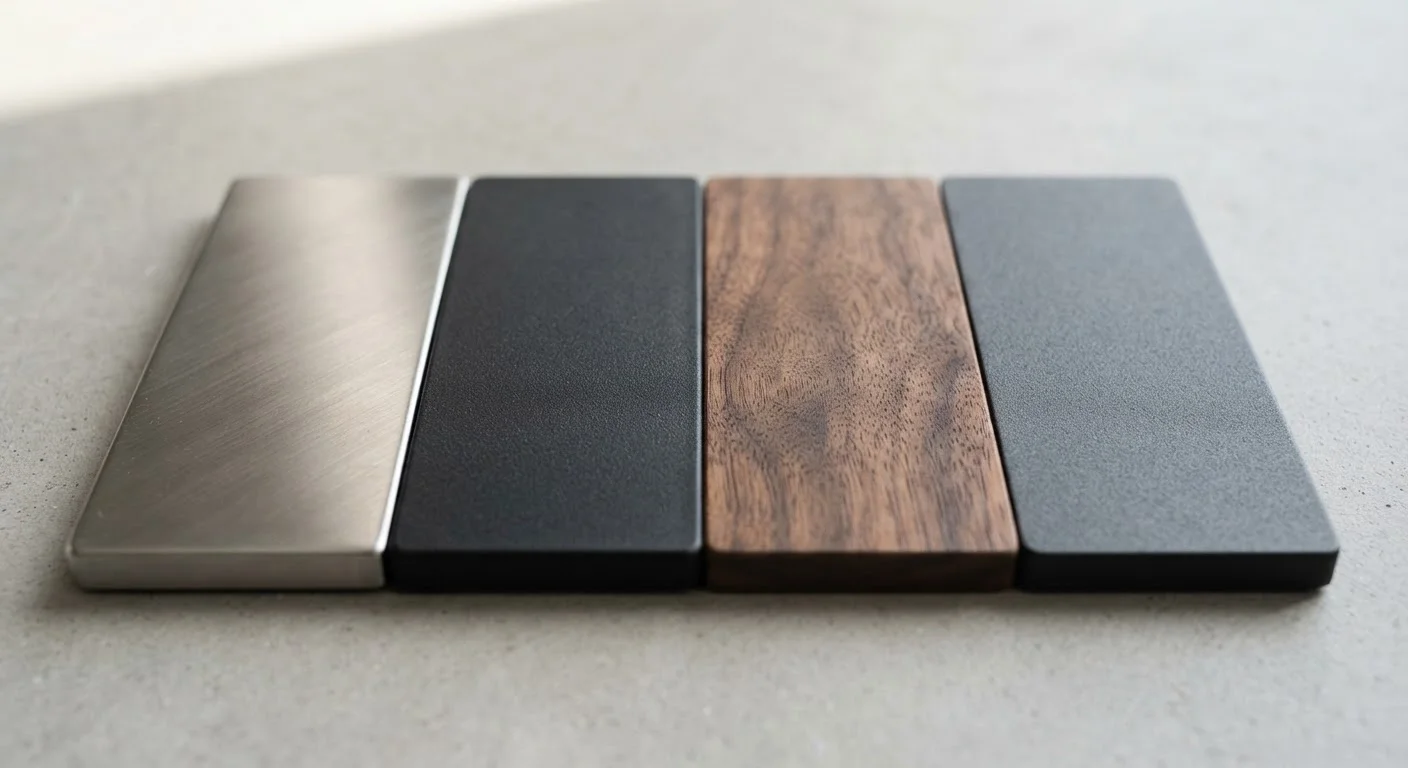
Why Materials Are the Foundation of Durability
When assessing whether a product will last, the base material is the starting point. Material choice determines how well a product handles mechanical stress, temperature changes, moisture, and daily contact. Broadly, products are built from metals, polymers (plastics), wood, ceramics, or composites - and within each category, there is significant variation in quality.
Gauge matters for metal products. A thicker gauge means more raw material, greater resistance to denting or deformation, and a heavier feel that many consumers correctly associate with durability. Thin-gauge metals flex, crease, and fail faster under repeated stress. Similarly, solid hardwoods resist warping and denting far better than engineered wood products like medium-density fiberboard (MDF), which are more vulnerable to moisture and surface damage over time.
For polymers, density and formulation are key. High-density polyethylene (HDPE) or glass-filled nylon are engineered for strength and wear resistance, while lower-grade injection-molded plastics tend to become brittle with UV exposure and temperature cycling. When a product listing specifies the polymer type, that specificity itself is a positive signal - manufacturers with confidence in their materials name them.
3-5×
Lifespan advantage of powder coat over spray paint
Industrial coating studies have found that properly applied powder coatings can outlast conventional liquid paint by three to five times under equivalent outdoor exposure conditions.
60%+
Of product returns cite quality below expectations
Consumer research consistently finds that unmet durability expectations - often related to material or finish performance - are among the leading drivers of product returns across categories.
2-10×
Cost variance between similar products in same category
Material and finish quality are primary drivers of price spread within any product category, though price alone is not a reliable proxy for durability without knowing what accounts for the difference.
How Finishes Protect - or Fail - the Material Beneath
A finish is not cosmetic decoration. It is the primary barrier between a product's structural material and the environment it operates in. Finishes slow or prevent oxidation, reduce friction wear, resist staining, and in many cases determine whether moisture ever reaches the substrate. When a finish fails, the clock starts on the material beneath it.
The durability of a finish depends on how it bonds to the surface and how thick that bond is. Powder coating, common on metal outdoor furniture and appliances, involves fusing a dry polymer powder electrostatically to the surface and curing it under heat. The result is a finish significantly more resistant to chipping and UV fading than liquid paint. Anodizing, used primarily on aluminum, integrates the finish into the metal itself - it cannot peel or delaminate, only scratch through. PVD (Physical Vapor Deposition) plating, often used on hardware and watch cases, deposits a thin, extremely hard metallic film that resists scratching and tarnishing far better than standard electroplating.
By contrast, thin electroplating - common on budget-tier metal goods - provides minimal thickness and often develops pitting or flaking within a few years of regular use. Similarly, laminate surfaces on furniture can peel at edges and corners as the adhesive bond weakens with humidity cycling. These are not inherent flaws in the technique, but predictable outcomes when the finish is applied at minimum cost.
“The finish is the first thing consumers notice and the first thing to fail. Understanding what's underneath it - and what the finish is actually protecting against - is the real durability question.”
— Materials Science Educator, Professor of Materials Engineering, published author on consumer product design
Reading Material and Finish Claims Critically
Product marketing regularly uses terms like "premium," "military-grade," and "durable finish" without defining what those terms mean in practice. As our guide on decoding product marketing language explains, these phrases carry no standardized definition and should prompt follow-up questions, not confidence.
When evaluating a product, look for specificity. A listing that says "brushed 304 stainless steel with a matte electropolished finish" gives you something to assess. One that says "premium metal construction" tells you very little. The same principle applies to polymers and composites - named materials are more trustworthy than category descriptors.
It's also worth considering how material and finish quality connect to genuine build quality versus brand perception. A well-known brand does not guarantee sound material choices, and a lesser-known manufacturer may use superior substrates and finishes. Evaluating what a product is made of - separately from whose logo it carries - is a more reliable signal of long-term value.
The Long-Term Cost of Material and Finish Choices
Material and finish quality have a direct relationship to total ownership cost. A product that requires refinishing, resealing, or early replacement compounds the original purchase price in ways that are easy to underestimate at point of sale. This is part of what our overview of hidden costs built into product ownership addresses in broader terms.
For example, outdoor furniture with a low-grade painted finish may need repainting within two to three seasons in harsh climates. Cast iron cookware with a quality enamel coating requires no re-seasoning; carbon steel requires periodic maintenance. Neither is superior in absolute terms - the calculus depends on your use patterns and tolerance for upkeep. But understanding the maintenance demands of a material and finish before purchase allows for an honest cost comparison.
It's also worth considering whether a higher upfront price for better materials is justified by reduced lifecycle costs - a calculation our article on when spending more upfront costs less over time walks through in detail. A product with a superior finish that lasts a decade is often more economical than a cheaper equivalent replaced twice in the same period.
Frequently Asked Questions
Look for even coverage with no visible brush marks, bubbles, drips, or thin patches. High-quality finishes also tend to feel consistent in texture across the entire surface. Where possible, check product documentation for finish type - powder coating, anodizing, and PVD plating generally outlast standard spray paint or electroplating.
Not always. Durability depends heavily on context - the right material for the right application matters more than raw cost. Aluminum is lightweight and corrosion-resistant, making it ideal for some uses; carbon steel is stronger but may rust without proper coating. Matching the material to the use case is key.
Anodizing is an electrochemical process that thickens the natural oxide layer on aluminum, making the surface harder and more resistant to corrosion and scratching. Unlike applied coatings, an anodized layer is integrated into the metal itself, which is why it cannot peel or flake off under normal use.
Look for product specifications that name the material and finish type explicitly - vague terms like 'high-quality' carry no standard meaning. Check for independent user reviews that mention how the product held up over months or years. Our <a href="/shopping/understanding-products/before-you-buy-a-product-evaluation-checklist">product evaluation checklist</a> provides a structured approach for assessing purchases sight-unseen.
Yes, significantly. In many categories - cookware, tools, hardware - the surface finish directly affects function. A worn non-stick coating changes how food behaves in a pan. A degraded sealant on a power tool exposes internal components to moisture. Finish integrity is often inseparable from product performance.
Common indicators include lightweight feel relative to size, visible seams or mold lines on plastics, inconsistent surface texture, and finishes that scratch with minimal pressure. Hollow-sounding metal components or panels that flex easily under light hand pressure can also signal thin gauge construction.
The content on this site is for informational purposes only and is not a substitute for professional advice. Always consult a qualified professional for guidance specific to your situation.