

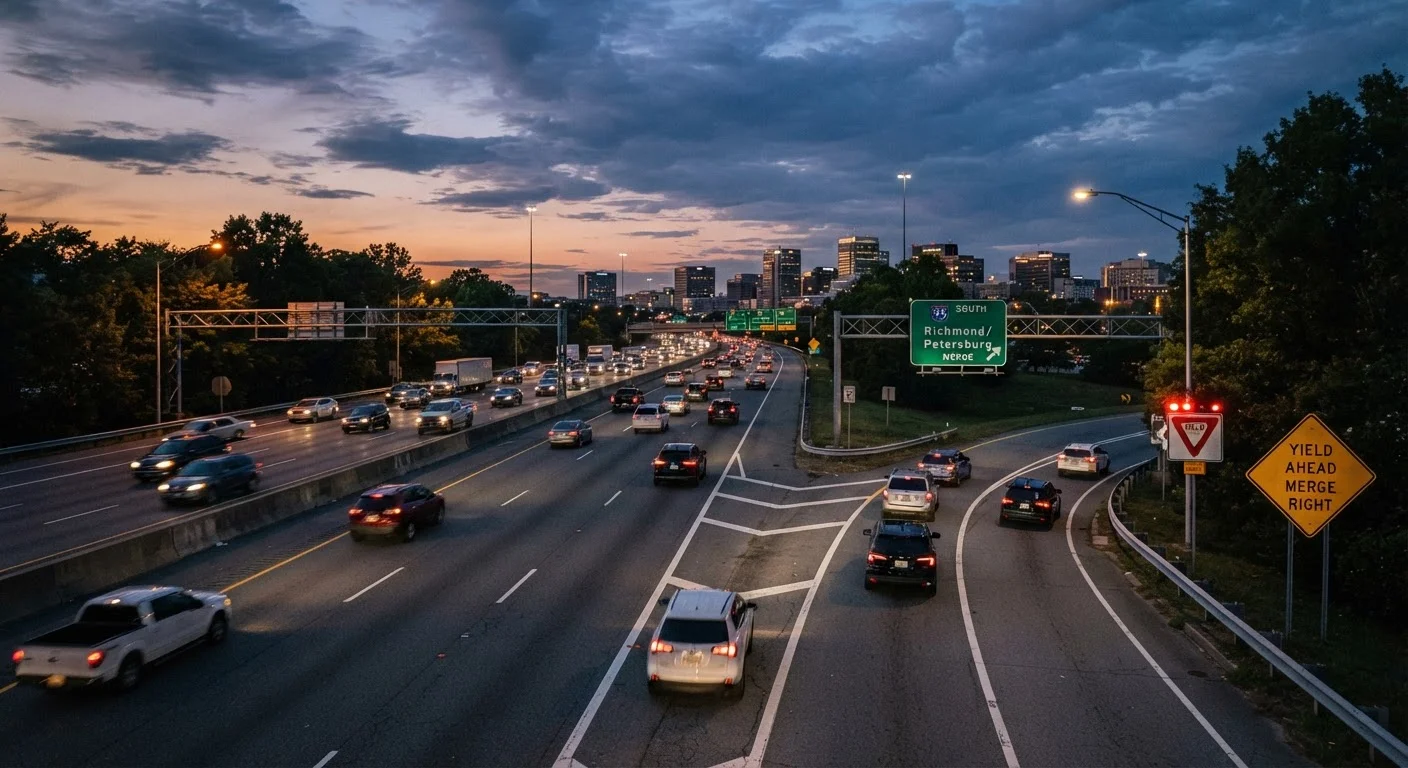
Why Right-of-Way Rules Are Widely Misunderstood
Right-of-way rules don't give any driver an absolute legal right to proceed - they assign who must yield. That distinction matters enormously. Data from the National Highway Traffic Safety Administration (NHTSA) consistently shows that failure to yield is among the most common contributing factors in intersection and merge crashes. Yet many drivers operate on assumptions rather than rules, particularly at four-way stops, highway on-ramps, and roundabouts.
Part of the confusion stems from inconsistent driver education across states and the tendency to conflate courtesy with law. Understanding the actual rules - not just informal habits - is the foundation of safer driving. See also our guide on driving habits that quietly raise your risk.
Merging: Who Actually Has to Move?
Highway merging is one of the most misread scenarios on the road. The widespread belief that "the merge lane has right of way" is incorrect in most states. Generally, a driver entering a highway from an on-ramp must yield to traffic already traveling in the through lane. The on-ramp is an acceleration lane designed to help drivers match highway speed before merging - not an automatic ticket to enter.
That said, drivers already on the highway are legally permitted (and often expected by safe driving practice) to move over when space allows, to facilitate a smooth merge. This is not required by law in most states, but it reduces the risk of collision. Zipper merging - where two lanes alternate one vehicle at a time at the merge point - is actively encouraged by many state DOTs as the most efficient and safe approach in heavy traffic. Problems arise when drivers treat a zipper merge as cutting in line, or when through-lane drivers block merging vehicles out of frustration.
For drivers navigating high-speed scenarios, understanding how highway risk differs from city driving can sharpen your overall lane discipline.
Four-Way Stops and Yield Signs: The Rules, Plainly Stated
Four-way stops follow a consistent priority sequence that many drivers approximate rather than apply precisely:
- First to stop, first to go. The vehicle that comes to a complete stop first has priority to proceed first.
- Simultaneous arrival: yield to the right. When two vehicles stop at the same time, the driver on the left yields to the driver on the right.
- Opposite directions, no turns involved: both may proceed simultaneously if going straight.
- Turning vs. straight: a driver going straight generally has priority over one turning left across their path.
Yield signs are legally distinct from stop signs. A yield sign requires you to slow and give way to crossing or merging traffic - but you do not need to stop unless traffic makes it necessary. Rolling through a yield sign without checking for crossing vehicles is a common and dangerous error.
Right-of-way
The legal priority to proceed through a given roadway situation. Right-of-way rules identify who must yield, not who is guaranteed safe passage.
Yield
To slow or stop as needed to allow another vehicle or pedestrian with priority to pass safely. A yield sign does not always require a full stop.
Zipper merge
A lane-merge technique where vehicles in two lanes alternate one by one at the merge point, maximizing throughput and reducing the length of traffic backups.
Acceleration lane
A highway on-ramp lane designed to allow entering vehicles to reach highway speeds before merging into the through lanes.
Through lane
A continuous travel lane on a roadway, as opposed to a turn lane, merge lane, or acceleration lane. Vehicles in through lanes generally have priority over merging traffic.
Roundabouts, Pedestrians, and Edge Cases
Roundabouts require vehicles entering the circle to yield to traffic already circulating inside it. This rule trips up drivers accustomed to traffic signals, who may treat the entry like a green light. The correct approach: slow at entry, check for circulating vehicles to your left, and enter only when a safe gap exists.
Pedestrian right-of-way rules are also frequently misread. At marked crosswalks, pedestrians generally have the right of way when they have entered the crosswalk. Drivers making turns - whether at a signal or a stop sign - must yield to pedestrians crossing the street they are turning into. This applies even when the driver has a green light.
Blind spots compound many of these scenarios. A driver checking for cross traffic at a stop sign may still miss a cyclist or motorcyclist due to viewing angle. Our coverage of how blind spots form and how mirrors can help addresses this directly.
State Laws Vary - Always Check Locally
While most US states follow the Uniform Vehicle Code as a baseline, specific right-of-way statutes differ by state. For example, pedestrian crossing rules, roundabout signage requirements, and zipper merge guidance are not uniform nationwide. When driving in an unfamiliar state, it's worth reviewing that state's driver handbook - most are available free from the state DMV website.
The content on this site is for informational purposes only and is not a substitute for professional advice. Always consult a qualified professional for guidance specific to your situation.