

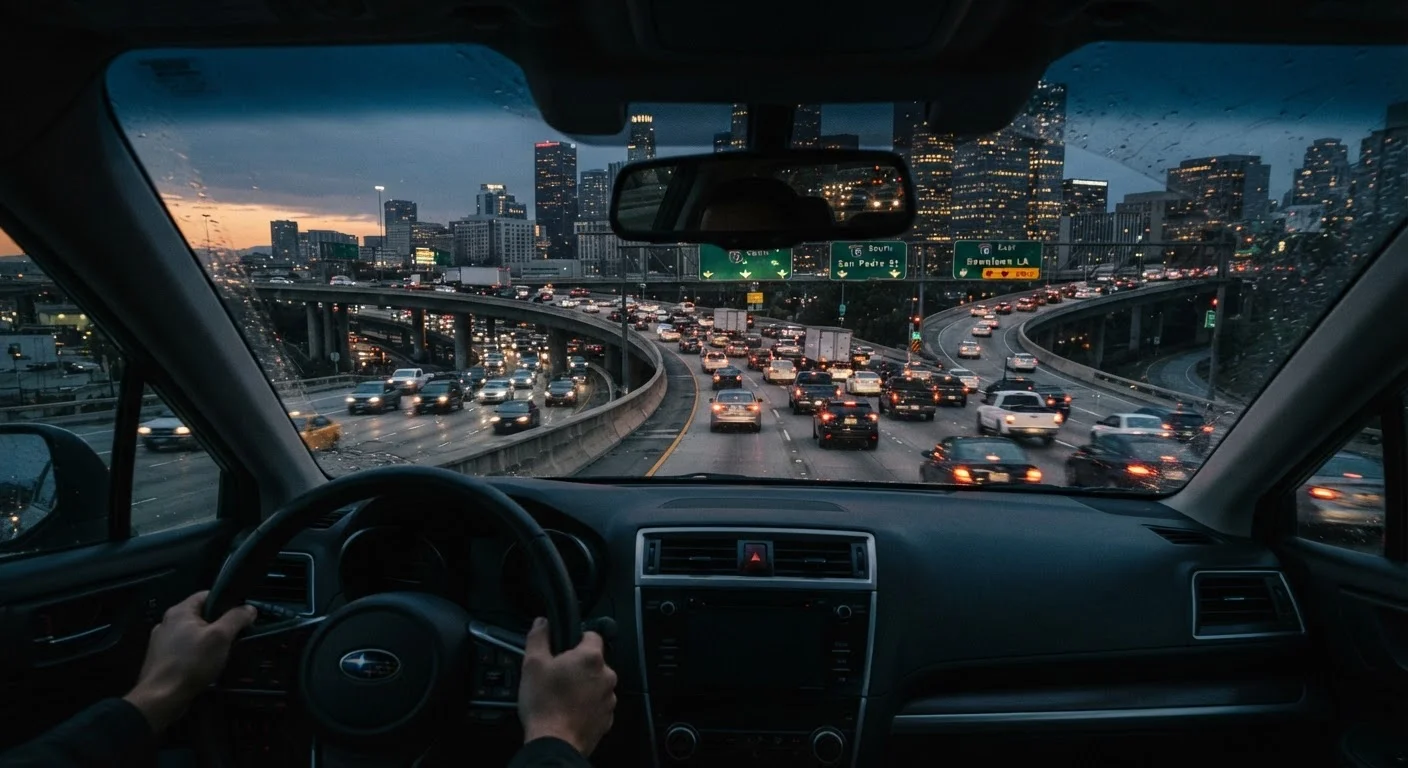
Why 'Safe-Feeling' Habits Are Worth Scrutinizing
Most drivers consider themselves above average behind the wheel - a statistical impossibility that researchers call the illusory superiority effect. This overconfidence doesn't usually lead to reckless behavior. Instead, it leads to uncritical repetition of habits that have never caused an obvious problem, which makes them feel validated.
The trouble is that many driving behaviors carry elevated risk only in specific combinations of conditions: a certain traffic density, a wet road, a driver who is slightly fatigued. Because those conditions don't always align, bad habits often go unpunished long enough to become entrenched. Understanding the actual mechanics of risk - not just crash history - is the foundation of true defensive driving.
Familiarity Is Not the Same as Safety
Drivers who have never been in a crash often attribute that record to skill rather than circumstance. Research consistently shows that habitual, low-attention driving - not active recklessness - accounts for a large share of everyday collisions. A habit that has never caused a crash is not necessarily a safe habit; it may simply be an untested one.
The Habits Most Drivers Don't Realize Are Risky
The mistakes below are common, normalized, and often legal. That combination makes them especially persistent. For each one, understanding why the risk exists - not just that it does - makes correction more durable.
Accelerating through a yellow light instead of preparing to stop.
Why it happens: Drivers interpret yellow as a warning to hurry rather than a signal that the light is about to turn red. The reflex to avoid stopping becomes automatic over time.
Following too closely on highways because traffic is moving steadily.
Why it happens: When roads are clear and speeds feel stable, a short gap seems adequate. Drivers underestimate how much stopping distance increases at highway speeds.
Camping in the left lane on multi-lane highways.
Why it happens: Some drivers perceive the left lane as faster or safer. Others drift there and simply don't adjust. Over time, it becomes an unconsidered default.
Relying solely on mirrors before changing lanes, skipping the shoulder check.
Why it happens: Mirrors feel sufficient, and checking over the shoulder takes more effort. Drivers assume their mirrors provide complete coverage.
Treating hands-free calling as equivalent to undistracted driving.
Why it happens: Removing a phone from the hand feels like the entire fix. The legal framing around hands-free laws reinforces this assumption.
Driving at the speed limit regardless of conditions.
Why it happens: Posted limits feel like permission to drive at that speed in all circumstances. Drivers conflate the legal maximum with the situationally appropriate speed.
Left-Lane Camping Creates Real Hazards
In most U.S. states, the left lane of a multi-lane highway is designated for passing, not cruising. Occupying it continuously forces other drivers to pass on the right - a maneuver with a higher crash rate. Some states actively enforce left-lane laws with fines. Check your state's traffic statutes if you're unsure of the rule where you drive.
Lane discipline and following distance are two areas where small adjustments pay outsized dividends. The same applies to misunderstood right-of-way rules, which produce thousands of preventable collisions each year around merges and four-way stops.
Building Better Habits Without Overcomplicating It
Correcting ingrained driving habits doesn't require a formal course, though defensive driving programs can accelerate the process. The more practical starting point is deliberate attention during routine drives - treating familiar roads as worthy of the same awareness you'd apply somewhere unfamiliar.
A few specific practices compound well together: maintain a genuine three-second gap and extend it in poor weather; check mirrors and turn your head before lane changes; keep calls brief or pause them in complex traffic; and evaluate each yellow light individually rather than responding on reflex.
Conditions matter, too. Nighttime driving changes the risk profile of nearly every habit listed above - reduced visibility makes tailgating, late braking, and lane uncertainty measurably more dangerous. Treating the environment as a variable rather than a constant is one of the clearest markers of a low-risk driver.
This article is for general informational purposes. Always follow your state's traffic laws and consult official driving resources for jurisdiction-specific guidance.
The content on this site is for informational purposes only and is not a substitute for professional advice. Always consult a qualified professional for guidance specific to your situation.