

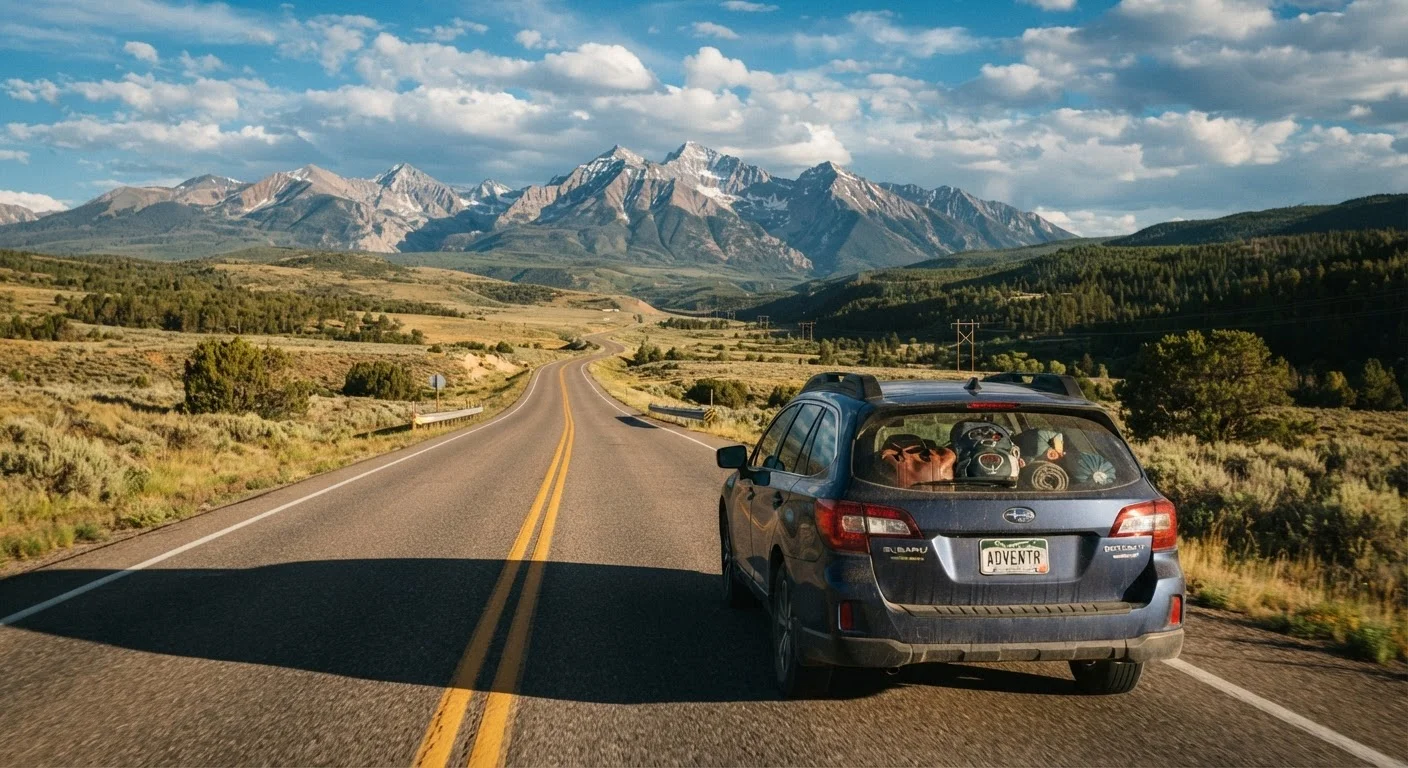
The Illusion of the Easy Road Trip
There's something irresistible about a road trip map. You draw a line from Point A to Point B, add a few stops, and the whole adventure looks elegant on paper. Then reality arrives: a four-hour drive turns into seven, the campsite you assumed was available is booked solid, and by day two, everyone in the car is exhausted before the best part of the trip has even begun.
American road trips are genuinely one of the great travel experiences - vast landscapes, quirky small towns, genuine freedom. But that same vastness is what catches so many travelers off guard. The mistakes that unravel these trips aren't dramatic; they're quiet planning oversights that compound. Here's where things most often go wrong, and how to get ahead of them.
Treating map distances as drive times.
Why it happens: Online maps show mileage clearly, but travelers routinely underestimate how mountain passes, construction zones, speed limit changes, and rest stops inflate real travel time - sometimes by 50% or more.
Assuming national parks and popular sites are first-come, first-served.
Why it happens: Many travelers learned to road trip before timed-entry permits, reservation systems, and capacity limits became standard. They assume the experience still works the same way.
Over-scheduling every hour of every day.
Why it happens: Travelers who have saved up limited vacation time feel pressure to maximize every moment, leading to itineraries that treat each stop like a checkbox rather than an experience.
Skipping vehicle prep before departure.
Why it happens: When trip excitement takes over, mechanical basics feel like a distraction. Many travelers assume their car is fine because it seemed fine last week.
Not researching fuel and service availability along the route.
Why it happens: Travelers accustomed to dense urban infrastructure assume gas stations are everywhere. In rural stretches of the West, Southwest, or Great Plains, that assumption is dangerous.
Ignoring local traffic laws and road rules that differ by state.
Why it happens: Drivers assume traffic laws are uniform nationwide and don't think to check variations in speed limits, right-of-way rules, or hands-free phone requirements before crossing state lines.
Building a Road Trip That Actually Works
Most road trip disasters are avoidable with a few hours of research before you leave the driveway. Start by mapping your intended route using a navigation tool that reflects real drive times - not straight-line distances. Then subtract at least 20% of your daily driving target to account for fuel stops, meals, photo pulls, and the general unpredictability of travel.
For any trip touching national parks or federal recreation areas, permit and reservation research is non-negotiable. The national park planning checklist covers timed-entry systems, campsite reservation windows, and fuel considerations that catch first-timers off guard every season. Don't assume showing up is an option during peak periods.
Once your route is mapped and reservations are locked, build intentional breathing room into each day. Our guide to itinerary pacing breaks down how to structure days so you see what matters without turning a vacation into a logistics sprint. Flexibility isn't laziness - it's what lets you say yes to the unexpected roadside attraction or the perfect sunset that wasn't on the schedule.
Finally, don't overlook the vehicle itself. A pre-trip vehicle safety check - tires, fluids, lights, brakes - is one of the highest-value hours you can spend before departure. And if your route takes you through the desert Southwest, the Southwest road trip orientation guide is worth reading for its frank take on distances, heat, and remote fuel gaps that surprise even experienced drivers.
660 miles
Average daily distance many travelers overestimate
AAA research consistently shows travelers significantly overestimate how far they can comfortably drive per day while still enjoying their stops.
3-4 months
Lead time needed for peak-season park permits
Recreation.gov data shows that campsites and timed-entry permits at the most visited US national parks routinely sell out within hours of opening, often months before peak season.
The content on this site is for informational purposes only and is not a substitute for professional advice. Always consult a qualified professional for guidance specific to your situation.