

Summary
22 items · 20-45 minutes
Why This Check Matters More Than Most Drivers Realize
Most drivers think of a road trip safety check as something mechanics do - not something you do in your own driveway the morning of departure. That assumption is precisely why breakdowns happen. A long highway drive amplifies every small mechanical shortcoming: slightly low tire pressure becomes a blowout risk at 75 mph; a marginal battery that starts fine around town may not recover after sitting in midday heat at a rest stop.
This checklist is designed to take 20 to 45 minutes and requires no special mechanical knowledge. It will not replace routine service - see your car's maintenance schedule, demystified for mileage-based service intervals - but it will catch the acute problems most likely to strand you between service visits.
If you're planning a drive to a remote destination, the stakes are higher. Our guide on driving to a US national park covers additional planning factors specific to areas with long fuel gaps and limited cell coverage.
Tire Condition Is the Most Skipped - and Most Critical - Check
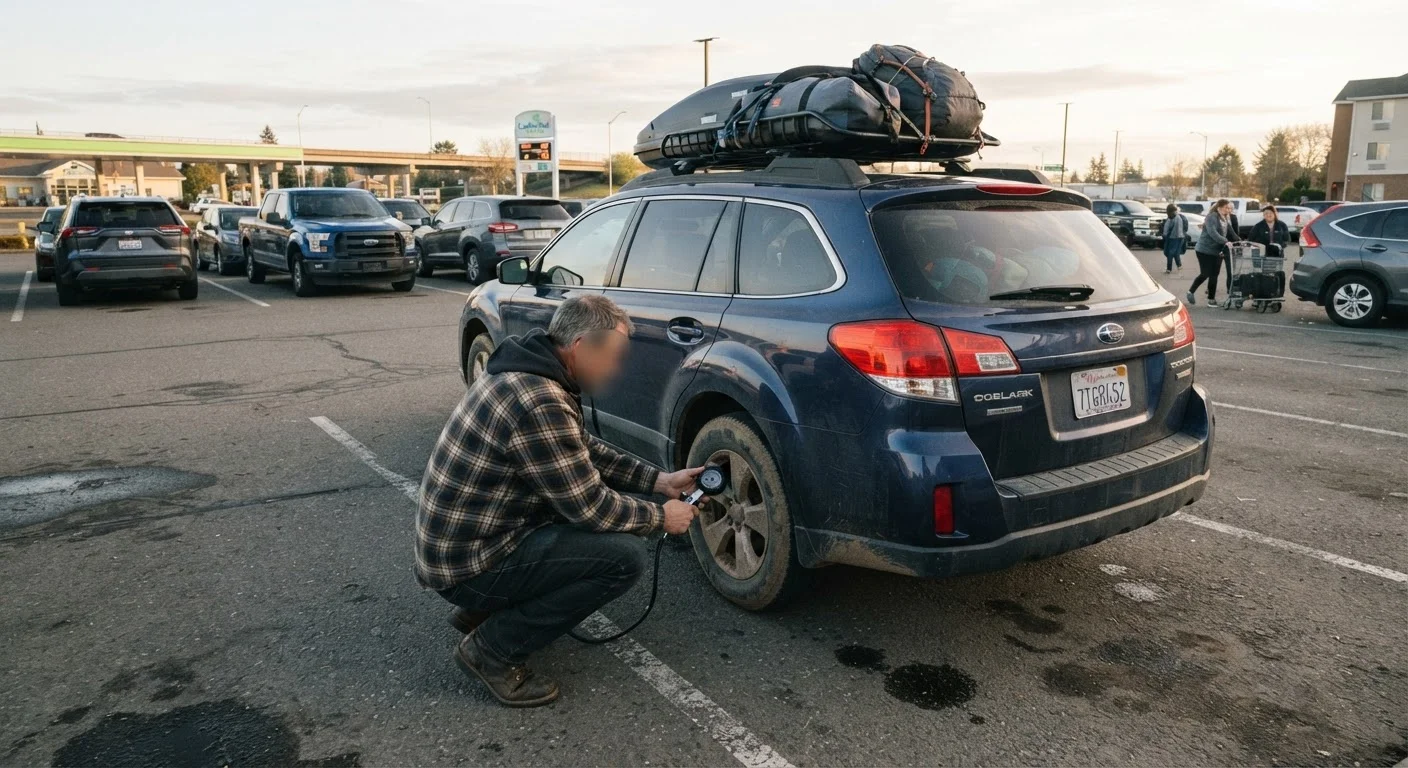
Research from the National Highway Traffic Safety Administration (NHTSA) consistently links tire-related failures to a significant share of highway crashes and breakdowns. Under-inflation accelerates wear, reduces handling, and dramatically increases blowout risk at highway speeds. Checking pressure takes under five minutes and costs nothing beyond a gauge. If you do only one thing on this list, make it tires.
What to Check and Why
Work through the checklist systematically. Starting with tires makes sense because they're the only contact point between your vehicle and the road - every other system depends on them performing correctly. Fluid checks come next because levels drift between service appointments, especially in warm weather or older vehicles. Lighting is often the most neglected category: you can't see a burned-out brake light from the driver's seat, and a taillight failure creates danger for every driver behind you.
Tire pressure gauge
Accurately measures PSI in each tire so you can inflate to the manufacturer's specification.
Penny (for tread depth test)
A simple, no-cost way to gauge whether tire tread has worn below the safe threshold.
Flashlight or work light
Illuminates hard-to-see areas under the hood and around the vehicle, especially in low-light conditions.
Microfiber cloths
Used to clean exterior light lenses, mirrors, and windshield for maximum visibility.
Jump starter pack or jumper cables
Restores a dead battery roadside without needing another vehicle.
Portable phone charger / power bank
Keeps navigation and communication available even during extended driving or a breakdown.
For the brakes and steering section, a simple parking-lot test - a firm stop from 20 mph, a slow figure-eight - can surface symptoms that warrant a mechanic's attention before you commit to highway miles. If your vehicle has accumulated high mileage, our guide on keeping a used car running well past 150,000 miles outlines the additional service items that deserve attention on older vehicles.
Tires
Fluids
Lights and Visibility
Brakes and Steering
Emergency Kit and Documentation
Don't Ignore Active Dashboard Warning Lights
A check engine light, brake warning, or TPMS alert illuminated at startup is not something to 'keep an eye on' for 500 miles. These signals indicate conditions that can worsen rapidly under highway load. Have a qualified mechanic diagnose any unresolved warning light before you leave. See our guide to what your car's warning lights are actually telling you for a breakdown of urgency levels.
Brake Concerns Require Professional Diagnosis
If you hear grinding or feel pedal pulsation during your parking-lot brake test, do not assume the issue will hold for the trip. Brake system failures at highway speeds can have serious consequences. Schedule an inspection with a licensed mechanic before departure - this is not a DIY judgment call on the day of travel.
Once you're confident in your vehicle's mechanical condition, a blowout or brake event is far less likely - but knowing how to respond if one does occur is still worthwhile. Our article on responding to a sudden loss of control explains what to do in those critical first seconds.
This article provides general vehicle safety information for educational purposes. It is not a substitute for professional mechanical inspection. When in doubt about any vehicle condition, consult a qualified, licensed mechanic before driving.
The content on this site is for informational purposes only and is not a substitute for professional advice. Always consult a qualified professional for guidance specific to your situation.