

Start here
What Makes the Southwest Different From Other Road Trip Regions
Explore destinations
The Core Destinations: Where First-Timers Usually Start
Build your timeline
Understanding Distances and Drive Times
Plan the details
Permits, Crowds, and Seasonal Timing
Before you leave
Practical Planning Basics Before You Go
What Makes the Southwest Different From Other Road Trip Regions
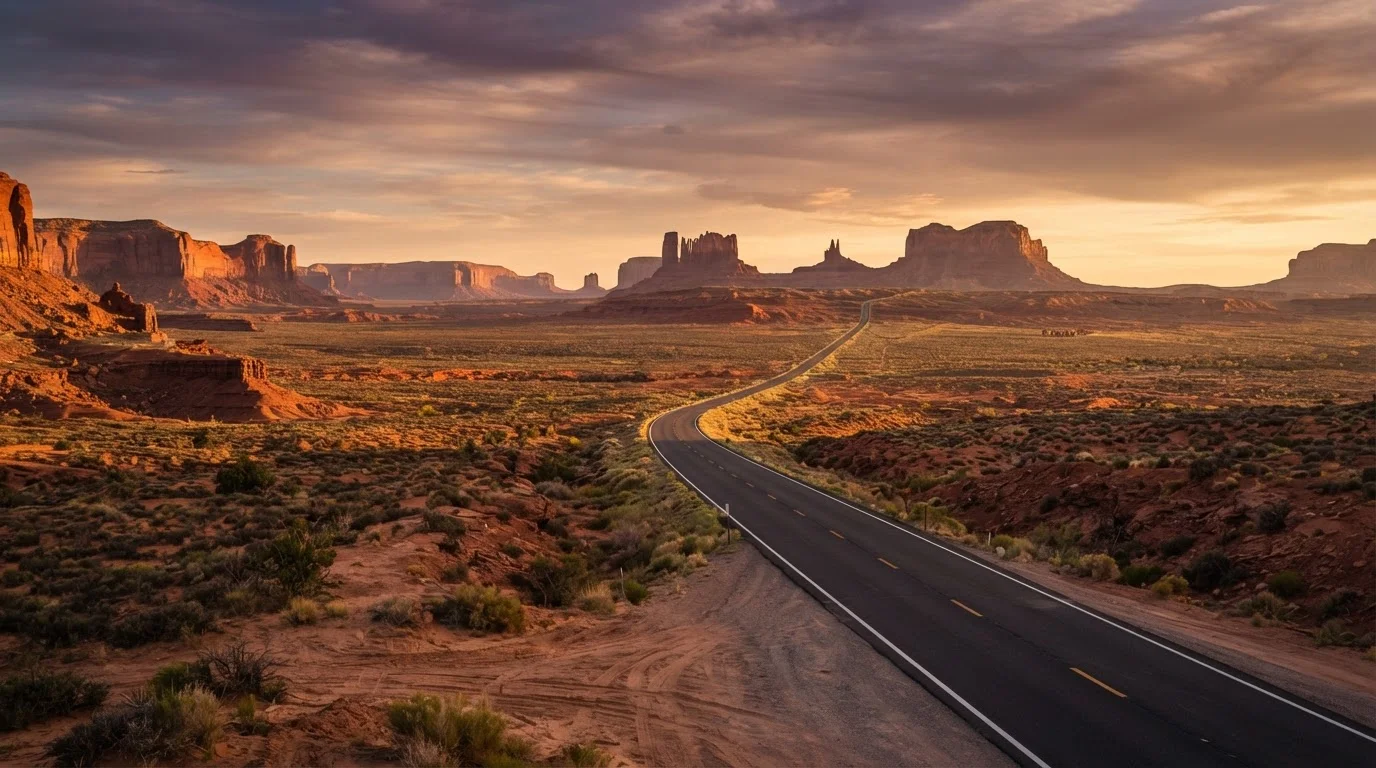
The American Southwest operates on a scale that surprises most first-time visitors. This is not New England, where historic towns appear every 20 miles. Between landmarks, you may drive through 100 miles of open desert, red rock canyon country, or high plateau - and that vastness is a feature, not a bug. It's part of what makes the region so arresting.
Geographically, a classic Southwest road trip touches parts of Arizona, Utah, Nevada, and sometimes New Mexico. Elevation shifts dramatically: the Grand Canyon's South Rim sits above 7,000 feet, while Las Vegas is a desert basin at roughly 2,000 feet. Those swings affect temperature, weather, and even how your body feels. If you're comparing regions, our comparison of the Mountain West and Pacific Northwest can help you understand how the Southwest fits into the broader American outdoor landscape.
Timed-entry permit
A reservation system some national parks use to limit how many visitors enter during a specific time window, helping manage crowds and protect natural resources.
Hoodoo
A tall, thin spire of rock formed by erosion, most famously seen at Bryce Canyon. The term describes the distinctive pillar shapes that dot the plateau.
Tribal park
A protected natural area managed by a Native American nation rather than the federal government. Monument Valley is a tribal park managed by the Navajo Nation, with its own entry rules and fees.
Gateway town
A small town located near the entrance to a national park that offers lodging, dining, and services for visitors. Examples include Springdale (near Zion) and Williams (near the Grand Canyon).
America the Beautiful Pass
An annual federal lands pass that covers entry fees at national parks and other federal recreation sites across the United States. It can offer significant savings for visitors planning to visit multiple parks.
The Core Destinations: Where First-Timers Usually Start
Most first-time Southwest road trips anchor around a handful of marquee destinations, and for good reason - each one delivers a genuinely different visual experience.
- Grand Canyon National Park (Arizona): The South Rim is the most accessible entry point, with paved roads, visitor services, and iconic rim-edge viewpoints. The canyon's sheer scale takes a moment to fully register.
- Sedona (Arizona): Known for its striking red sandstone formations and a lively arts scene, Sedona makes a great overnight stop and offers trails across a wide range of difficulty levels.
- Monument Valley Navajo Tribal Park (Arizona/Utah border): The cinematic mittens and buttes here are managed by the Navajo Nation, not the National Park Service - entry fees and visitor rules are different, so check the tribal park's official site before visiting.
- Zion National Park (Utah): Slot canyons, towering sandstone cliffs, and the famous Angels Landing hike. Zion draws enormous crowds; a shuttle system operates within the main canyon during peak season.
- Bryce Canyon National Park (Utah): Defined by its hoodoos - narrow spires of eroded rock - Bryce sits at higher elevation and can feel noticeably cooler than sites further south.
These five destinations form a natural loop that most road-trippers adapt to their own starting point, whether that's Las Vegas, Phoenix, or Salt Lake City.
Understanding Distances and Drive Times
One of the most common planning mistakes in the Southwest is treating the map like a city grid. A glance at a national map might suggest the Grand Canyon and Zion are "close" - but the drive between them, including the road around the canyon, is typically around four hours. Monument Valley to Zion can run three to four hours under good conditions.
A realistic daily driving target for a road trip that also includes hiking, photography stops, and sightseeing is 150 to 250 miles. Pushing beyond that consistently turns a road trip into a driving marathon. Overestimating how much ground you can cover is one of the most reliable ways to derail a domestic road trip before it really begins.
Build Buffer Days Into Your Route
The best Southwest road trip moments often happen unexpectedly - a pullout with a perfect sunset view, a spontaneous trail, an unhurried lunch in a small-town diner. Scheduling every hour of every day leaves no room for those discoveries. Plan to drive less than you think you should, and you'll almost always feel like you had more time.
Permits, Crowds, and Seasonal Timing
The Southwest's popularity means several key sites now use timed-entry or permit systems during busy periods. Zion's Angels Landing requires a permit obtained through a lottery run by the National Park Service. Some trailheads in the Grand Canyon's backcountry require separate overnight permits booked months in advance. The Wave, a sandstone formation in the Vermilion Cliffs, is accessed by competitive lottery only.
Always verify current entry requirements directly through the National Park Service website or the relevant tribal authority before you finalize your itinerary. Requirements change seasonally and can shift year to year. See what first-time national park visitors commonly overlook for a fuller checklist.
As for timing: spring and fall are broadly the most comfortable windows. Summer temperatures in the lower desert zones regularly exceed 105°F, making strenuous hiking genuinely dangerous for unprepared visitors. Winter brings cold nights and occasional road closures at elevation but also thin crowds and unique lighting conditions for photography.
Practical Planning Basics Before You Go
A few logistical realities will shape your trip more than any single destination choice:
- Fuel: Gas stations in rural Utah and on the Navajo Nation can be far apart. Top off whenever you dip below half a tank, and carry extra water in case of an unplanned stop in the heat.
- Connectivity: Cell coverage drops significantly outside towns and park visitor centers. Download offline maps and save key addresses and permit information before you leave populated areas.
- Accommodations: Gateway towns near popular parks - Springdale near Zion, Kanab for Bryce and the Paria area, Williams or Tusayan near the Grand Canyon - fill up fast in peak season. Book well ahead or be prepared to camp.
- Physical preparation: High elevation and dry air affect hydration differently than most visitors expect. Even easy-seeming trails demand more water than you'd typically carry on a sea-level hike.
If you're planning your first road trip from scratch, this complete trip planning starting point walks through every stage of the process. The Southwest rewards preparation - and pays it back with landscapes that genuinely stop you in your tracks.
Verify Conditions Before Departure
Road conditions, trail closures, permit availability, and entry fees across Southwest parks and tribal lands can change with little advance notice. Always check official National Park Service pages and tribal authority sites immediately before your trip - not just when you book. This is especially important after winter weather or during periods of high fire activity.
Frequently Asked Questions
A meaningful first trip covering the Grand Canyon, Zion, Bryce Canyon, and Sedona typically takes 7 to 10 days. Rushing to hit every iconic site in under a week usually leads to exhaustion and missed experiences. Build in at least one or two slower days.
Spring (March-May) and fall (September-October) offer the most comfortable driving and hiking temperatures across most of the region. Summer brings intense desert heat, especially at Grand Canyon and Sedona. Winter can be surprisingly cold at elevation and may close some park roads.
Entry to most national parks requires a fee or an America the Beautiful pass, but some specific areas within parks - like The Narrows at Zion or the Wave in Arizona - require separate, competitive permit lotteries. Check the official National Park Service website well in advance of your trip.
Most of the major Southwest destinations are accessible on paved roads with a standard vehicle. A few scenic byways, like parts of the road to Monument Valley's backcountry, are unpaved. Research your specific route before assuming you need a special vehicle.
Yes - especially in rural Utah, the Navajo Nation, and stretches of northern Arizona. It's common to encounter 50 or more miles between fuel stops. Always top off your tank when you have the opportunity, and carry water in case of a breakdown.
Both are viable. National park campgrounds are popular and book up months in advance, particularly at Zion and Bryce Canyon. Gateway towns near major parks (Springdale, Kanab, Williams) have a range of lodging options. Reserve accommodations well ahead of your trip.
The content on this site is for informational purposes only and is not a substitute for professional advice. Always consult a qualified professional for guidance specific to your situation.