

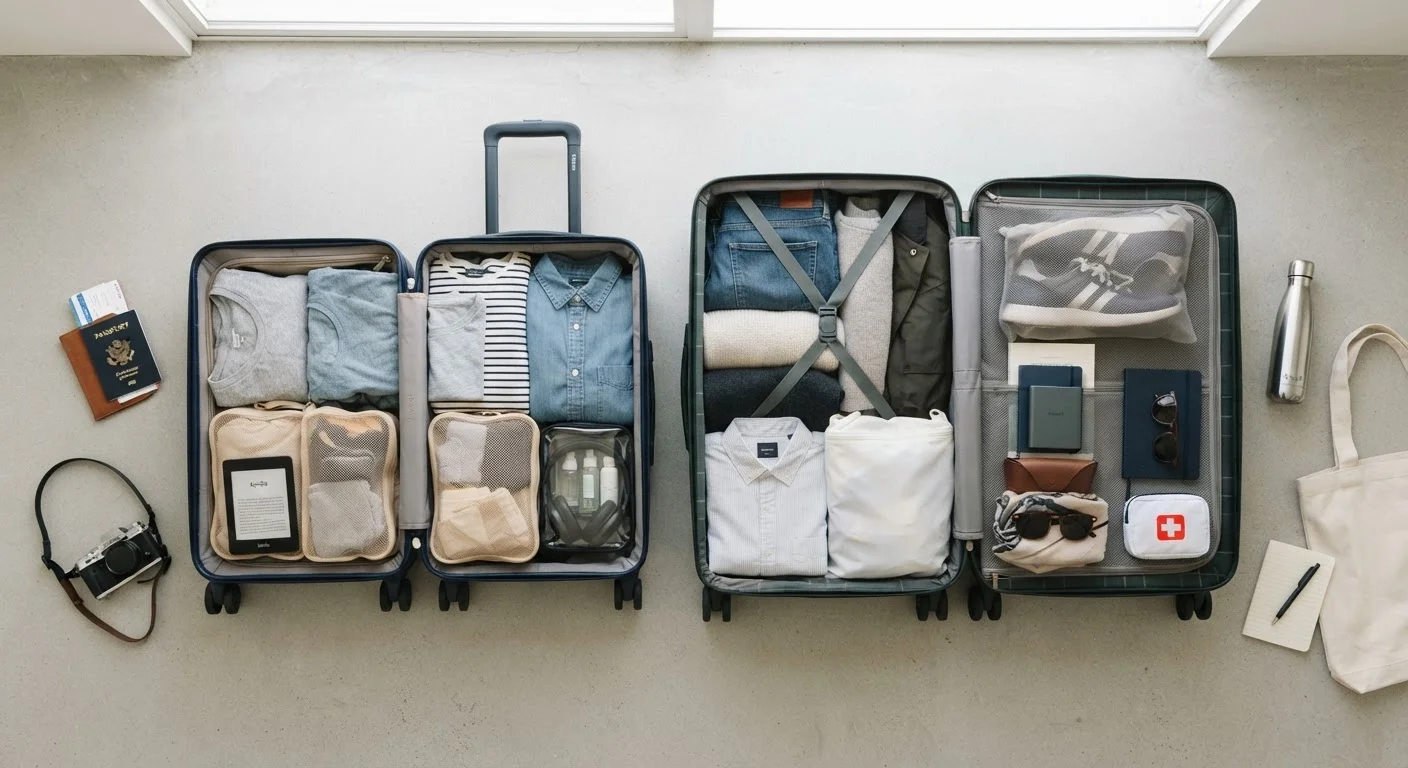
Option A
Carry-On Bag
The swift, self-sufficient traveler's best ally.
Best for: Short trips, frequent flyers, and anyone who wants to move fast without waiting at baggage claim.
Option B
Checked Bag
The flexible hauler for longer journeys and bigger needs.
Best for: Extended trips, families with gear, and destinations requiring specialty clothing or equipment.
What's Really at Stake When You Pick Your Bag
The choice between a carry-on and a checked bag isn't just logistical - it shapes how your trip feels. Breeze off a plane and straight to your destination, or wait at the carousel and start the vacation clock ticking? Both approaches are valid, but each comes with genuine trade-offs that go beyond the price tag.
The smartest travelers don't default to one method out of habit. They think about trip length, destination, airline, and what they're actually planning to do - then decide. The same trade-off thinking that applies to everyday spending decisions applies here too: what are you giving up, and is it worth it?
Before you zip anything up, it's worth understanding what each option genuinely delivers - and where it falls short.
Carry-On Bags: Speed, Savings, and Discipline
A carry-on bag's greatest superpower is time. No checked bag fee (on most full-service carriers), no waiting at baggage claim, and no risk of your luggage arriving on a different continent than you. For weekend trips, quick domestic hops, or business travel, a well-organized carry-on is hard to beat.
The catch? You are working within strict constraints. The TSA's 3-1-1 rule limits liquids to 3.4-ounce containers in a single quart-sized bag - full-size toiletries are out. Airlines publish their own size and weight limits for carry-on bags, and these vary more than most travelers expect. A bag that fits perfectly in one airline's overhead bin may need to be checked at the gate on another. Always verify dimensions and weight limits directly with your carrier before you fly.
The overhead bin squeeze is real, too. On smaller regional jets or very full flights, gate agents may check carry-ons at no charge - but it's still a disruption. And if you're connecting through a busy hub, lugging your bag through terminals adds friction that checked luggage would eliminate.
| Criterion | Carry-On Bag | Checked Bag |
|---|---|---|
| Typical added cost | Often free (full-service carriers) | $30-$40+ per bag each way |
| Baggage claim wait | None | 15-45 minutes average |
| Packing space | Limited; strict size rules | Generous; up to 50 lbs typically |
| Liquid restrictions | TSA 3-1-1 rule applies | Full-size toiletries allowed |
| Risk of loss or delay | Very low | Small but real risk |
| Ideal trip length | 1-5 nights | 6+ nights or gear-heavy |
| Gate-check risk | Possible on full flights | Not applicable |
If packing light is your goal, the principles behind traveling light can help you maximize what fits without sacrificing comfort.
Checked Bags: Freedom, Flexibility, and a Few Frustrations
Checking a bag is an act of liberation - within reason. You can pack your full-size shampoo, bring the nicer shoes, and not spend 45 minutes agonizing over whether your jacket counts as your personal item. For trips longer than a week, destinations with unpredictable weather, or itineraries involving hiking gear, beach equipment, or formal attire, the extra space can make a genuine difference in how comfortable and prepared you feel.
But checked bags aren't free of headaches. Most domestic carriers charge between $30-$40 for a first checked bag each way, and those fees compound quickly on round trips or multi-leg journeys. Internationally, policies vary widely - some carriers include a bag in the fare; budget operators often do not.
Then there's the delay factor. Baggage claim adds anywhere from 15 to 45 minutes to your arrival experience, and on tight connections, it can be genuinely stressful. Rare but real: bags do get delayed or misrouted. Filing a delayed baggage claim with your airline is straightforward, but starting a trip without your luggage is nobody's idea of a smooth landing. When traveling internationally, your entry requirements and travel documents should always be in your carry-on regardless of which strategy you choose.
~2.9 million
Bags mishandled by US carriers annually
According to the Bureau of Transportation Statistics, US airlines mishandled roughly 2.9 million bags in a recent reporting year - a rate of about 5-6 per 1,000 passengers.
$30-$40
Typical first checked bag fee (domestic, one way)
Most major US carriers charge in this range for a first checked bag on domestic routes, meaning a round trip can add $60-$80 or more to your ticket cost.
45 min
Average time saved skipping baggage claim
Travel industry estimates suggest carry-on travelers typically save 20-45 minutes per trip by bypassing the baggage carousel entirely.
How to Decide: The Questions That Actually Matter
Rather than picking a side, ask yourself a few practical questions before every trip:
- How long am I going? Anything under five days is typically carry-on territory with smart packing. Longer trips usually benefit from checked luggage.
- What's my airline's policy? Budget carriers often charge for carry-ons too - check before assuming you're saving money.
- What am I doing at the destination? Beach trips, ski trips, and adventure travel almost always tip the scales toward checking a bag.
- How many connections do I have? Multiple legs increase the risk of a checked bag being delayed and the inconvenience of hauling a carry-on through crowded terminals.
- Is there laundry access? Access to a washer at your destination can cut your clothing needs nearly in half, making a carry-on viable for much longer trips.
A flexible itinerary can also influence your bag choice - if you're moving cities frequently, lighter is almost always better.
There's no universally correct answer here, only the right answer for your trip. Think it through before you pack, and you'll arrive more relaxed no matter what size bag you're rolling behind you.
The content on this site is for informational purposes only and is not a substitute for professional advice. Always consult a qualified professional for guidance specific to your situation.