

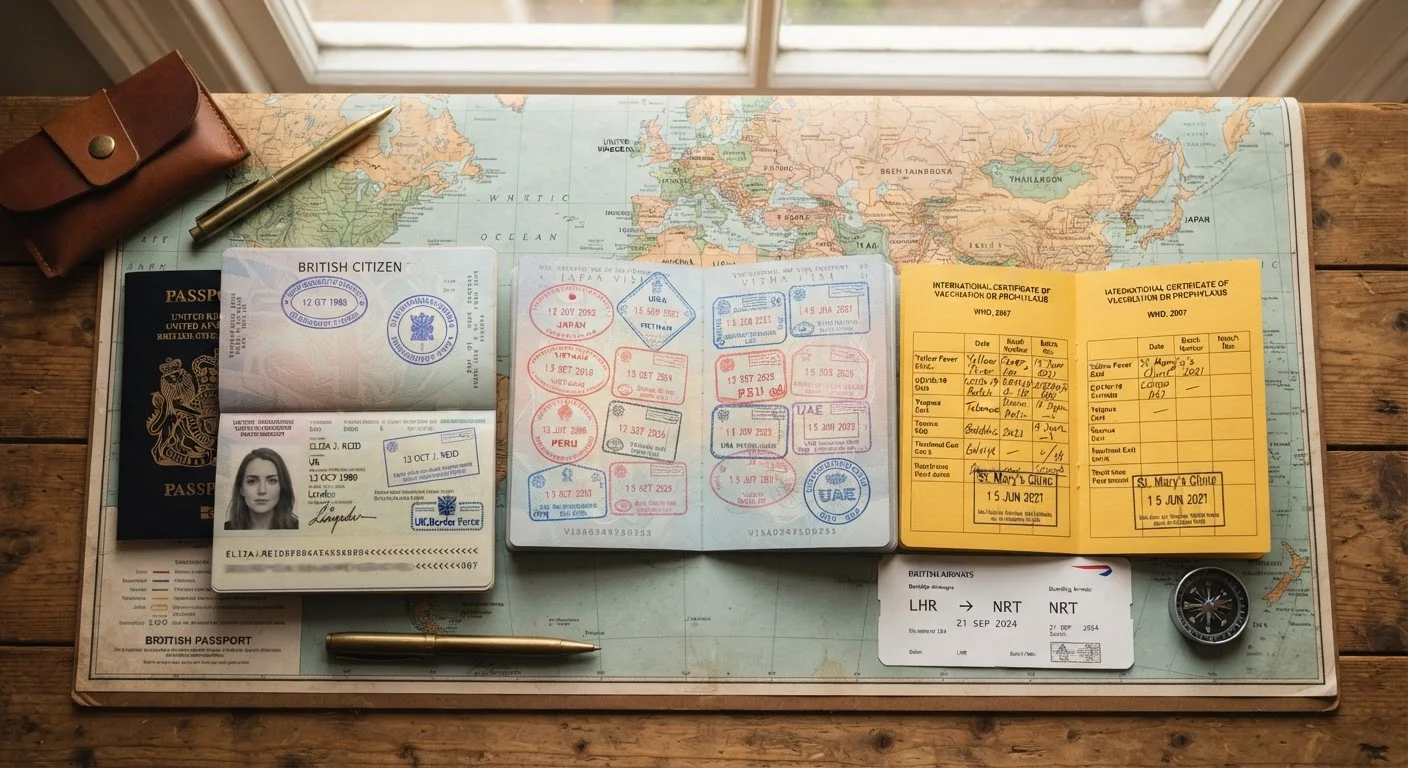
Summary
22 items · 30-60 minutes
Why Entry Requirements Deserve Their Own Planning Session
Every international trip starts with a deceptively simple question: will they actually let you in? The answer depends on a tangle of variables - your passport's expiration date, your nationality, the specific country you're visiting, how long you plan to stay, and what vaccinations you've had. Get any piece of that wrong and you may be turned away at the airport before you even board.
Entry requirements are also a moving target. Governments update visa policies, vaccination mandates, and bilateral agreements on their own timelines - often without fanfare. That's why this checklist focuses on building a verification habit rather than memorizing rules that may no longer apply by the time you travel.
If you're heading abroad for the first time, our guide for first-time international travelers walks through the full picture of what Americans should expect. For the documentation side, keep reading - here's how to work through it systematically.
U.S. Department of State - Country Information Pages
The authoritative source for U.S. citizens on visa requirements, travel advisories, and entry rules for every destination.
CDC Travelers' Health
Provides destination-specific vaccination recommendations and required health documentation for international travel.
Smart Traveler Enrollment Program (STEP)
Free U.S. government service that alerts enrolled travelers to safety conditions and helps embassies locate Americans in emergencies.
Destination Country's Official Embassy or Consulate Website
The definitive source for visa application procedures, fees, and document requirements as set by the destination government.
Travel Medicine Clinic or Healthcare Provider
Provides personalized vaccination advice, prescriptions for travel-related medications, and official vaccination documentation.
International Certificate of Vaccination or Prophylaxis (Yellow Card)
Official WHO document that serves as proof of required vaccinations such as yellow fever at border checkpoints.
The Entry Requirements Checklist
Work through these groups in order - passport first, then visas, then health documentation. Each group builds on the last, and skipping ahead can mean missing a dependency (like realizing your passport needs renewal before you can even apply for a visa).
Passport Check
Visa Research
Vaccination and Health Documentation
Final Pre-Booking Verification
Official Sources Only - Not Travel Blogs
Entry requirements must be verified through official government sources - the U.S. Department of State, the destination country's embassy or consulate, and the CDC. Travel blogs, booking platforms, and forums may publish outdated or incomplete information. Rules can change between when an article is written and when you travel, sometimes with very short notice. Always go to the primary source before making any non-refundable commitments.
If you're traveling with prescription medications, requirements at border crossings add another layer of complexity. See our article on carrying medications across borders for documentation guidance specific to that situation.
Once you've sorted your entry requirements, your next planning step is evaluating where you'll stay. Our questions to ask before booking any accommodation can help you avoid surprises there too.
This article provides general travel information for educational purposes only. Entry requirements, visa rules, vaccination mandates, and travel advisories change frequently. Always verify current requirements directly with the destination country's official embassy or consulate, the U.S. Department of State, and the CDC before making any travel decisions. Nothing in this article constitutes legal or medical advice.
The content on this site is for informational purposes only and is not a substitute for professional advice. Always consult a qualified professional for guidance specific to your situation.