

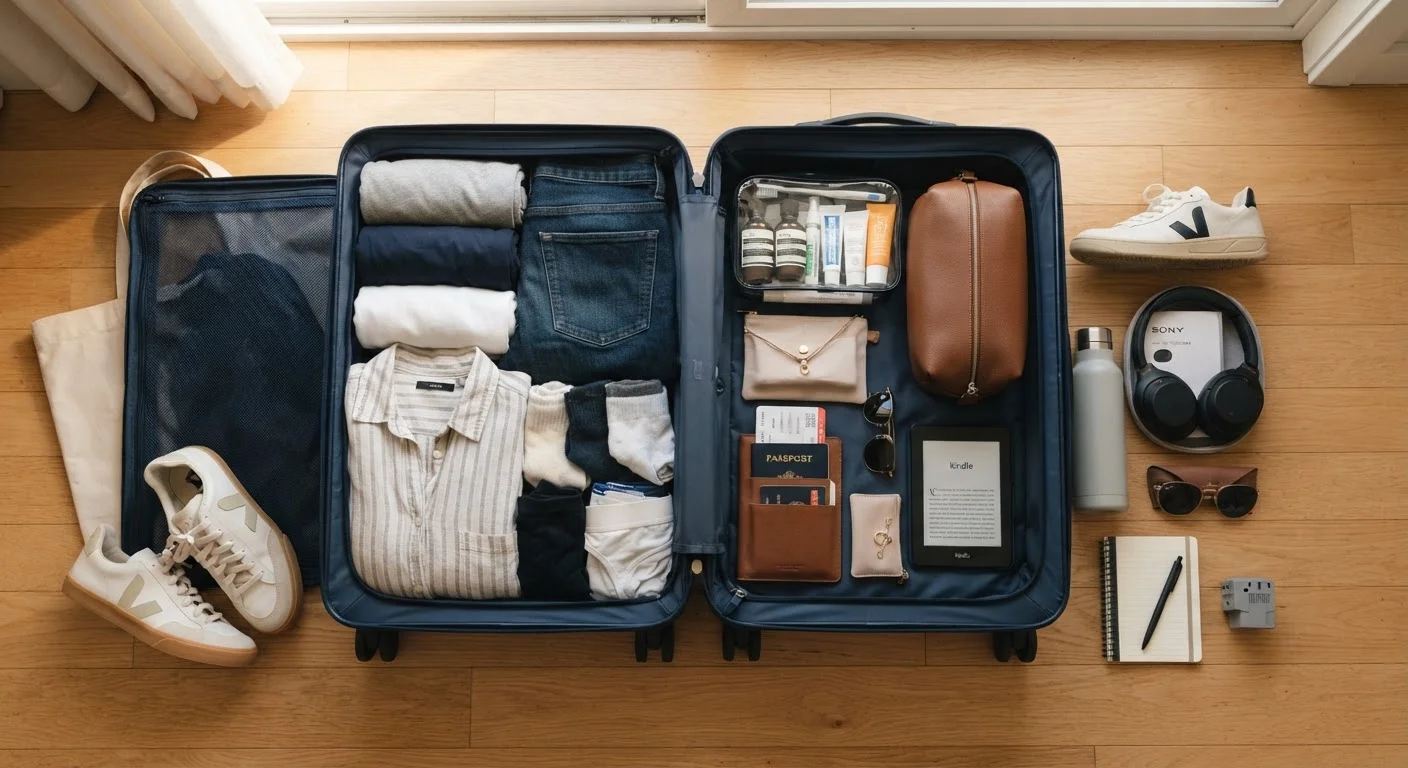
Why Packing Light Changes the Entire Trip
Ask any seasoned traveler what they wish they'd known earlier, and a surprising number will say: pack less. Overpacking is one of the most common - and most fixable - sources of travel stress. A heavy bag slows you down through airports, limits your flexibility on transit, and eats into your budget when airline fees apply.
But packing light doesn't mean roughing it. It means making deliberate choices before you leave so that everything you carry earns its place. Whether you're heading abroad for two weeks or driving to a mountain cabin for a long weekend, the principles behind efficient packing stay consistent. This article walks through those core ideas so you can apply them to any trip. For a broader look at trip preparation, see our end-to-end trip planning guide.
Core Practices for Packing Smarter
The following principles work together - adopt even a few and you'll notice a meaningful difference in how easily you move through a trip.
Build a packing list around your actual planned activities, not hypothetical ones.
Most overpacking happens when people pack for scenarios that never materialize - a formal dinner that doesn't happen, gym sessions that get skipped, weather that never arrives. Anchoring your list to confirmed activities keeps it honest and lean.
Choose a color palette that lets every clothing item mix and match.
When every piece coordinates with the others, you multiply your outfit options without multiplying the items in your bag. This single shift can cut clothing volume by 30-40% without any visible sacrifice in versatility.
Apply a one-in, one-out rule during the packing process.
For every item you add to the bag, consciously ask whether something else can be removed. This check-and-balance prevents the pile from growing unchecked and forces real prioritization.
Limit toiletries to solid or travel-size formats, and plan to buy basics at your destination.
Liquids are heavy, take up space, and create airport security complications. Switching to solid shampoo bars, concentrated products, or decanted amounts reduces bulk significantly - and most destinations have pharmacies or grocery stores for anything you need.
Wear your bulkiest items during travel, not in your bag.
Jackets, boots, and heavier layers take up disproportionate space in luggage but weigh and bulk nothing when worn on your body during transit. This is especially useful on flights where weight limits matter.
Quick Actions You Can Take Before Your Next Trip
You don't have to overhaul your entire approach at once. These targeted actions can immediately reduce what ends up in your bag:
If you're still weighing whether to check a bag at all, our guide on carry-on vs. checked bag strategy breaks down how to think through that trade-off by trip type and airline rules.
The Mindset Shift That Makes It All Work
Efficient packing is ultimately about trusting yourself - trusting that you can handle a minor inconvenience if you forget something, that stores exist at your destination, and that traveling lighter actually expands your experience rather than limiting it.
“The secret of travel is not seeing as much as possible, but being as free as possible - and that freedom begins with what you choose not to bring.”
— Rolf Potts, Travel author and advocate for minimalist long-term travel
The same mindset that helps you streamline a bag works well in trip planning more broadly. An overstuffed itinerary creates the same friction as an overstuffed suitcase. Our guide on building an itinerary that leaves room to breathe explores how to structure your days with the same intentionality. And if you're traveling with family, packing with kids in the mix adds its own layer of planning - but the core principle of bringing only what you'll use still applies.
The content on this site is for informational purposes only and is not a substitute for professional advice. Always consult a qualified professional for guidance specific to your situation.