

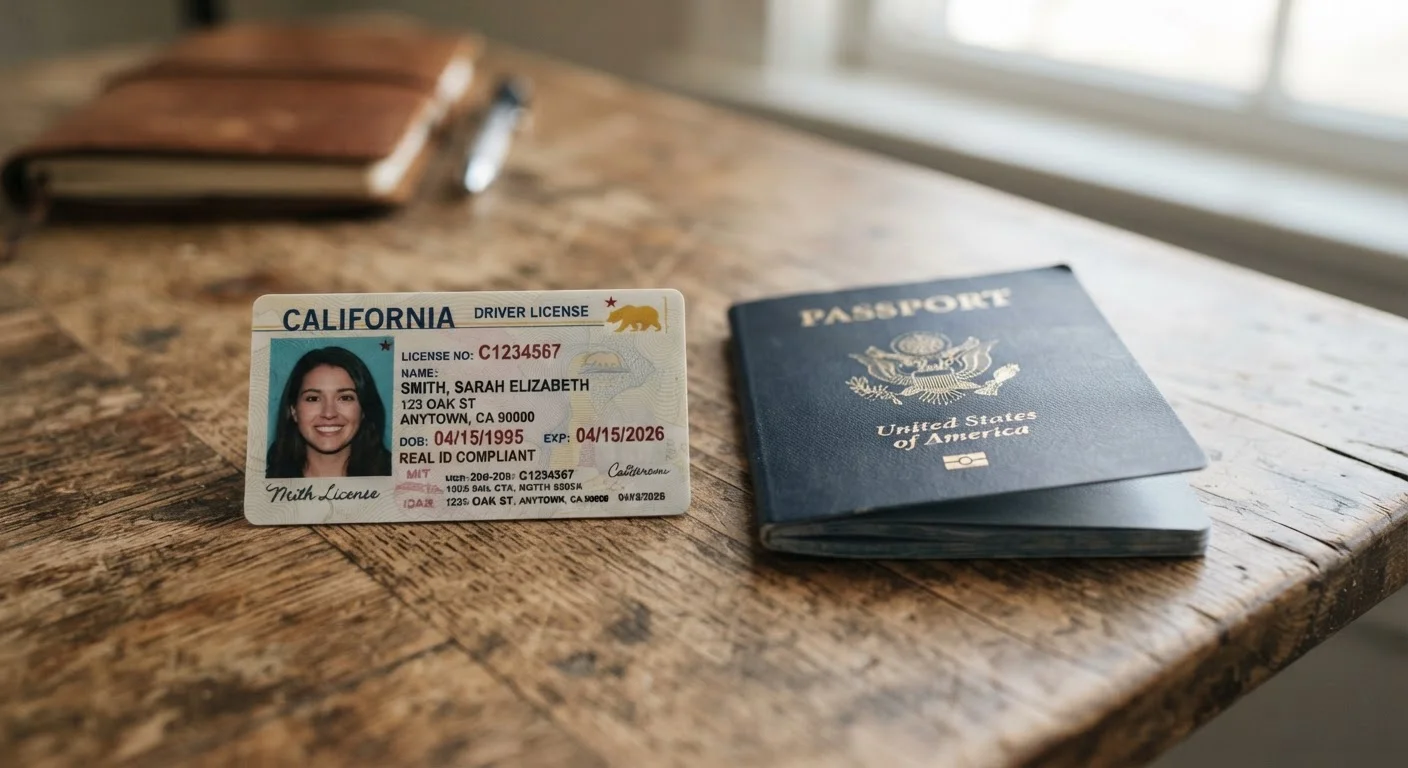
What REAL ID Actually Is - and Why It Exists
REAL ID is a federal security standard for state-issued driver's licenses and ID cards, created by the REAL ID Act of 2005 in response to the 9/11 Commission's recommendations. When a state license or ID carries a star marking in the upper corner, it means that ID was issued under federal compliance standards - stricter identity verification, proof of legal residency, and more secure document production.
The practical upshot for most Americans: starting May 7, 2025, a REAL ID-compliant license or ID (or another acceptable federal document like a passport) will be required to board domestic U.S. commercial flights and access certain federal facilities. That's it. That is the scope of REAL ID - domestic access within U.S. borders.
It is a domestic security upgrade, not an international travel credential. Understanding this distinction before you book any trip abroad is critical.
Myth
My REAL ID is all I need to travel internationally - it's a federally compliant ID, so foreign countries should accept it.
Fact
REAL ID is a domestic standard only. No foreign country recognizes it as an entry document.
The REAL ID Act established uniform security standards for state-issued IDs used to access certain U.S. federal facilities and domestic commercial flights. The law and its compliance standards have no jurisdiction - and no recognition - outside U.S. borders. Foreign border authorities operate under their own national laws and international agreements, none of which include provisions for American state-issued driver's licenses, REAL ID star or not.
Myth
If I have a REAL ID, I don't need to renew my expired passport before traveling abroad.
Fact
An expired passport cannot get you across any international border. REAL ID does not substitute for it in any way.
This is one of the most costly misconceptions travelers encounter. A REAL ID has no relationship to passport status whatsoever. If your passport is expired or expiring soon, you need to renew it regardless of what your driver's license looks like. Passport renewal processing times can run several weeks under standard service, so planning ahead is essential - especially since many countries also require the passport to be valid for six months beyond your travel dates.
Myth
A passport card works the same as a passport book - I can fly internationally with just the card.
Fact
A passport card is only valid for land and sea border crossings into select neighboring countries, not international air travel.
The U.S. passport card is a limited-use travel document. It's accepted for entry at land border crossings and sea ports between the U.S., Canada, Mexico, Bermuda, and some Caribbean destinations. But if you're boarding an international flight anywhere in the world, you must carry a full U.S. passport book. Airlines will not accept a passport card for international air departure, and foreign immigration will not accept it upon arrival.
Myth
Once REAL ID is fully enforced, it will eventually replace the passport for travel to at least some countries.
Fact
There are no provisions - current or planned - for REAL ID to serve as an international travel document.
REAL ID enforcement relates exclusively to access to domestic U.S. flights and certain federal buildings. International travel is governed by treaties, bilateral agreements, and immigration laws between nations - a framework that is entirely separate from the REAL ID Act. No announcements, proposed legislation, or international agreements exist that would extend REAL ID recognition to any foreign country. This myth appears to stem from conflating "federally compliant" with "internationally accepted," which are completely different categories.
Where Your Passport Is Still - and Always - Required
Every single international trip from the United States requires a valid U.S. passport book for air travel. No foreign government border authority recognizes a REAL ID-compliant state license as proof of citizenship or as an entry document. When you land in another country, the border officer is checking whether your passport is valid, whether you need a visa, and whether your document satisfies that country's entry rules.
193
Countries requiring a valid passport for U.S. entry
All 193 UN member states require a valid national passport - not a state ID - as the foundational international travel document for foreign visitors.
~145M
Americans currently holding a valid passport
According to U.S. State Department data, roughly 145 million Americans hold a valid passport, meaning a significant share of the population is traveling without one.
For land and sea crossings into Canada, Mexico, Bermuda, and some Caribbean nations, a U.S. passport card is an accepted alternative to the full passport book - but even that is a federally issued travel document, not a state ID. The passport card cannot be used for international air travel.
If you're planning your first trip abroad, our guide for first-time American international travelers walks through exactly what documents to gather before you ever reach the airport. And because passport validity matters as much as having the document at all, it's worth reviewing why airlines and countries enforce the six-month passport validity rule well in advance of your departure date.
Don't Assume a Domestic ID Is Enough Abroad
Travelers who arrive at an international departure gate - or worse, a foreign border - relying on a REAL ID rather than a passport face being turned away with no recourse. Airlines check passport validity before boarding international flights, and foreign immigration officers do not have discretion to waive the passport requirement. Always verify your travel documents against official government sources, including the U.S. State Department (travel.state.gov) and the destination country's official entry requirements, before finalizing any international trip.
Getting Your Documents Right Before You Book
The safest approach is straightforward: carry a valid U.S. passport book for any international trip, and make sure your REAL ID-compliant license is ready for domestic flights. These are two separate documents serving two different purposes - and both matter depending on where you're going.
Entry requirements also extend beyond the passport itself. Visas, vaccinations, and destination-specific rules layer on top of your base travel documents. Sorting out entry requirements before you book can help you understand what each destination actually demands. Before any international departure, run through a pre-departure checklist to confirm every document is in order.
And if you're unsure which U.S. passport document applies to your travel plans, understanding U.S. passport types and validity rules can help you choose the right credential. The bottom line: get your passport sorted first, then worry about your REAL ID for the flight home.
The content on this site is for informational purposes only and is not a substitute for professional advice. Always consult a qualified professional for guidance specific to your situation.