

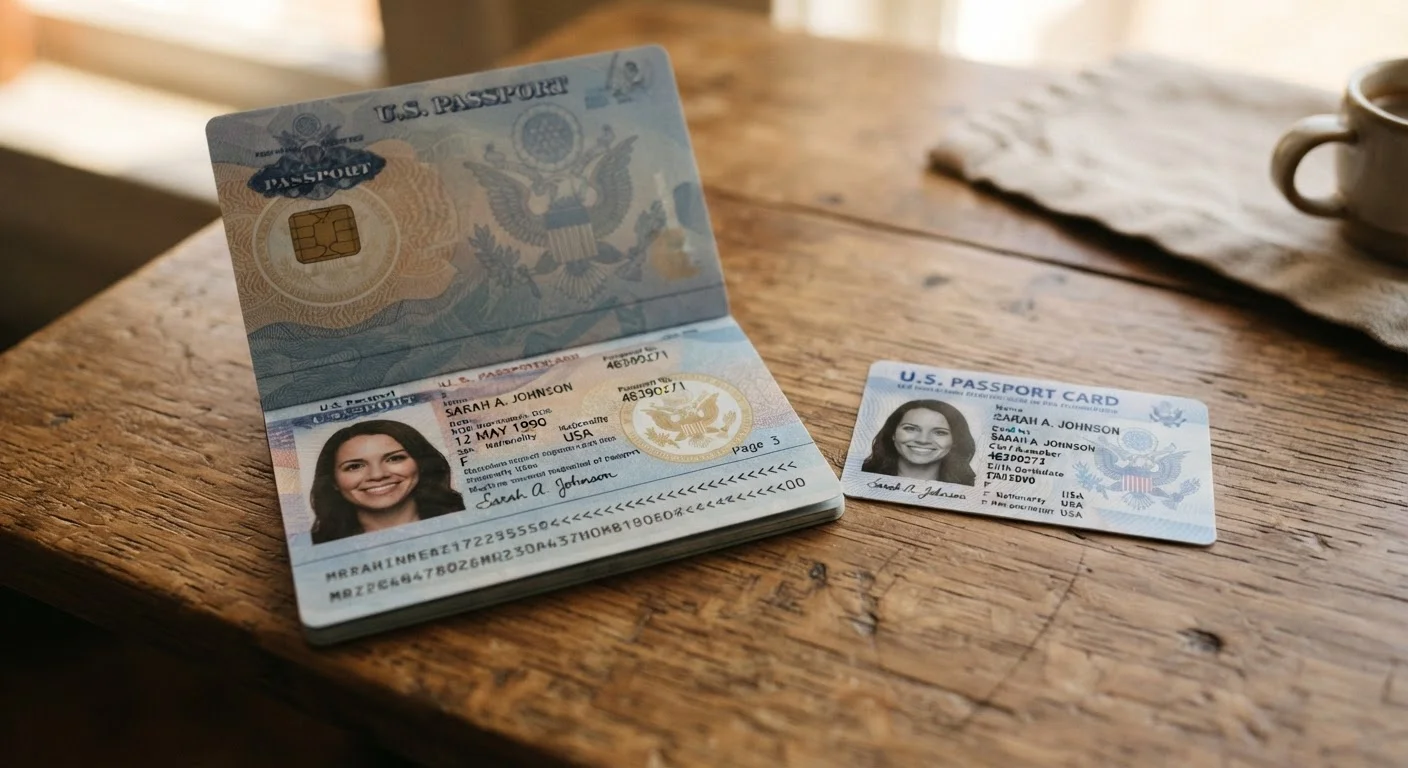
The Three Types of U.S. Passports - and What Each One Does
Most Americans know they need a passport to travel internationally, but fewer realize there are actually three distinct types issued by the U.S. Department of State. Knowing which one you hold - and where it works - is the first step in stress-free trip planning.
| Passport Book Validity (Adults) | 10 years from issue date (U.S. Department of State) |
| Passport Book Validity (Under 16) | 5 years from issue date (U.S. Department of State) |
| Passport Card Accepted For | Land and sea crossings only (Canada, Mexico, Caribbean, Bermuda) (U.S. Department of State) |
| Passport Card Valid for Air Travel? | No (U.S. Department of State) |
| Recommended Lead Time to Apply | At least 6 months before travel (U.S. Department of State (check current processing times)) |
| Passport Required for U.S. Territories? | No - standard photo ID is typically sufficient |
Passport Book (Tourist Booklet)
The standard blue booklet is the most versatile travel document a U.S. citizen can carry. It's accepted for air, sea, and land entry into virtually every country that allows American tourists. It comes in two sizes: a standard 28-page book and a larger 52-page book for frequent travelers who fill pages quickly with stamps and visas.
Passport Card
The wallet-sized passport card is a more limited - but handy - option. It's valid only for land and sea border crossings between the U.S. and Canada, Mexico, the Caribbean, and Bermuda. Critically, it is not accepted for international air travel. If your cruise departs from and returns to a U.S. port and visits only those destinations, the card may work - but always verify with your cruise line. See how REAL ID compares to the passport card when it comes to border crossings.
Official and Diplomatic Passports
Black (diplomatic) and maroon (official) passports are issued to U.S. government employees and their dependents traveling on government business. They are not available to the general public and are surrendered when the official assignment ends.
Validity Rules You Must Understand Before You Book
Passport validity isn't as simple as checking the expiration date on the back cover. Two rules catch American travelers off guard every year.
Passport Book
The standard U.S. travel document, accepted for air, land, and sea entry to international destinations worldwide. Issued in 28-page and 52-page versions.
Passport Card
A wallet-sized U.S. travel document valid only for land and sea border crossings to Canada, Mexico, the Caribbean, and Bermuda. Not valid for international air travel.
Six-Month Validity Rule
A policy enforced by many countries requiring a traveler's passport to remain valid for at least six months beyond the intended travel dates, not just the return date.
Blank Visa Pages
Unstamped pages in a passport booklet that some countries require travelers to have available at entry. Running out of blank pages can result in denied entry even on a valid passport.
REAL ID
A federally compliant U.S. state-issued driver's license or ID accepted for domestic TSA checkpoints. It does not serve as an international travel document.
The Six-Month Rule
Many countries require your passport to remain valid for at least six months beyond your planned departure date - not just your arrival date. If your passport expires in four months and you're planning a two-week trip, you could be denied boarding. This rule is enforced by airlines, not just immigration officers at the destination. For a deeper dive into why this matters, see the six-month passport validity rule explained.
Standard Validity Periods
Adult passports (age 16 and over) are valid for 10 years from the issue date. Passports issued to children under 16 are valid for only 5 years. Renewal timelines can stretch during peak seasons, so the U.S. State Department recommends applying at least six months before international travel whenever possible - always check current processing estimates at travel.state.gov before planning.
Blank Pages Matter Too
Some countries require a minimum number of blank visa pages - often one or two full, unstamped pages - at the point of entry. A technically valid but fully stamped passport can still get you turned away. If your booklet is running low, consider applying for a new one even if the expiration date is still years out.
When You Actually Need a Passport - and When You Might Not
Not every trip out of the United States automatically requires a passport book. But understanding the exceptions matters just as much as knowing the rule.
You Almost Always Need One For International Air Travel
Traveling by air to any international destination - including Canada and Mexico - requires a valid passport book. The passport card is not valid for air travel, even on short regional flights. If you're flying, the booklet is non-negotiable.
Domestic Travel Doesn't Require a Passport
Flying within the United States doesn't require a passport; a REAL ID-compliant driver's license or state ID is sufficient for TSA checkpoints at domestic airports. Understand what REAL ID covers and where it falls short before assuming it handles all your travel needs.
U.S. Territories: A Special Case
Travel to U.S. territories - including Puerto Rico, the U.S. Virgin Islands, Guam, and American Samoa - does not require a passport for U.S. citizens, since they are domestic destinations for legal purposes. A standard government-issued photo ID is typically sufficient.
Entry Requirements Vary Widely By Country
Beyond your passport, many destinations require visas, proof of onward travel, or specific health documentation. Learn how visa permissions work for U.S. citizens so you're never caught unprepared at the gate. For a full pre-trip checklist, sorting out entry requirements before you book walks through what to verify for every destination.
If this is your first time heading abroad, planning your first international trip as an American covers everything from customs expectations to staying safe overseas.
Entry requirements, processing times, and acceptance rules change periodically. Always verify current requirements directly with the U.S. Department of State (travel.state.gov) and the official embassy or consulate of your destination country before booking travel.
The content on this site is for informational purposes only and is not a substitute for professional advice. Always consult a qualified professional for guidance specific to your situation.