

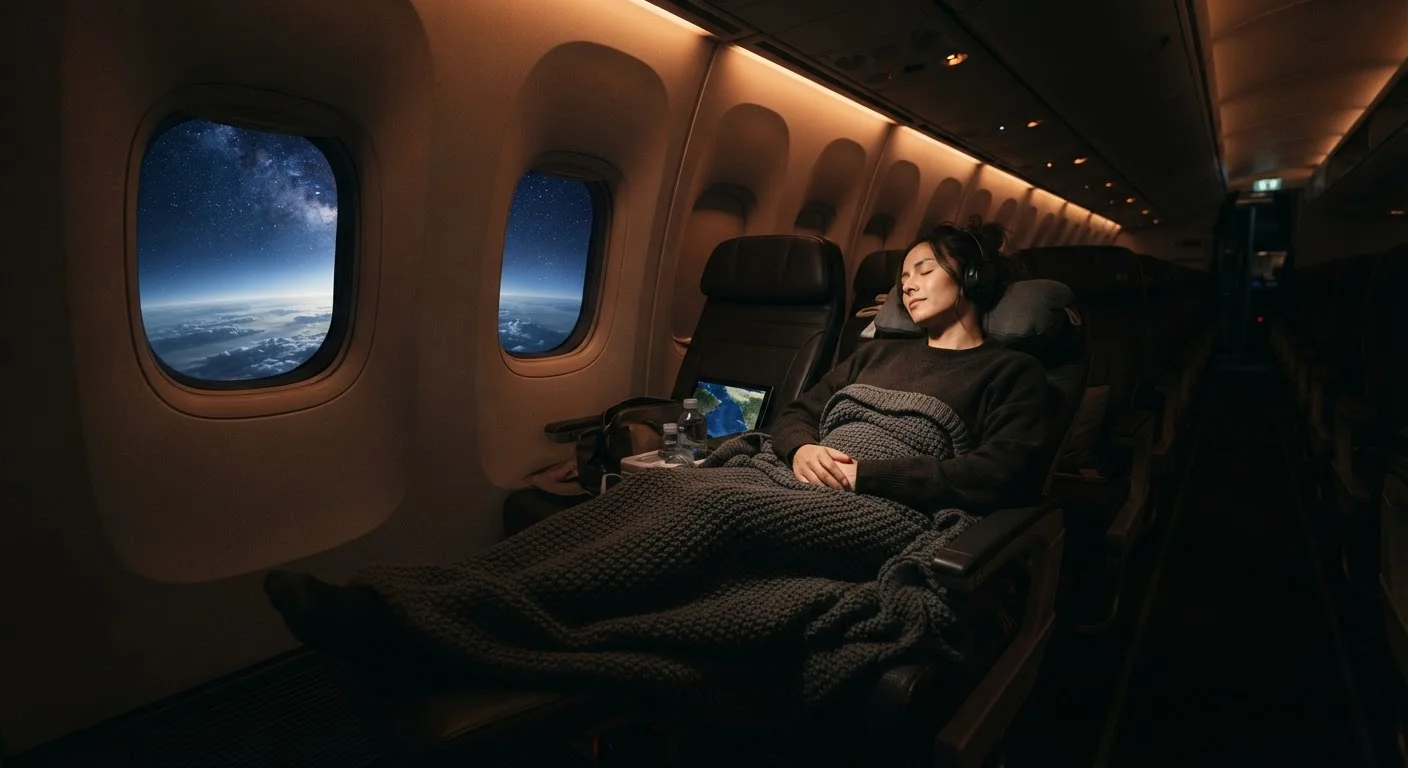
Why Long-Haul Flights Hit the Body Hard
A transatlantic or transpacific flight isn't just a long sit - it's a physiological event. Cabin air pressure is typically maintained at the equivalent of 6,000-8,000 feet above sea level, which reduces the amount of oxygen your blood absorbs compared to sea level. Add in low humidity (usually under 20%), near-total inactivity, disrupted meal timing, and crossing five or more time zones, and it's no surprise that many travelers arrive feeling foggy, dehydrated, and out of sorts.
Jet lag - the mismatch between your internal body clock and the local time at your destination - is the most widely recognized issue. But it travels alongside other concerns: swollen ankles, digestive sluggishness, dry sinuses, and general fatigue. Understanding what's actually happening to your body makes it much easier to respond usefully. For a deeper look at the science behind time-zone adjustment, see our companion piece on jet lag.
Best Practices for Managing Jet Lag and Sleep
Your circadian rhythm - the internal 24-hour cycle governing sleep, hunger, and alertness - is set primarily by light exposure. Disrupting it across time zones takes time to resolve, but a few practical approaches can meaningfully speed things up.
Shift your sleep schedule gradually in the days before departure
Your circadian rhythm can only move about one to two hours per day under normal conditions. Beginning to shift your bedtime toward your destination's time zone two or three days before flying gives your body a head start on adjustment and reduces the severity of jet lag on arrival.
Use light exposure strategically at your destination
Natural daylight is the strongest signal your brain uses to set its internal clock. Getting outside in the morning light at your destination - rather than hiding in a hotel room - accelerates adaptation. Conversely, avoiding bright light in the evening when traveling eastward helps prevent the clock from drifting later.
Keep alcohol consumption minimal during the flight
Alcohol disrupts the quality of sleep during flight, contributes to dehydration in an already low-humidity cabin, and can worsen the grogginess felt upon arrival. The pressurized environment also means alcohol may feel stronger than it does at ground level.
Time melatonin use according to your destination's night
Low-dose melatonin (a hormone naturally produced by the body) is among the more studied interventions for jet lag, and some research suggests it can help shift the body clock when taken at the right time relative to the destination. The 'right time' matters - taking it incorrectly relative to your new time zone can have the opposite effect.
Stick to destination meal times as soon as possible
Hunger signals are another cue that helps anchor your body clock. Eating breakfast, lunch, and dinner according to local time - rather than when you're used to eating at home - reinforces the circadian adjustment triggered by light exposure.
“The timing of light exposure is the most powerful tool we have for shifting the human circadian clock. Getting it right - or wrong - can make or break recovery from jet lag.”
— Charles Czeisler, Sleep researcher and professor of sleep medicine, Harvard Medical School
In-Flight Comfort and Circulation
Economy class was not engineered for optimum physiology, but there's plenty you can do within its constraints. Prolonged sitting limits blood flow, particularly in the lower legs - a concern that becomes more significant on flights over eight hours. Standing, stretching, and walking the aisle periodically are straightforward countermeasures.
If you have a personal or family history of circulation problems, discuss long-haul travel with a doctor before your trip. This content is general information, not medical advice - individual circumstances vary significantly.
Eating, Drinking, and Arrival Health
What goes into your body during a long flight shapes how you step off the plane. Alcohol accelerates dehydration in an already dry cabin environment and tends to reduce sleep quality even when it induces drowsiness. Caffeine, strategically timed, can help reset alertness - but consumed too late relative to your destination's night, it delays adaptation.
Hydration is genuinely important: drinking water consistently throughout the flight (not just when you feel thirsty) offsets the drying effects of cabin air on your sinuses, skin, and overall energy. Heavy, high-sodium meals can worsen bloating in the pressurized cabin - lighter options tend to sit more comfortably.
20%
Typical relative cabin humidity on long-haul flights
Aviation health researchers note cabin humidity often falls below 20%, compared to a typical indoor environment of 30-60%, accelerating fluid loss during flights.
1-2 days
Time zones crossed per day of jet lag recovery
A commonly cited general estimate in sleep medicine suggests the body adjusts roughly one to two time zones per day, meaning a 10-hour difference may take up to a week to fully resolve.
On arrival, resist the urge to nap immediately if it's daytime at your destination. Staying awake until local evening - even if difficult - helps your body clock sync faster. Before your trip, make sure your pre-departure preparations are solid: our pre-departure checklist covers everything from documents to medications. If you're carrying prescription drugs, the guide to carrying medications across borders is worth reviewing in advance.
This article provides general travel health information only and is not a substitute for personalized medical advice. Consult a qualified healthcare provider before traveling if you have any health concerns.
The content on this site is for informational purposes only and is not a substitute for professional advice. Always consult a qualified professional for guidance specific to your situation.