

Why Price Labels Are Rarely Straightforward
Walk into any store or scroll through a product page and you're likely to encounter a cluster of numbers: a "List Price," an "MSRP," and the actual price you pay. These terms are often used interchangeably, but they represent distinct concepts with different origins and different implications for how much something is actually worth.
Understanding what each label means doesn't just satisfy curiosity - it gives you a clearer lens through which to evaluate whether a stated "discount" reflects genuine savings or is simply a pricing presentation strategy. Keep in mind that the sticker price is often just the beginning: see our guide to hidden costs built into product ownership for a fuller picture of what you'll actually spend.
| What MSRP stands for | Manufacturer's Suggested Retail Price |
| Is MSRP legally binding on retailers? | Generally no - it is a suggestion, not a requirement |
| FTC guidance on comparison pricing | A "former" price used in a sale claim must reflect a real prior selling price (Federal Trade Commission, Guides Against Deceptive Pricing) |
| New cars: MSRP disclosure required? | Yes - the Monroney Act mandates a window sticker on all new vehicles (Automobile Information Disclosure Act (Monroney Act)) |
| "List price" vs. "MSRP" | Often interchangeable in consumer retail; list price may also refer to distributor-set reference prices in B2B contexts |
| Retail price location in the supply chain | Set by the retailer - the final step before the consumer |
MSRP, List Price, and Retail Price: The Definitions
MSRP (Manufacturer's Suggested Retail Price) is the price a product's maker recommends that retailers charge consumers. The key word is suggested. Manufacturers set MSRPs to create pricing consistency across markets and to signal a product's intended value tier. Retailers are generally free to sell above or below this figure - and frequently do.
List Price is often used synonymously with MSRP, but it can also refer to a price established by a distributor or wholesaler rather than the manufacturer itself. In practice, "list price" frequently appears in business-to-business contexts as a starting point before volume discounts, and in consumer retail as an anchor figure intended to frame any actual price as a savings opportunity.
Retail Price (sometimes called the selling price or street price) is simply what a seller is actually charging at the point of sale. It can sit below, at, or occasionally above MSRP depending on supply conditions, seller strategy, or contractual arrangements.
MSRP
Manufacturer's Suggested Retail Price. The price a product's maker recommends retailers charge consumers. It is a suggestion, not a binding ceiling or floor, and actual selling prices often differ.
List Price
A reference price set by a manufacturer or distributor, often used as an anchor in pricing comparisons. It may or may not reflect any price at which the product was actually sold.
Retail Price
The actual price charged by a seller at the point of sale, also called the street price or selling price. This is what you pay, and it may be above, at, or below MSRP.
Anchor Price
A reference price presented alongside a selling price to frame the latter as a bargain. Consumer psychology research shows that anchor prices strongly influence perceived value, regardless of whether the anchor reflects a real market price.
Street Price
An informal term for the prevailing retail price of an item across multiple sellers in a real market, as opposed to any officially stated or suggested price.
Monroney Sticker
The federally mandated window label required on new vehicles sold in the US, displaying the manufacturer's MSRP, installed options, fuel economy ratings, and other standardized information.
In some product categories - notably new automobiles - the relationship between these numbers is codified in law. The Monroney Act requires that new cars display a federally mandated window sticker showing the MSRP for the base vehicle and any installed options. Our companion piece on reading a car's window sticker walks through each section of that document in detail.
How These Numbers Are Used - and Misused
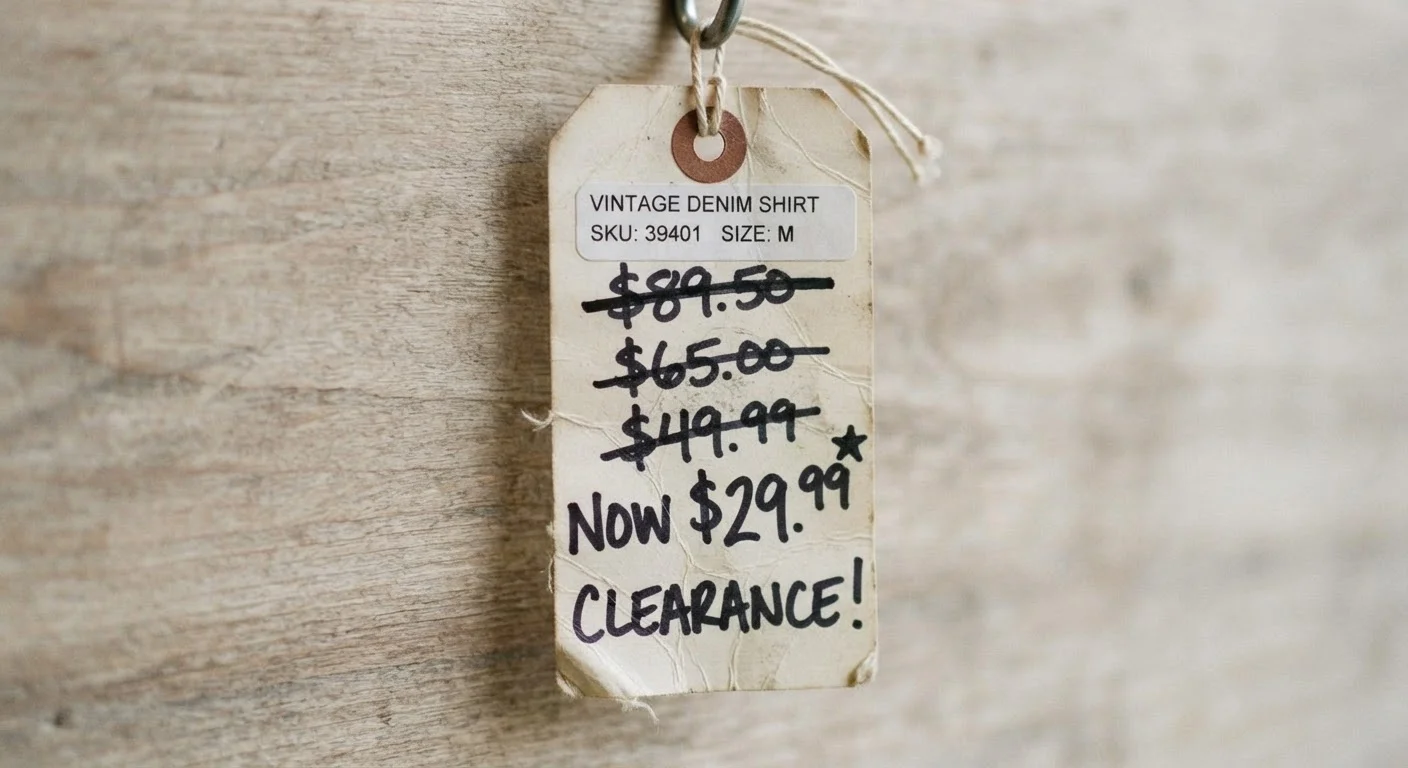
Displaying a high list price alongside a lower retail price is a well-documented pricing presentation technique. Research in consumer psychology consistently shows that an anchor price - even a fictitious or inflated one - influences how buyers perceive the value of a deal. When the "original" figure is set artificially high, any retail price beneath it can appear to represent significant savings even when the actual discount is modest or fabricated.
Regulatory bodies in the United States, including the Federal Trade Commission (FTC), have issued guidance indicating that a "former" or "original" price used in a comparison must reflect a price at which the item was actually sold in meaningful quantities and for a reasonable period of time. Using an MSRP that no retailer ever actually charged as a comparison point can, under certain circumstances, be considered a deceptive practice.
FTC Rules on Reference Pricing
The Federal Trade Commission's Guides Against Deceptive Pricing state that a seller who advertises a price reduction must be able to substantiate that the "original" or "former" price is a real one at which the item was genuinely offered to the public. Inflated or fictitious reference prices used solely to manufacture the appearance of a discount may constitute a deceptive practice under federal consumer protection standards. When in doubt, verify what the item actually sells for across multiple sources before treating any stated savings as meaningful.
This context is useful when evaluating any product category, not just retail goods. Similar dynamics appear in real estate listing strategies and in the way contractor estimates are presented. The same critical lens that helps decode a product page can apply when reading a housing market report.
For a deeper dive into how language itself shapes perceived value, see reading between the lines of product marketing language.
What to Look for Instead of Price Labels
Once you understand that MSRP and list price are reference points rather than objective benchmarks, the practical question becomes: what should you use to evaluate whether a price is reasonable?
- Market price research: Check what multiple sellers are currently charging for the identical item. The range of actual retail prices gives you a realistic picture of the market rate, independent of any stated list price.
- Cost-per-use analysis: A higher purchase price may represent better value if the item lasts longer or sees heavier use. Our guide to cost per use as a value metric explains how to apply this calculation.
- Total ownership cost: Factor in recurring expenses - consumables, accessories, maintenance - not just the initial figure. Hidden costs shoppers routinely overlook covers this in practical terms.
- Category norms: In some markets (new cars, for example), paying below MSRP is routine; in others, MSRP is a firm floor. Knowing the conventions of the category you're shopping in sets realistic expectations.
Price labels are informational starting points. Treating them as the primary measure of a deal's quality - rather than one data point among several - is where consumers most commonly lose ground.
The content on this site is for informational purposes only and is not a substitute for professional advice. Always consult a qualified professional for guidance specific to your situation.