

Why Sticker Price Is an Incomplete Signal
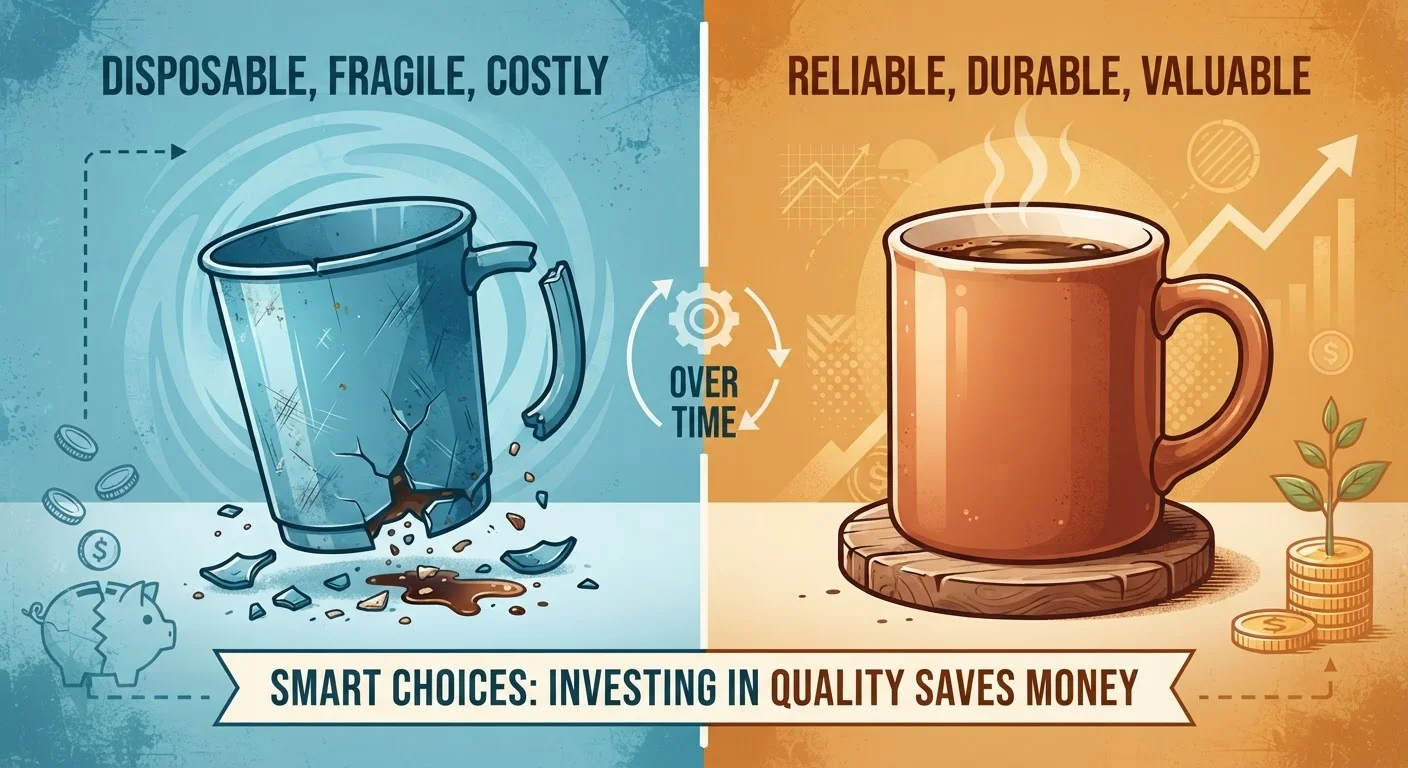
Most purchasing decisions happen at the point of sale, where the only number visible is the upfront price. But that figure captures just one moment in a product's life. The total cost of ownership - a concept used in business procurement and increasingly relevant to household budgeting - accounts for every dollar a product will require from purchase to disposal.
This includes energy consumption, routine maintenance, replacement parts, and eventual disposal or recycling costs. A cheaper appliance that runs inefficiently, breaks down frequently, or requires expensive consumables can easily surpass the lifetime cost of a pricier, more durable alternative. Our guide to hidden costs built into product ownership explores this dynamic in detail.
The challenge for shoppers is that these downstream costs are rarely advertised at the register. Building the habit of looking past the price tag requires a systematic approach - which is exactly what the steps below provide.
What you will need
How to Evaluate Whether a Higher Price Pays Off
Follow these steps before making any significant purchase where you're weighing a lower-cost option against a more expensive one. The process works equally well for appliances, tools, vehicles, or home improvements.
Calculate the annual cost of each option
Divide each product's purchase price by its expected lifespan in years. This gives you an annualized cost that makes comparison fair regardless of price differences. For example, a $300 item lasting 10 years costs $30 per year; a $120 item lasting 3 years costs $40 per year - making the more expensive option cheaper annually.
Use manufacturer warranty length as a conservative proxy for expected lifespan if independent data isn't available.
Add operating and energy costs
For any product that consumes energy - appliances, HVAC systems, vehicles - find the annual operating cost and add it to your annualized purchase cost. Energy guides on appliances and fuel economy ratings on vehicles provide standardized figures for comparison.
Multiply annual energy use by your local utility rate to convert consumption figures into actual dollar costs. Even a $10-$20 annual energy difference grows meaningfully over a decade.
Estimate maintenance and repair expenses
Research the typical maintenance schedule and common repair costs for each option. Some products have low purchase prices but depend on expensive proprietary consumables or frequent professional servicing - costs that can dwarf the original price gap over time.
Our article on why deferred maintenance costs more illustrates how this dynamic plays out with vehicles specifically.
Add up the total and compare
Combine the annualized purchase cost, annual energy cost, and estimated annual maintenance cost for each option. Multiply by the number of years you plan to own the item to get a total cost figure for each. This is your true apples-to-apples comparison.
If the higher-priced option's total is lower, the upfront investment is financially justified. If the totals are similar or the cheaper option wins, consider whether non-financial factors - such as reliability, repairability, or environmental impact - tip the decision.
Sanity-check your assumptions
The analysis is only as reliable as the inputs. Before committing, ask: Is the lifespan estimate realistic for how I'll actually use this? Are the energy savings based on my actual usage patterns, not idealized lab conditions? Is the maintenance cost estimate from a credible source?
Small errors in lifespan or usage frequency assumptions can flip the result. Build in a margin - if the numbers are close, the cheaper option may be the more prudent choice given uncertainty.
Cross-Check With Cost-Per-Use Thinking
Total cost of ownership and cost per use are complementary lenses. Once you've run the numbers above, divide the total cost by your estimated number of uses over the ownership period. This can reveal whether a durable, expensive item is genuinely a better value for your actual usage habits - or whether a less costly option suits infrequent use just as well.
Keep in mind that a higher price is not automatic proof of better long-term value. As our analysis of why price and quality don't always align makes clear, marketing, branding, and retail positioning can all inflate a price without adding durability or efficiency. The framework above protects you from paying a premium for the wrong reasons.
When the Math Favors Spending More - and When It Doesn't
Several conditions make the higher-upfront investment genuinely worthwhile:
- Frequency of use is high. Daily-use items accumulate cost-per-use savings quickly. A more durable version pays off faster than one used occasionally. See our guide to cost per use as a value metric for a practical method.
- Energy consumption differs meaningfully. For appliances and vehicles, even modest efficiency differences compound over years of operation.
- Maintenance costs diverge sharply. If the cheaper option requires frequent servicing, those labor and parts costs can outpace the original price gap.
Conversely, the premium purchase often doesn't make financial sense when:
- Your timeline is short - you'll replace or upgrade the item in a few years regardless.
- Usage frequency is low enough that wear and efficiency differences become negligible.
- The price gap is large but the performance or lifespan difference is modest.
Beware the Sunk Cost Trap in Reverse
Rationalizing a premium purchase because it 'must pay off eventually' can be just as costly as ignoring long-term value altogether. If your usage scenario or timeline doesn't support the math, a higher price simply costs more. Our article on the sunk cost fallacy in spending explores how past spending can distort future decisions in similar ways.
For context on how these trade-offs appear in specific categories, our hub on understanding products covers how to evaluate quality, specs, and long-term value across a range of purchases.
The content on this site is for informational purposes only and is not a substitute for professional advice. Always consult a qualified professional for guidance specific to your situation.