

Where the Rule Comes From - and What It's Really Solving
Most homes don't become cluttered overnight. Instead, belongings accumulate gradually - a purchase here, a gift there, items kept 'just in case' - until drawers stop closing and storage space runs out. The one-in, one-out rule addresses this creep at its source by building a decision point directly into how you acquire things.
The concept isn't tied to a single originator or trademarked method. It has appeared across professional organizing, minimalism communities, and personal finance circles as a practical guardrail against unconscious accumulation. The core logic is simple: if your home has a comfortable capacity, maintaining that capacity means balancing what comes in with what goes out.
This distinguishes the rule from decluttering. Decluttering is a corrective action - you do it when things have already gotten out of hand. The one-in, one-out rule is a preventive habit. See our starter's overview of home organization for context on how this fits within broader organizing principles.
The Rule Doesn't Apply to Consumables
The one-in, one-out rule is designed for durable goods - clothing, tools, furniture, books, and similar belongings that accumulate over time. It doesn't apply to consumables like groceries, cleaning supplies, or toiletries, which are used up and naturally replaced. Applying it to consumables would create unnecessary friction without any organizational benefit.
How to Apply It in Practice
The most reliable way to apply this rule is by category rather than across your home as a whole. Committing to 'one in, one out for everything' is vague enough to ignore, but 'one new book means one book leaves the shelf' is concrete and easy to act on.
Common categories where this rule adds real value include:
- Clothing and shoes: A new jacket means an older jacket is donated or discarded.
- Kitchen tools and appliances: A new gadget means a redundant or unused one is removed.
- Children's toys: A new toy means an outgrown toy is passed along.
- Books and media: A new title means one on the shelf is donated or sold.
The outgoing item doesn't have to be removed the instant the new one arrives, but it should happen within a short, defined window - ideally the same day or same week. Delay tends to undermine follow-through.
Make the Exit Easy Before the Entry
Before bringing a new item home, identify what it will replace and set the outgoing item aside for donation or removal. Doing this in advance removes the temptation to delay - and makes the habit feel less like a chore.
When It Works Best - and Where It Has Limits
The one-in, one-out rule performs best as a maintenance tool for a home that has already been organized to a comfortable baseline. If your home currently has more belongings than you have functional space for, the rule alone won't fix that - you'll need a dedicated decluttering effort first. Our comprehensive end-to-end home organization guide covers room-by-room strategies that can help establish that foundation.
The rule also has natural exceptions. Major life transitions - a new baby, a move, a renovation, or the loss of a family member - may temporarily require bringing many items in or out at once. Treating these moments as failures misses the point; the rule is a steady-state habit, not a rigid law.
One useful parallel: just as rules like the 50/30/20 budgeting framework give structure to financial decision-making without eliminating all flexibility, the one-in, one-out rule provides a consistent framework for ownership decisions without demanding perfection.
1 in 10
American households renting off-site storage
According to the Self Storage Association, approximately one in ten U.S. households rents a storage unit, often to house belongings that no longer fit in the home - a dynamic the one-in, one-out rule is designed to prevent.
~300,000
Items in the average American home
A frequently cited estimate from the Los Angeles Times suggests the average American home contains around 300,000 items, highlighting how accumulation happens without intentional management practices.
Building It Into Your Routine
The difference between people who maintain organized homes and those who struggle isn't willpower - it's systems. The one-in, one-out rule works because it converts a recurring decision into a standing habit: acquisition triggers removal, automatically.
A few practical ways to reinforce the habit:
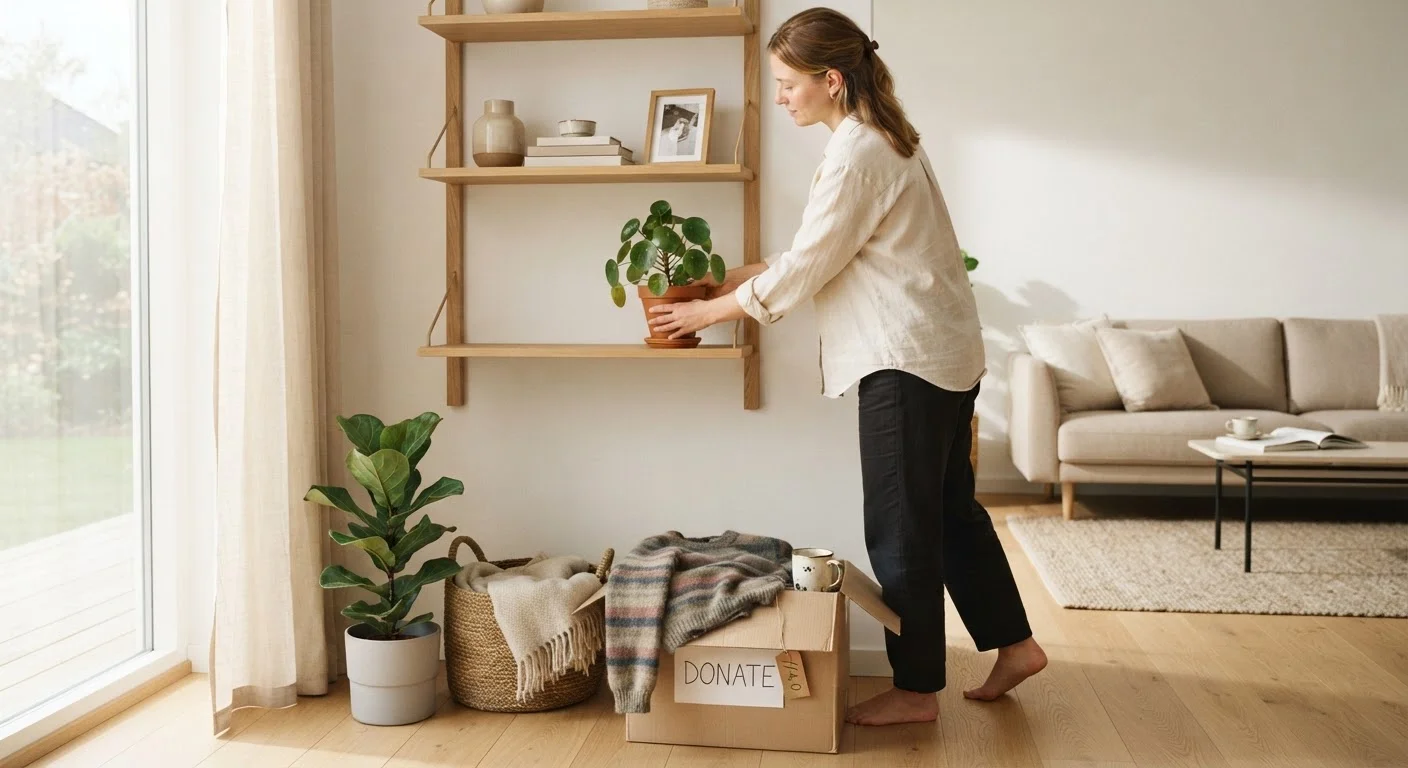
- Keep a donation box visible. A designated, accessible box in a closet or garage lowers the friction of removing items. When something is ready to leave, it goes in the box.
- Pause before purchasing. Ask whether you already own something that does the same job. If yes, decide whether the new item is worth replacing the existing one - and commit to removing the old one before or during the purchase.
- Do a category check seasonally. Twice a year, walk through high-accumulation areas and see whether the balance has held. Catching drift early is far easier than doing a full reorganization later.
Over time, this habit reshapes how you think about acquiring things - which is the deeper benefit. The rule isn't just about space. It builds a more intentional relationship with your belongings, making your home easier to maintain without relying on periodic bursts of effort.
Frequently Asked Questions
Yes, when applied consistently, the rule is one of the more durable organization habits because it shifts decision-making to the point of acquisition rather than requiring periodic mass decluttering. It works best for people who have already reached a baseline level of organization in their home.
Common options include donating to a local charity, offering items to family or friends, selling secondhand, or recycling where appropriate. The goal is to remove the item promptly so it doesn't linger and quietly re-enter your living space.
Not necessarily. Most people find it most useful in categories prone to over-accumulation, such as clothing, kitchen gadgets, books, and children's toys. Consumables like food or cleaning supplies don't typically need this framework.
The rule can apply to gifts, though many people handle this with more flexibility. The underlying principle is about intentional ownership: if a gift enters your home and serves no real purpose, finding something to remove still honors the spirit of the rule.
Not exactly. Minimalism often involves reducing possessions to a much smaller number as a lifestyle philosophy. The one-in, one-out rule is more neutral - it simply maintains whatever level of belongings you're comfortable with, without requiring you to own as little as possible.
The content on this site is for informational purposes only and is not a substitute for professional advice. Always consult a qualified professional for guidance specific to your situation.