

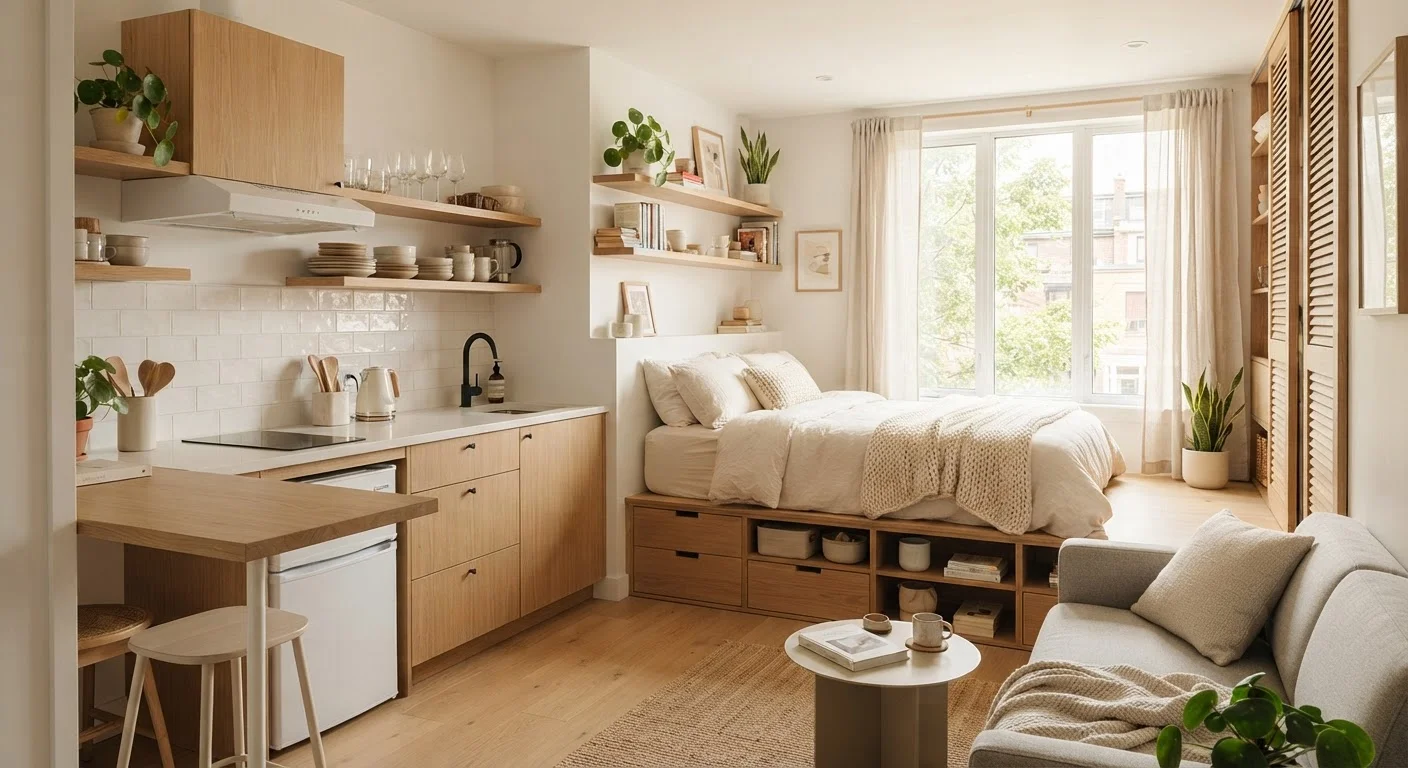
Why small-space organization is its own discipline
Organizing a compact apartment isn't simply a scaled-down version of organizing a larger home - it requires a different set of priorities entirely. When every square foot has to work harder, the margin for inefficiency shrinks to nearly zero. A storage solution that's fine in a 2,000-square-foot house might dominate an entire wall in a studio.
The good news: small spaces respond quickly to smart changes. A few well-chosen adjustments can transform how a compact apartment feels and functions - making it genuinely comfortable rather than just manageable. For a broader framework covering every room and life stage, see the comprehensive home organization guide. The strategies below are specific to the constraints and opportunities of apartments under 700 square feet.
Start with the space that bothers you most
If you're feeling overwhelmed by where to begin, focus on the single area of your apartment that causes the most daily frustration - whether that's a cluttered entryway, a chaotic kitchen counter, or an overflowing closet. Solving one visible problem first builds momentum and makes the overall project feel manageable.
Seven strategies for smarter compact living
Declutter before you organize anything
No storage system can fix a volume problem. Before rearranging shelves or buying bins, go through every category of item you own and decide what genuinely earns its place in your home. In an apartment under 700 square feet, every object competes for limited real estate.
Work room by room - or category by category - setting aside items to donate, recycle, or discard. Our room-by-room decluttering guide walks through this process in practical detail. Only after editing your possessions should you think about where and how to store what remains.
No storage system can fix a volume problem - edit first, organize second.
Treat walls as vertical real estate
Floor space is scarce, but walls extend all the way to the ceiling. Floating shelves, wall-mounted hooks, pegboards, and tall bookcases shift storage upward and keep floor areas clear - which also makes rooms feel larger and less cramped.
In kitchens, a mounted rail with hooks can hold utensils and free up an entire drawer. In entryways, a wall-mounted coat rack with a small shelf below handles outerwear, bags, and keys without a bulky furniture piece. Prioritize shelving at eye level and above for items used less frequently, keeping everyday essentials within easy reach.
Walls extending to the ceiling offer far more usable storage than most renters tap into.
Choose furniture that pulls double duty
Multi-functional furniture is the cornerstone of smart small-space living. A bed frame with built-in drawers eliminates the need for a separate dresser. A storage ottoman serves as a coffee table, seating, and hidden storage simultaneously. A dining bench with a lift-top lid stores linens or seasonal items underneath.
When evaluating any furniture purchase, ask: does this piece do at least two jobs? If it only serves one function, consider whether a smarter alternative exists. This principle applies even to smaller items - a rolling kitchen cart, for instance, adds both prep surface and storage while remaining moveable.
Every piece of furniture in a small apartment should ideally serve at least two functions.
Zone your space intentionally
Without distinct zones, a small apartment can feel chaotic - things end up everywhere because there's no clear system for where they belong. Defining zones (sleep, work, cook, relax) and storing items within or near the zone where they're used creates natural order that's easier to maintain.
Use rugs, furniture arrangement, or open shelving as visual dividers to signal zone boundaries without physical walls. Keep work supplies in the work zone, cooking tools in the kitchen zone, and entertainment items near your seating area. When every item has a logical home, putting things away becomes effortless rather than a decision you avoid.
Zoning assigns every item a logical home, turning tidying up into a simple habit.
Maximize closet and cabinet interiors
Most closets and cabinets are poorly configured out of the box - a single hanging rod and bare shelves leave significant space unused. Adding a second hanging rod below shorter garments, shelf dividers, door-mounted organizers, and stackable bins can dramatically increase what fits inside.
In kitchen cabinets, turntables (lazy Susans) and pull-out organizers make deep shelves accessible. In bathroom vanities, tiered shelf inserts turn a cluttered cabinet into a tidy system. Think about the full interior volume - top, bottom, back, and door surface - not just the obvious front shelf.
The interior of most closets and cabinets holds far more than their default setup suggests.
Rethink hidden and overlooked spaces
Small apartments often hide usable storage in plain sight. The space under a sofa can hold flat storage boxes for extra linens. The area above kitchen cabinets can display or store infrequently used items. The back of a bathroom door is an ideal spot for an over-door organizer holding toiletries or cleaning supplies.
Take a slow walk through your apartment looking specifically for these forgotten zones. You'll likely find five to ten additional square feet of storage potential you've been ignoring. Just be careful not to overload structural elements - follow manufacturer weight limits and use appropriate wall anchors when mounting anything overhead.
A slow, deliberate scan of your apartment typically reveals five to ten hidden storage opportunities.
Build habits that maintain the system
The best organization system fails without consistent upkeep. In a small space, clutter accumulates visibly and quickly - which means small daily habits matter more here than in a larger home. A five-minute reset at the end of each day, or a designated landing spot for incoming mail and bags, prevents buildup before it becomes overwhelming.
It's also worth revisiting the common organizing myths that backfire - many people buy more bins assuming that's the fix, when the real solution is simpler habits and fewer possessions. Maintenance is the strategy.
A five-minute daily reset does more for small-space organization than any storage product.
Renting? Check before you mount
Many wall-mounting solutions require drilling into walls, which may violate lease agreements or result in deposit deductions. Before installing shelves, rails, or hooks, review your lease terms and speak with your landlord. Plenty of renter-friendly alternatives - such as adhesive strips rated for heavier loads, tension rods, and freestanding shelving units - can achieve similar results without permanent modifications.
Keeping it functional over time
Organization in a small space is never a one-time project - it's an ongoing practice. As your needs change, your storage systems should evolve with them. Seasonal items rotate in and out, habits shift, and possessions accumulate if you're not periodically editing what you own.
A good rule of thumb: every few months, do a quick pass through each zone of your apartment and ask whether the current setup still reflects how you actually live. If it doesn't, adjust. For anyone dealing with organization challenges beyond the apartment walls, the same principles scale outward - even the approach to garage organization shares this core idea: function follows intentional setup and consistent habits. Small-space living, done well, isn't about sacrifice - it's about clarity.
The content on this site is for informational purposes only and is not a substitute for professional advice. Always consult a qualified professional for guidance specific to your situation.