

Our Verdict
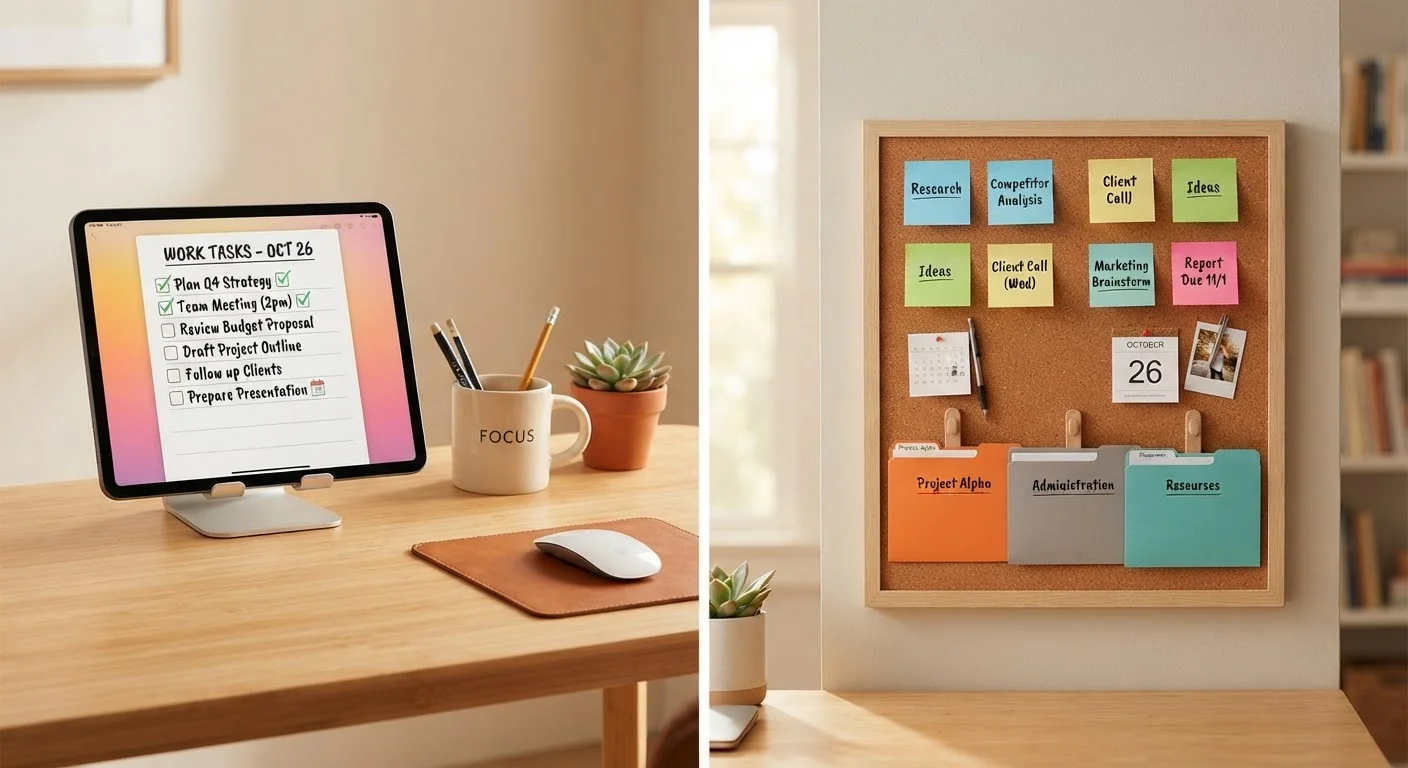
Neither digital nor physical organization systems win outright — each has clear strengths that map to different tasks and household types. Digital tools shine for scheduling, shared task lists, and searchable documents, while physical systems offer reliability, visibility, and lower friction for everyday household routines. The most functional households tend to use both strategically.
| Best for | Recommended |
|---|---|
| Tech-comfortable individuals or remote workers managing complex schedules | Digital systems |
| Families with young children or screen-sensitive routines | Physical systems |
| Multi-person households coordinating shared tasks and finances | Hybrid approach |
| Small-space dwellers prioritizing minimal physical clutter | Digital systems (with selective physical anchors) |
Why the Right System Depends on Your Household
Home organization isn't one-size-fits-all, and the tools you use are no exception. Before diving into which approach works better for calendars, paperwork, or chores, it helps to understand what you're actually optimizing for. As the foundational principles of home organization make clear, lasting systems are built around real habits — not idealized routines.
Ask yourself a few grounding questions: How many people share your home? Do household members have reliable access to and comfort with smartphones or computers? Are you dealing with paper-heavy tasks like warranties and medical records, or primarily schedule coordination? Your answers will shape which system — or combination — actually sticks.
| Criterion | Digital Systems | Physical Systems | |
|---|---|---|---|
| Access requirements | Device and internet or power needed | No technology required | |
| Multi-person sharing | Real-time sync across devices | Visible in one fixed location | |
| Searchability | Instant keyword search | Depends on filing discipline | |
| Setup effort | Moderate; app learning curve | Low; label and go | |
| Long-term reliability | App changes, subscriptions may lapse | Durable with minimal upkeep | |
| Best suited for | Schedules, documents, reminders | Chores, meal plans, visible references |
Where Digital Systems Have the Edge
Digital tools — shared calendars, note-taking apps, cloud document storage, and task managers — are particularly strong in three areas:
- Real-time collaboration: When multiple adults share grocery lists, bill due dates, or household maintenance schedules, synced apps eliminate the need for constant verbal updates.
- Searchability: A scanned warranty or insurance document can be found in seconds; a physical file requires you to remember where you put it.
- Automated reminders: Recurring tasks like filter replacements or lease renewals can be set once and reliably surfaced on schedule.
Digital organization is especially valuable in smaller homes where physical storage is limited. If you're working with under 700 square feet, the smart storage strategies for compact living often pair well with going paperless wherever possible.
Start With One Category, Not Everything
When switching to or building a new organizational system, resist the urge to overhaul everything at once. Pick one high-friction area — such as bill tracking or meal planning — and test your chosen approach there for a few weeks. If it reduces stress and gets used consistently, expand from there. Gradual adoption leads to more durable habits than whole-home overhauls.
Where Physical Systems Still Win
Despite the appeal of apps and cloud tools, physical organization systems hold meaningful advantages that are easy to underestimate:
- No friction to access: A wall calendar or labeled bin requires zero login, no battery, and no notification. Visibility is instant.
- Better for households with mixed tech comfort: If some family members — including children or older adults — don't regularly use smartphones, a shared physical board keeps everyone included.
- Reduces screen time: Using a paper planner or a physical chore chart keeps household management off devices, which many families intentionally prioritize.
Physical systems also tend to feel more permanent for categories like reference documents, emergency contact sheets, or school year schedules that benefit from being posted somewhere visible. The household organization reference guide covers specific physical methods — from binder systems to command centers — worth considering here.
Building a Hybrid Approach That Works
For most households, the most practical answer is selective integration. The goal isn't to use every tool available — it's to match the right format to each category of home management.
A workable hybrid framework might look like this:
- Digital: Shared family calendar, cloud storage for important documents, recurring bill reminders
- Physical: Weekly meal planning whiteboard, posted emergency contacts, paper chore charts for children
- Either (based on preference): Grocery lists, household inventory, project to-do lists
Avoid the common trap of over-engineering the system itself. As explored in common organizing myths that backfire, elaborate systems that require significant upkeep often collapse under real household demands. Simpler beats sophisticated if simpler is what you'll actually use. And if you're evaluating where to direct any budget toward organizational tools, the Smarter Spending framework offers practical guidance on thoughtful purchasing decisions.
Ultimately, the system that reduces your mental load — and that every person in the household can participate in — is the right one for your home.
The content on this site is for informational purposes only and is not a substitute for professional advice. Always consult a qualified professional for guidance specific to your situation.