

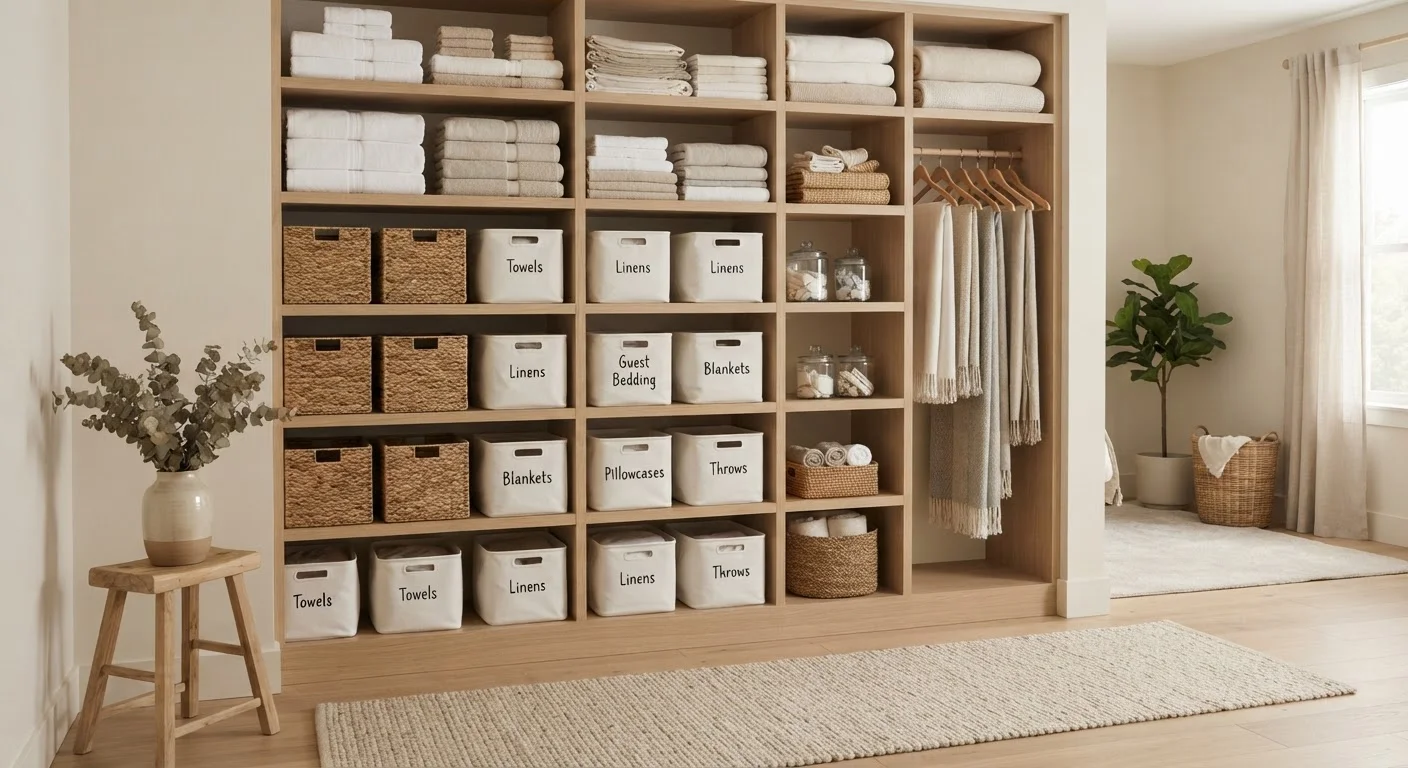
Core Decluttering Concepts
Before choosing a system or buying a single storage bin, it helps to understand what decluttering actually means - and what it doesn't. At its most basic, decluttering is the process of removing items from a space that no longer serve a clear purpose there. That's distinct from tidying, which simply means putting things back where they belong.
Two terms you'll encounter often are purging and editing. Purging refers to a decisive removal of a large volume of items - think clearing out an entire closet in one session. Editing is a more selective, ongoing process: reviewing what you own and removing items incrementally over time. Neither is inherently better; they suit different personalities and lifestyles.
The phrase one-in, one-out describes a simple maintenance rule: whenever a new item enters the home, one existing item leaves. It's one of the most effective strategies for preventing re-accumulation after a major declutter.
Decluttering
The deliberate process of removing items from a space that no longer serve a clear, current purpose. It is distinct from tidying, which involves returning items to their designated places.
One-In, One-Out Rule
A maintenance principle in which every new item brought into a home is offset by removing one existing item. It helps prevent clutter from gradually rebuilding after a major declutter session.
Zoning
Dividing a room or storage space into defined areas, each dedicated to a specific category of items. Zones reduce the time spent searching for things and make it easier to return items consistently.
Dead Space
Areas within a home that physically exist but are not currently being used for storage or function. Identifying and activating dead space is a common strategy for adding capacity without structural changes.
Prime Real Estate
The most accessible positions in any storage area - typically eye-level shelves or front-of-drawer spaces. High-frequency items should occupy these spots to reduce friction in daily routines.
Purging
A large-scale, concentrated removal of items from a space, usually done in a single session. Purging is more drastic than editing and is often used to reset a space that has become significantly disorganized.
Editing
An ongoing, incremental review of belongings in which items are selectively removed over time. Editing is generally less intense than purging and suits people who prefer gradual, low-pressure decluttering.
Vertical Storage
The practice of using wall height - through shelving, hooks, or stackable containers - rather than floor area for storage. It is especially valuable in smaller homes where floor space is limited.
If you're just getting started and need a grounding overview, see this starter's overview of home organization for a plain-English introduction to concepts and mindsets.
Popular Organization Systems Explained
Several named methods have shaped how millions of people approach home organization. Understanding what each one prioritizes helps you decide where any given approach fits your household.
| KonMari Method focus | Organizes by category, not room |
| OHIO Rule | Only Handle It Once - deal with items immediately |
| Swedish Death Cleaning origin | Swedish concept (döstädning) for mindful downsizing |
| Four-Box Method destinations | Keep, Donate, Trash, Relocate |
| One-In, One-Out Rule purpose | Prevents re-accumulation after decluttering |
| KonMari category order | Clothes → Books → Papers → Miscellaneous → Sentimental |
The KonMari Method organizes belongings by category - not by room - and asks whether each item genuinely contributes positive value to your life. It works from clothes and books through papers and miscellaneous items, ending with sentimental objects. The sequence is intentional: easier categories build decision-making confidence for harder ones.
The OHIO Rule (Only Handle It Once) is less a full system than a daily habit: when you pick something up - mail, a dish, a piece of clothing - deal with it immediately rather than setting it down to handle later. Applied consistently, it prevents the small pile-ups that quietly consume space.
The Swedish Death Cleaning concept, known in Swedish as döstädning, encourages reducing possessions thoughtfully so that those left behind won't face an overwhelming sorting task. Despite the name, it's practiced at any age as a form of intentional, considerate living.
The Four-Box Method gives every item in a declutter session a destination: keep, donate, trash, or relocate. Having a physical box for each prevents decision paralysis and keeps the process moving.
For a deeper comparison of how these systems pair with digital and physical tools, see digital vs. physical organization systems to weigh the approaches side by side.
Storage and Space Terminology
Organization literature uses a consistent vocabulary for describing how space is structured and used. Knowing these terms makes it easier to evaluate your own home and act on advice you find.
Dead space refers to areas in a home that exist but go unused - the corners of deep shelves, the space above a refrigerator, or the area under a bed. Identifying dead space is often the first step toward expanding functional storage without a renovation.
Vertical storage means using wall height rather than floor area for storage - shelving units, wall-mounted hooks, and stacked containers all fall under this category. In smaller homes, vertical storage is frequently the most practical way to add capacity.
Prime real estate in organizing terms means the most accessible storage positions in any given area: eye-level shelves, front-of-drawer space, and the first section you reach in a cabinet. High-use items belong in prime real estate; lower-frequency items go in harder-to-reach spots.
Zones are defined areas within a room - or even a drawer - where categories of items consistently live. Zoning reduces the mental effort of finding things and returning them. A kitchen might have a baking zone, a coffee zone, and a meal-prep zone, each with its tools grouped nearby.
It's worth noting that more storage containers don't automatically solve a clutter problem. Common organizing myths often convince homeowners to buy more bins before they've reduced volume - which usually makes things worse, not better.
For a full room-by-room walkthrough using these concepts in practice, the end-to-end home organization guide covers how principles translate into real spaces at every stage of life.
The content on this site is for informational purposes only and is not a substitute for professional advice. Always consult a qualified professional for guidance specific to your situation.