

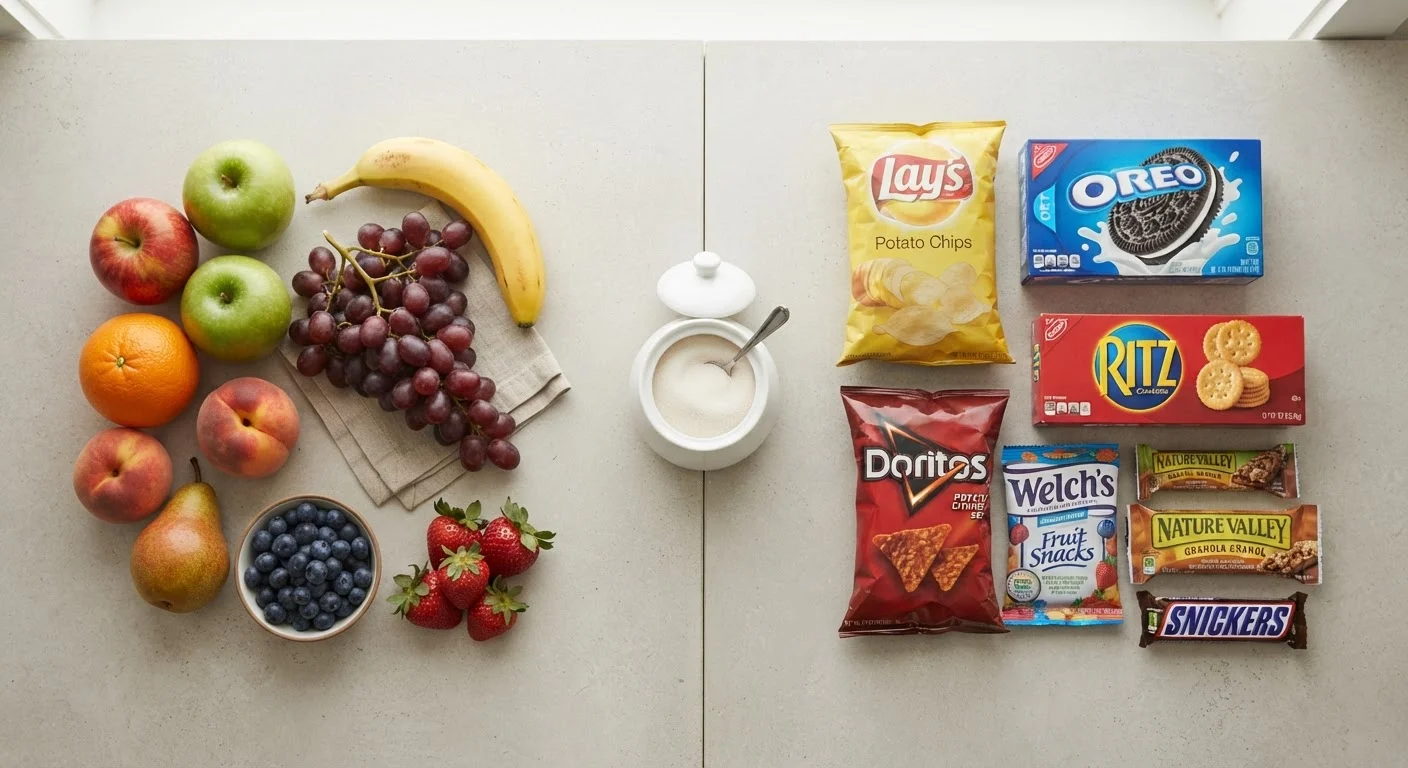
Option A
Natural Sugar
Sugar as it exists within whole, unprocessed foods.
Best for: Everyday nutrition where fiber, vitamins, and minerals accompany the sweetness.
Option B
Added Sugar
Sugar introduced during food manufacturing or preparation.
Best for: Understanding where excess sugar hides in the American diet and how to monitor intake.
What Makes a Sugar 'Natural' or 'Added'?
At the chemical level, sucrose is sucrose and fructose is fructose - your body cannot distinguish a glucose molecule from a strawberry from one dissolved in a sports drink. What differs profoundly, however, is the context in which that sugar arrives.
Natural sugars are those found inherently in whole, minimally processed foods. Lactose in milk, fructose in an apple, sucrose in a carrot - these sugars have never been separated from their original food matrix. That matrix includes dietary fiber, water, vitamins, minerals, and phytonutrients that alter how quickly sugar is digested and what else the body receives alongside it.
Added sugars, by contrast, are any sugars or caloric sweeteners incorporated into a food or beverage during processing, preparation, or manufacturing. This category includes cane sugar, high-fructose corn syrup, honey stirred into a commercial yogurt, agave nectar in a granola bar, and maple syrup added to a packaged cereal. The sugar itself may be chemically identical to what's in fruit, but it arrives stripped of the fiber and micronutrient package that would otherwise accompany it.
This distinction is why nutritionists and public health agencies pay close attention to source, not just quantity. Understanding this difference connects directly to how you might approach reading a Nutrition Facts label.
How the Body Responds Differently
When you eat a whole apple, the fruit's natural fructose is bound within a fiber-rich cellular structure. That fiber slows gastric emptying and moderates the rate at which sugar enters the bloodstream, producing a more gradual glucose response. The apple also supplies vitamin C, potassium, and antioxidant compounds - none of which come along for the ride in apple-flavored candy.
Added sugars, particularly when delivered in liquid form (sodas, sweetened coffees, fruit-flavored drinks), are absorbed rapidly. There is little to nothing to slow digestion, which can produce sharper spikes in blood glucose and a shorter window of satiety. Research published in nutrition journals has consistently linked high added-sugar intake with increased risk of weight gain, metabolic syndrome, and cardiovascular disease markers - associations that are far weaker for equivalent amounts of sugar consumed from whole fruit.
17 tsp
Average daily added sugar intake for U.S. adults
CDC data indicates American adults consume roughly 17 teaspoons of added sugar per day, more than triple what the American Heart Association recommends for women.
10%
Recommended added sugar limit (of daily calories)
The U.S. Dietary Guidelines for Americans set this ceiling as a general reference point for a healthy eating pattern in adults and children over two.
~39g
Added sugar in a single 12 oz. cola
A standard 12-ounce regular soda contains approximately 39 grams of added sugar - close to a full day's recommended limit on its own.
It's worth noting that these are population-level associations, not guarantees for any individual. How your body responds to sugar also depends on overall diet, activity level, and individual physiology. Anyone with specific concerns about blood sugar or metabolic health should consult a qualified healthcare provider.
Where Added Sugar Hides in the American Diet
The average American adult consumes well above recommended limits for added sugar, according to federal dietary data - and much of it arrives in places that don't taste particularly sweet. Pasta sauces, salad dressings, sandwich breads, flavored yogurts, and condiments routinely contain meaningful amounts of added sugar that consumers often overlook.
| Criterion | Natural Sugar | Added Sugar |
|---|---|---|
| Origin | Inherent in whole foods | Introduced during processing |
| Common sources | Fruit, dairy, some vegetables | Sodas, sweets, sauces, breads |
| Fiber present? | Usually yes (in whole foods) | Rarely |
| Nutrient co-passengers | Vitamins, minerals, phytonutrients | Generally none |
| Absorption rate | Slower (moderated by fiber) | Faster, especially in liquids |
| Listed separately on label? | No | Yes, since 2020 FDA rule |
| Dietary guideline limits | No specific cap | Under 10% of daily calories |
The U.S. Dietary Guidelines for Americans recommend that added sugars account for less than 10% of total daily calories. For a 2,000-calorie diet, that translates to no more than about 50 grams per day. The American Heart Association sets an even more conservative threshold - particularly for children and women. These are general reference points; individual needs vary.
Since 2020, the FDA has required food manufacturers to list added sugars separately on Nutrition Facts labels, directly below total sugars. This regulatory change makes it meaningfully easier for consumers to distinguish between the two - a practical tool for anyone trying to manage their intake. This topic connects closely to the broader subject of what food processing removes from whole ingredients.
A Note on 'Natural' Sweeteners
Honey, maple syrup, agave nectar, and similar sweeteners are often marketed as healthier alternatives to refined sugar. From a regulatory and nutritional standpoint, however, they are classified as added sugars when incorporated into a food product. They still contribute calories without the fiber and nutrient package of a whole food. This distinction matters when evaluating ingredient lists and nutrition labels - 'natural' on a label does not automatically mean nutritionally advantageous.
The content on this site is for informational purposes only and is not a substitute for professional advice. Always consult a qualified professional for guidance specific to your situation.