

Why Teen Driving Is a Public Safety Priority
Teenagers are statistically the most crash-prone group on American roads. According to the CDC, motor vehicle crashes are the leading cause of death for U.S. teens, accounting for a disproportionate share of traffic fatalities relative to the miles they drive. The risk is highest in the first months after a teen receives a license - before experience compensates for the limitations of an still-developing brain.
Several factors compound the risk: limited hazard perception, overconfidence, susceptibility to peer pressure, and a neurological predisposition toward risk-taking that persists into the early 20s. These are not character flaws but documented developmental realities. GDL programs were designed specifically to account for them by limiting exposure to the highest-risk driving situations until baseline experience is in place.
Nighttime driving is among the most dangerous conditions for any inexperienced driver. Many GDL intermediate licenses restrict driving after 9 or 10 p.m. for exactly this reason.
#1
Leading cause of teen death in the U.S.
Motor vehicle crashes are the leading cause of death for teenagers aged 15-19, according to the CDC.
50 states
States with some form of GDL law
All 50 states and Washington D.C. have enacted graduated driver licensing legislation, though program strength varies widely.
~10-30%
Reduction in fatal crashes among 16-year-olds
Research reviewed by the Insurance Institute for Highway Safety has found comprehensive GDL programs associated with meaningful reductions in fatal crash involvement at age 16.
4-5x
Higher crash rate: 16-year-olds vs. adults
Per mile driven, 16-year-old drivers have crash rates approximately four to five times higher than adult drivers, according to IIHS data.
How Graduated Licensing Works in Practice
A standard GDL system moves a new driver through three distinct stages:
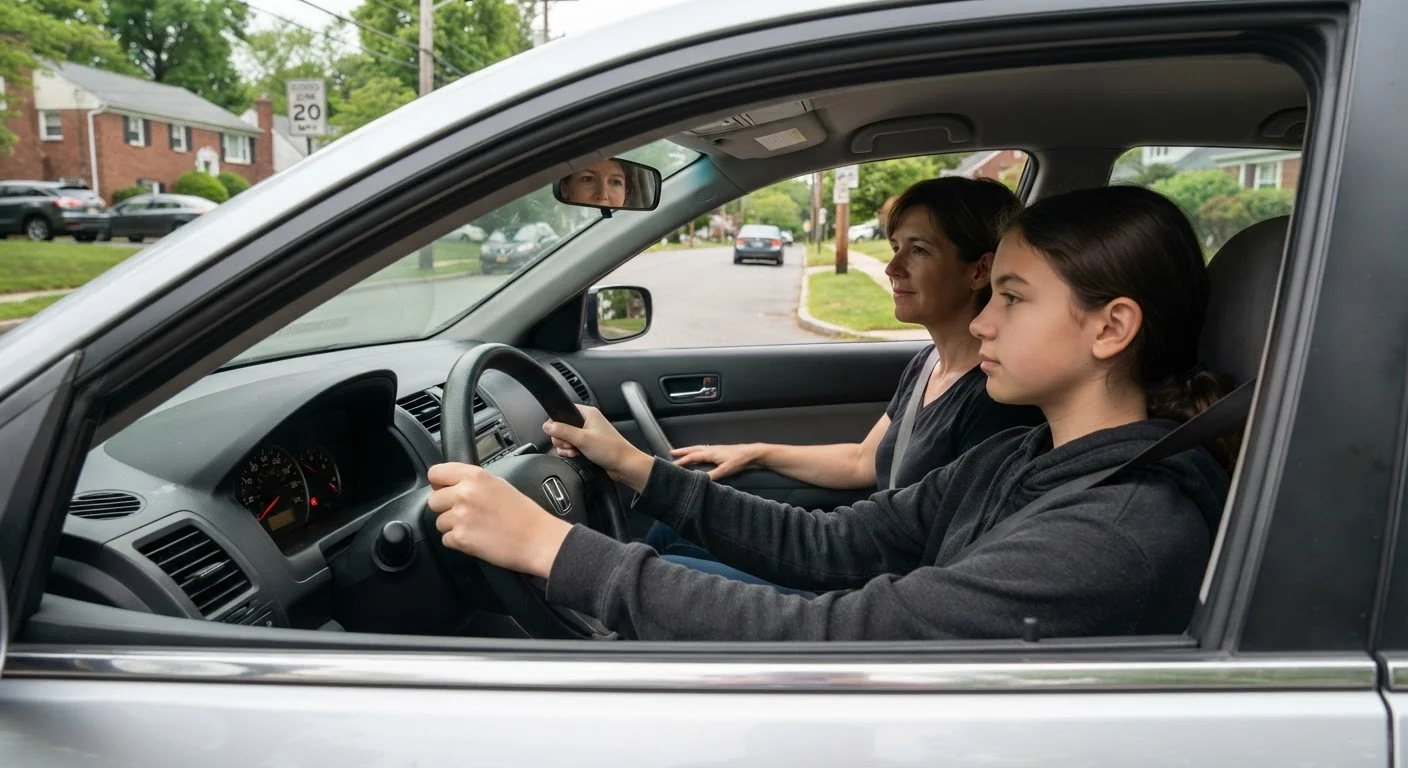
- Learner's Permit: The teen may drive only when accompanied by a licensed adult supervisor - typically a parent or guardian. Most states require a minimum number of practice hours (often 50 or more), and some mandate a portion be completed at night. This phase lasts a minimum of several months.
- Intermediate (Provisional) License: The teen can drive unsupervised during daytime hours but faces restrictions on nighttime driving and the number of teen passengers allowed. Some states also prohibit mobile device use during this stage entirely. The intermediate phase generally lasts until age 17 or 18.
- Full Unrestricted License: All restrictions lift once the driver meets the minimum age and has a clean record during the provisional period.
The logic is straightforward: each restriction targets a documented risk factor. Passenger limits address distraction; nighttime curfews reduce exposure to reduced-visibility conditions that experienced drivers manage through pattern recognition a new driver hasn't yet developed. For a deeper look at how darkness changes road risk, see our article on why darkness changes everything about road hazards.
Make the Most of the Learner Permit Phase
Many families treat the learner permit as a countdown to independence, logging just enough hours to qualify. Research suggests that teens who practice across a wider range of conditions - unfamiliar roads, rain, night driving with supervision - build the hazard recognition skills that actually reduce crash risk after licensing. Consider setting a family driving agreement that specifies not just hours but scenario variety.
What the Evidence Shows About GDL Effectiveness
The research record on GDL programs is among the most consistent in traffic safety. Studies published in peer-reviewed journals and reviewed by the Insurance Institute for Highway Safety (IIHS) have found that comprehensive GDL laws are associated with reductions in fatal crash involvement among 16-year-old drivers - with some analyses estimating reductions in the range of 10-30% depending on program strength and state context.
Critically, not all GDL programs are equally effective. The IIHS and other researchers have consistently found that programs with stronger provisions - longer learner periods, stricter nighttime curfews, tighter passenger limits, and higher minimum licensing ages - are associated with larger crash reductions than weaker versions. States that have strengthened their GDL laws have generally seen corresponding improvements in teen crash data.
“Graduated licensing is one of the most effective traffic safety interventions we have. The evidence base is unusually strong for a behavioral policy - states that adopt robust programs see real reductions in teen crash deaths.”
— Anne McCartt, Senior Vice President for Research, Insurance Institute for Highway Safety (IIHS)
One consistent finding is that the benefits of GDL are concentrated at age 16, and some research suggests they partially shift - rather than eliminate - risk to age 18 when full licenses are issued. This underscores that GDL buys developmental time but doesn't replace the need for sustained safe driving habits. Defensive driving principles remain important well beyond the provisional stage.
What Parents and Teens Should Know
Understanding GDL isn't just a compliance exercise - it's a framework for structuring early driving experience in ways that build real skill. Parents who treat the learner phase as an active coaching period, rather than a formality, set their teens up for lower crash risk over the long term.
Practical considerations worth knowing:
- Practice variety matters: Supervised sessions should cover different road types, traffic densities, weather conditions, and highway versus city driving - not just familiar neighborhood loops.
- State laws vary: Your state's specific GDL rules - including minimum permit age, required hours, and restriction details - should be verified directly with your state's Department of Motor Vehicles, as they differ meaningfully across the country.
- Violations matter: Most GDL programs extend intermediate license requirements or add penalties if a teen receives a moving violation during the provisional stage. This creates a meaningful accountability structure.
- Impairment is an added layer of risk: Zero-tolerance alcohol laws apply in all states for drivers under 21. How cannabis and prescription drugs affect driving is also a concern that parents should address explicitly with teen drivers.
Graduated licensing represents one of the most evidence-supported interventions in traffic safety. Knowing how it works - and why each restriction exists - helps families use it as intended: not as a bureaucratic hurdle, but as a structured path toward genuinely safer drivers.
Frequently Asked Questions
Most GDL systems include a supervised learner's permit phase, an intermediate or provisional license phase with specific restrictions (such as no late-night driving), and a full unrestricted license. The requirements and timelines for each stage differ by state.
Research consistently shows that comprehensive GDL programs are associated with lower crash rates among teenage drivers, particularly 16-year-olds. Studies have found reductions in fatal crashes following the adoption or strengthening of GDL laws, though the magnitude varies by state and program design.
Carrying peer passengers increases the likelihood of distraction and risk-taking behavior among teenage drivers. Research suggests crash risk rises with each additional teen passenger in the vehicle, which is why many GDL programs restrict passenger numbers during the intermediate stage.
Most states allow teens to progress to a full unrestricted license at age 17 or 18, provided they have met minimum practice hours, held an intermediate license for a set period, and maintained a clean driving record.
Many states prohibit cell phone use for all drivers, but GDL intermediate license holders are often subject to stricter rules, including bans on any handheld or hands-free device use. Specific rules vary by state, so checking your state's DMV guidelines is essential.
Parents can provide consistent supervised practice across a variety of road conditions - highways, night driving, rain - rather than only familiar local routes. Setting a family driving agreement that mirrors or exceeds GDL restrictions is also a widely recommended approach.
The content on this site is for informational purposes only and is not a substitute for professional advice. Always consult a qualified professional for guidance specific to your situation.