

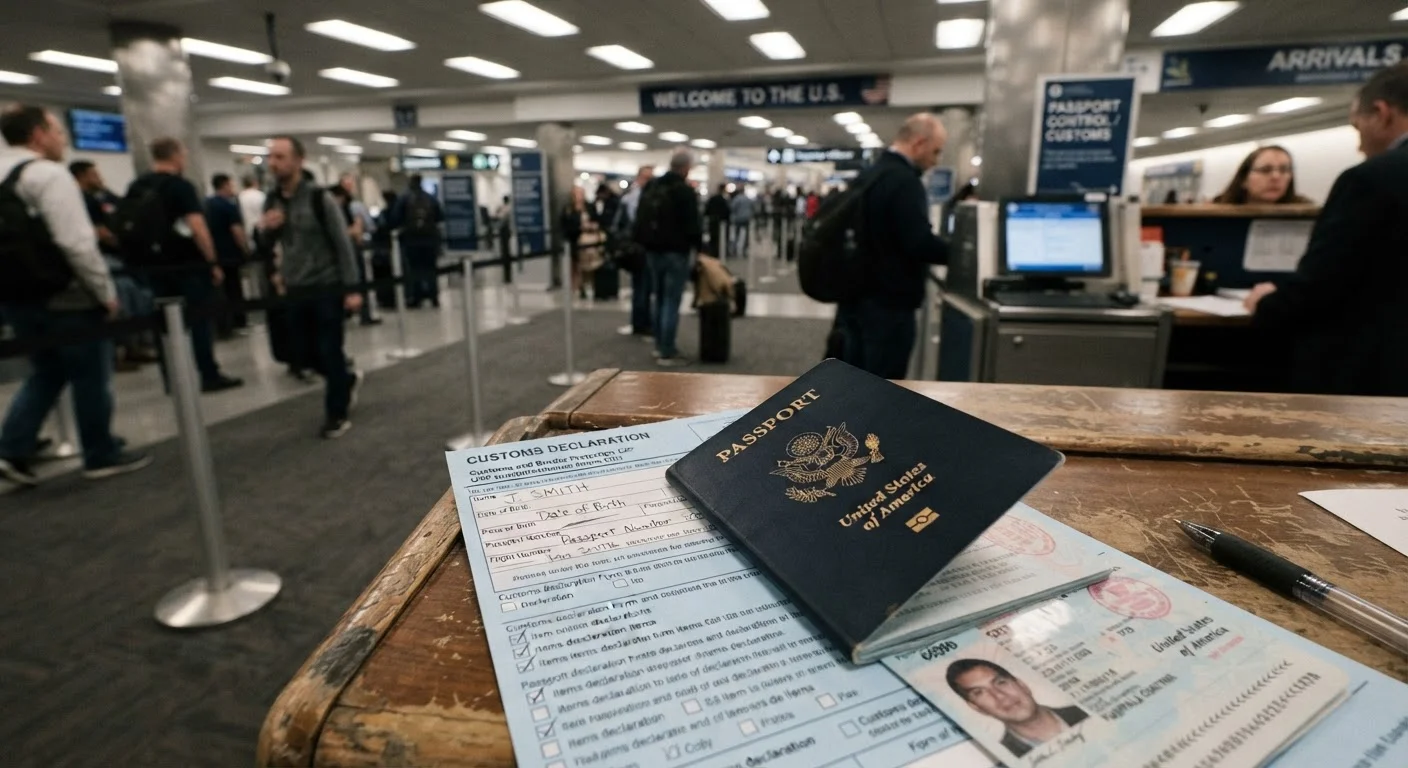
What Is a Customs Declaration and Who Must File One?
Every American returning from an international trip - whether it's a weekend in Cancún or a month-long backpacking trip through Southeast Asia - is legally required to complete a U.S. Customs and Border Protection (CBP) declaration. This declaration is your official account of what you're bringing back into the country.
Traditionally submitted on CBP Form 6059B, the process is increasingly digital: many airports now use the CBP Mobile Passport Control app or automated kiosks to capture this information before you reach an officer. Regardless of format, the declaration covers three core areas: goods and merchandise you purchased or received abroad, currency or monetary instruments over a specific threshold, and agricultural or food items.
If you're heading abroad for the first time, see our guide to planning your first international trip for a full picture of what to prepare before you leave.
The Duty-Free Allowance: What You Can Bring Back Tax-Free
Most returning Americans are entitled to an $800 duty-free exemption per person - meaning you can bring back up to $800 in foreign-purchased goods without owing federal import duties. Families traveling together may combine their individual exemptions on a single declaration form.
Beyond $800, you'll owe a flat 3% duty on the next $1,000 worth of goods. Amounts above that are assessed at standard CBP tariff rates, which vary by item category. Keep your receipts - CBP officers may ask you to substantiate the value of what you're declaring.
A few items have specific sub-limits within the exemption. Alcohol is capped at one liter duty-free for travelers 21 and older (additional quantities may be subject to both federal duty and state taxes). Tobacco products are limited to 200 cigarettes (one carton) and 100 cigars. Perfume containing alcohol is limited to reasonable quantities for personal use.
Customs Declaration
An official form filed by all returning travelers that discloses goods, currency, and agricultural items being brought into the United States. It is required by law and reviewed by CBP officers at the port of entry.
Duty-Free Exemption
The value of foreign-purchased goods a traveler may bring back without paying federal import duties. For most returning Americans, this is $800 per person.
Import Duty
A tax levied by the U.S. government on goods brought in from another country that exceed the duty-free exemption. Rates vary depending on the type and value of the item.
CBP (Customs and Border Protection)
The U.S. federal agency responsible for regulating what enters and exits the country, including processing travelers and enforcing trade and agricultural laws at ports of entry.
CITES
The Convention on International Trade in Endangered Species - an international treaty that restricts trade in wildlife products made from protected animals. Violations can result in confiscation and fines even when items were purchased legally abroad.
Monetary Instruments
Financial instruments including cash, travelers checks, money orders, and certain negotiable documents. Travelers carrying $10,000 or more in total must declare them to CBP at the border.
What You're Required to Declare - No Exceptions
The declaration is not just about dutiable goods. You must report all of the following, regardless of whether you believe they'll incur a duty:
- Any goods purchased, gifted, or acquired abroad, including items you intend to leave in the U.S.
- Repairs or alterations done to items you took out of the country (even if you're bringing them back with you)
- Currency and monetary instruments totaling more than $10,000, including cash, travelers checks, and certain negotiable instruments. Carrying more than this is not illegal, but failing to declare it is.
- All food, plants, soil, and animal products - even a piece of fruit from the airplane meal counts. The CBP agricultural inspection is taken seriously to protect American farms from foreign pests and disease.
- Any medications, including prescriptions, particularly if they contain controlled substances. For detailed preparation guidance, see how to document medications for international travel.
Undeclared items - especially agricultural goods and currency - are among the most common reasons travelers receive fines or have items confiscated at the border.
Restricted and Prohibited Items: Know Before You Pack
Not everything can come back with you, no matter how much you paid for it. Certain items are restricted (allowed under specific conditions) and others are prohibited (banned entirely).
Common restricted items include:
- Wildlife products and souvenirs - items made from protected species (ivory, tortoiseshell, certain feathers) may violate the Endangered Species Act and CITES treaties even if purchased legally abroad.
- Certain meats, cheeses, and fresh produce - agricultural restrictions vary by country of origin; CBP and USDA rules govern what's admissible.
- Alcohol beyond personal-use quantities may require state-level permits depending on where you're re-entering.
Prohibited items include narcotics, drug paraphernalia, obscene materials, and goods originating from countries subject to U.S. trade sanctions. Cultural artifacts and antiquities from certain countries are also barred under international agreements.
Always verify current rules directly with CBP.gov before your return trip, as policies can change. If you're still building your pre-travel checklist, our pre-departure checklist walks you through everything to confirm before you fly.
Ignorance Is Not a Defense at Customs
CBP officers are empowered to assess fines and confiscate undeclared or prohibited goods regardless of whether you knew the rules. Penalties for failing to declare currency can be particularly severe, including civil forfeiture. When in doubt, declare the item and let the officer make the determination - it's always the safer approach. Always check CBP.gov for the most current regulations before your trip.
The content on this site is for informational purposes only and is not a substitute for professional advice. Always consult a qualified professional for guidance specific to your situation.