

Why Currency Exchange Trips Up Even Experienced Travelers
Money exchange sounds simple: swap dollars for the local currency, then spend freely. But the mechanics behind that transaction are riddled with fine print, inflated margins, and psychological nudges designed to benefit the exchanger - not you. For first-time international travelers especially, the unfamiliarity of foreign denominations and a general eagerness to just get through the airport makes it easy to make costly decisions without realizing it.
The good news is that most of these mistakes are entirely avoidable once you know what to watch for. Whether you're heading to Europe, Southeast Asia, or Latin America, understanding the currency exchange landscape before you land can meaningfully stretch your travel budget. For a broader look at what first-timers should know, see our guide to your first international trip.
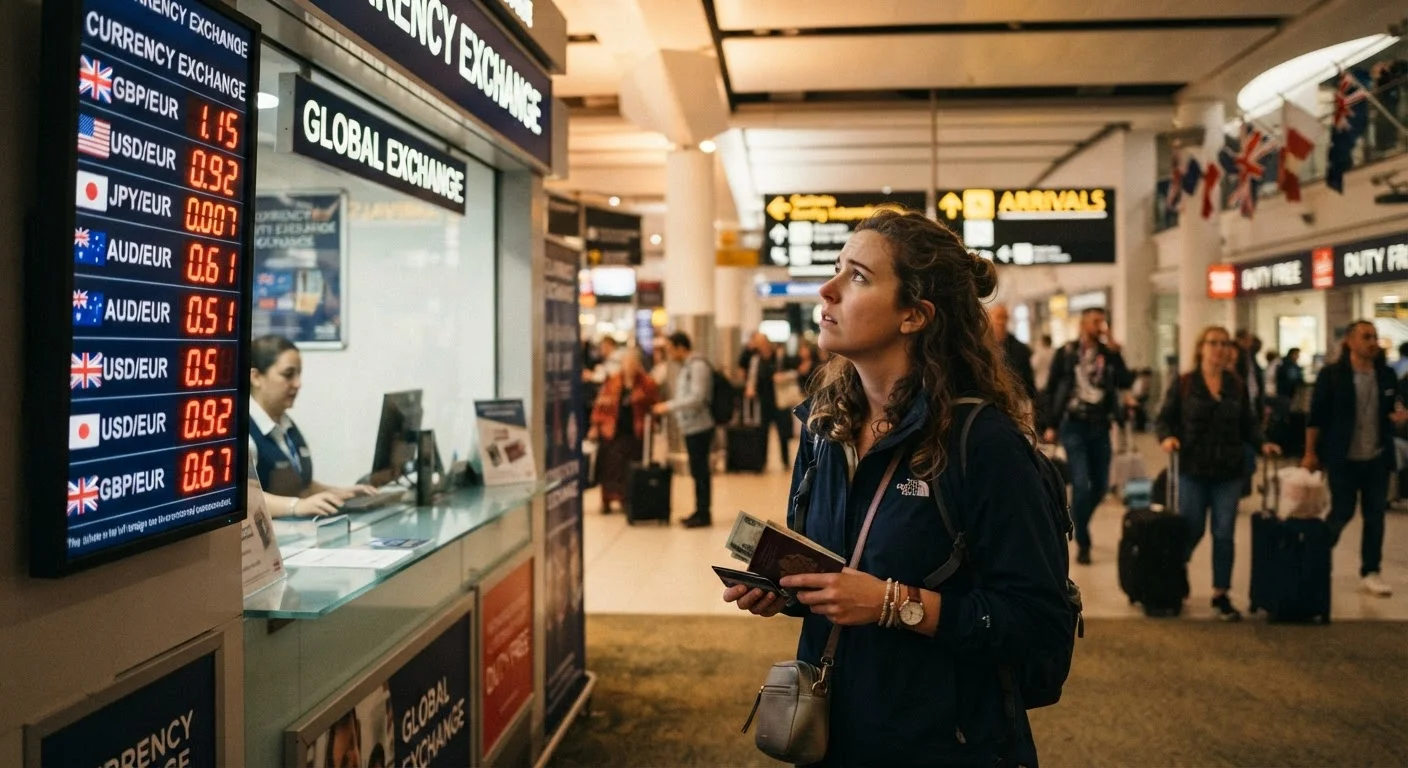
Exchanging currency at airport kiosks or hotel desks.
Why it happens: These locations feel official and safe, and travelers arriving after a long flight just want cash fast without hunting for alternatives.
Accepting dynamic currency conversion (DCC) at point-of-sale terminals.
Why it happens: When a card terminal abroad offers to charge you in US dollars instead of the local currency, it seems helpful - you can see exactly what you're paying. But the merchant or terminal provider sets that exchange rate, almost always at a steep markup.
Not notifying your bank or credit card issuer before traveling.
Why it happens: Many travelers forget this step or assume modern fraud systems make it unnecessary. Banks can still flag or freeze cards when unusual foreign transactions appear.
Carrying too much exchanged cash - or far too little.
Why it happens: Travelers either over-exchange out of anxiety about running short, or under-exchange and repeatedly return to expensive exchange counters throughout the trip.
Ignoring ATM fees by using the first machine available.
Why it happens: When you need cash urgently, any ATM looks fine. But independent ATMs in tourist areas often charge flat fees of $5 or more per transaction on top of your own bank's fees.
Smarter Habits to Carry Through Every Trip
Beyond avoiding specific mistakes, developing a consistent pre-trip money routine makes a real difference. Contact your bank and credit card issuers a week or two before departure - not just to flag travel alerts, but to ask directly about foreign transaction fees, ATM withdrawal limits, and whether your card has a fee reimbursement program. Some checking accounts refund ATM fees globally, which changes your strategy significantly.
Up to 15%
Markup at airport currency exchange desks
Consumer financial watchdogs have noted that airport exchange kiosks can apply margins of 10-15% above the mid-market rate, varying by location and operator.
3-7%
Typical dynamic currency conversion surcharge
Payment industry analyses suggest DCC transactions routinely carry markups of 3-7% above mid-market rates, applied by the merchant or terminal provider.
It's also worth building currency costs into your overall trip budget from the start. Exchange losses are often treated as invisible expenses, but they add up. For a complete look at the travel costs people routinely underestimate, check out our travel budget breakdown. And because navigating foreign countries involves more than just money, you'll want to read up on cultural norms that catch American travelers off guard before you go - social missteps can be just as disorienting as financial ones.
This article is for general informational purposes only. Exchange rates, bank fees, and financial products vary widely; verify current terms directly with your financial institution before traveling.
The content on this site is for informational purposes only and is not a substitute for professional advice. Always consult a qualified professional for guidance specific to your situation.