

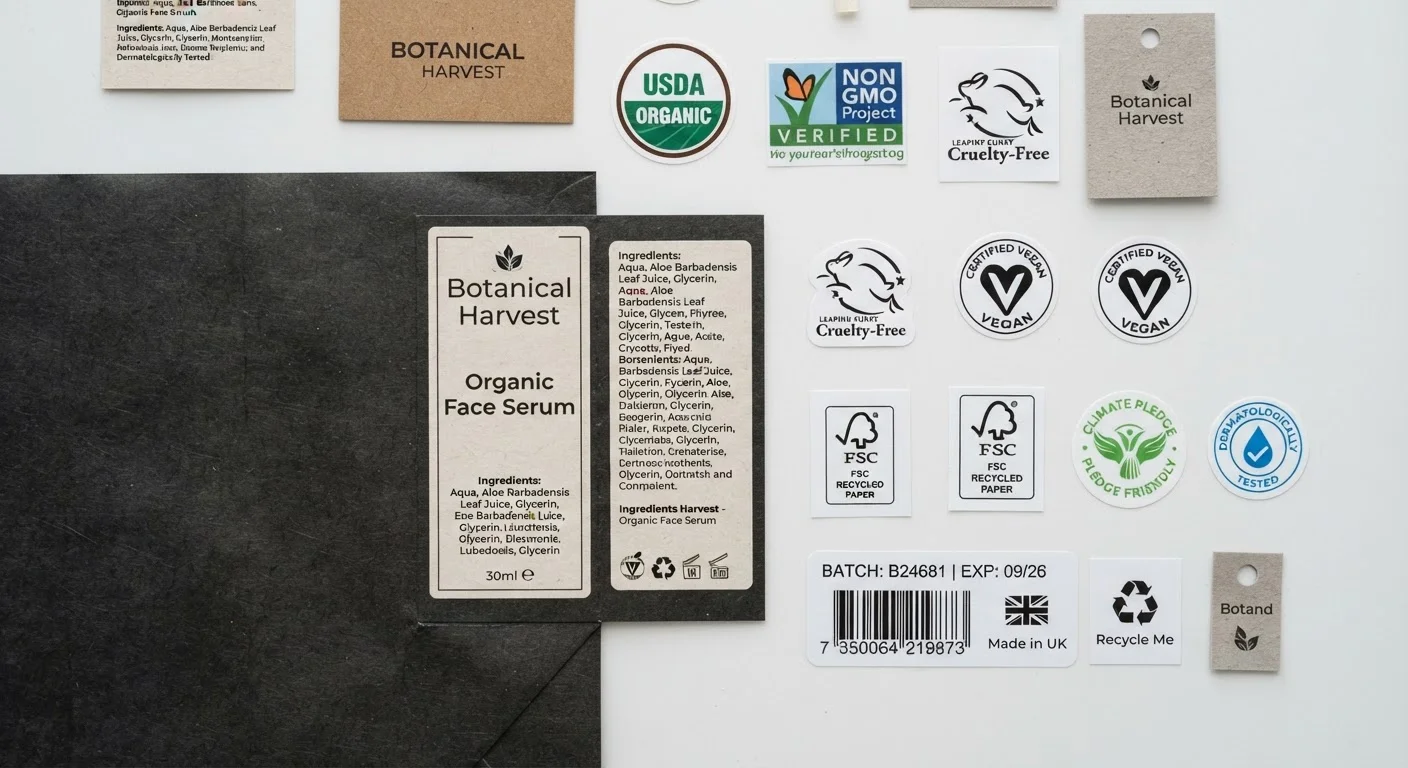
Why Certification Labels Vary So Widely in Meaning
Walk through any retail aisle - physical or digital - and you'll encounter dozens of badges, seals, and checkmarks on product packaging. Some represent months of third-party laboratory evaluation. Others were printed by the manufacturer with no external review at all. Knowing the difference can meaningfully change how you evaluate what you're buying.
The core distinction is simple: a meaningful certification is administered by an organization independent of the manufacturer, with published criteria and a defined testing or audit process. A marketing badge, by contrast, is self-applied - the company decides its own product meets its own definition of a claim. Neither type is illegal, but only one requires accountability.
This matters especially for categories where performance, safety, or environmental impact is the deciding factor in a purchase. As you read product listings, consider pairing this guidance with our explainer on first-party specs vs. independent testing - the same logic applies to certifications that only cite manufacturer data.
UL Listed or UL Recognized (Safety - Electrical Products)
UL Solutions (formerly Underwriters Laboratories) is one of the oldest and most established product safety testing organizations in the United States. When a product carries a UL Listed mark, it means UL has evaluated that specific product against published safety standards and determined it meets them. The UL Recognized mark applies to components intended for use within a larger product rather than as a standalone item.
UL certifications are widely required or expected for electrical and electronic products sold in the US market. Retailers and commercial buyers frequently require them. What makes UL credible is its independence from manufacturers, its published standards, and its ongoing factory inspection program - certified products aren't just tested once and forgotten.
UL certification involves ongoing factory inspections, not just a one-time product test.
ENERGY STAR (Energy Efficiency - Appliances and Electronics)
Administered by the U.S. Environmental Protection Agency (EPA), ENERGY STAR certifies that products - appliances, electronics, lighting, HVAC systems, and more - meet specific energy efficiency thresholds established by the EPA. Products must be tested by EPA-recognized laboratories, and the EPA conducts periodic verification testing after certification is granted.
ENERGY STAR has clear, publicly posted efficiency criteria for each product category, which change over time as technology improves. That means a certification earned several years ago may reflect a lower bar than a more recent one. The ENERGY STAR website allows consumers to search certified products by category, model number, or brand.
ENERGY STAR criteria are updated as technology advances, so older certifications may reflect a lower bar.
NSF International (Water, Food Safety, and Supplements)
NSF International operates certification programs across water filtration, food equipment, dietary supplements, and food safety systems. For water filters, NSF/ANSI standards specify exactly which contaminants a filter is tested to reduce - and by how much. A filter labeled "NSF 53 Certified" has been independently tested to reduce health-related contaminants; "NSF 42" covers aesthetic contaminants like chlorine taste and odor.
This specificity is what makes NSF marks useful: they don't just say a product meets a vague standard - they identify which standard, allowing consumers to match the certification to their actual need. For dietary supplements, NSF certification addresses ingredient identity and label accuracy, though it is not a health claim about efficacy.
NSF marks identify the specific standard met, so you can match the certification to your actual need.
USDA Organic (Food and Agricultural Products)
The USDA Organic seal is administered by the U.S. Department of Agriculture under the National Organic Program (NOP). Products bearing this seal must meet defined standards for how crops are grown and how livestock are raised - covering synthetic pesticide use, genetic modification, and other practices. Certification requires annual inspection by USDA-accredited certifying agents.
However, "organic" describes a production method, not a nutritional outcome. It also applies to the agricultural inputs - a processed food product can be certified organic while still being high in sugar or sodium. The seal is meaningful within its defined scope, but interpreting it beyond that scope is where confusion tends to arise.
USDA Organic certifies a production method - not nutritional quality or health outcomes.
Vague Environmental Claims - 'Eco-Friendly,' 'Green,' 'Natural'
Terms like eco-friendly, green, sustainable, and natural appear frequently on packaging but have no standardized regulatory definition when used as general marketing language. No independent body audits these terms before a company uses them. The Federal Trade Commission's Green Guides provide guidance to companies on avoiding deceptive environmental claims, but the terms themselves remain broadly unregulated.
This doesn't mean every product using these words is deceptive - some companies use them alongside legitimate third-party certifications. But taken alone, without a named certifying organization and a referenced standard, these labels function as marketing copy rather than verified claims. If environmental performance matters for your purchase, look for a specific certification - such as Rainforest Alliance, FSC (Forest Stewardship Council) for wood products, or OEKO-TEX for textiles - rather than a standalone adjective.
Without a named certifying body, environmental terms like 'natural' or 'green' are marketing copy, not verified claims.
CE Marking (European Conformity - Sold in the US)
The CE mark is a European regulatory marking indicating that a product meets the requirements of applicable EU directives - covering areas such as electrical safety, electromagnetic compatibility, and toy safety. It is legally required for many product categories sold within the European Economic Area.
In the US context, CE marking is frequently misunderstood. It is not a quality certification issued by an independent testing lab; for many product categories, it is a manufacturer's self-declaration of conformity. Some CE marks do require third-party involvement, depending on the directive and risk level, but many do not. Seeing CE on a product sold in the US tells you it was designed for the EU market - it is not a substitute for US-specific certifications like UL or FCC authorization for electronic devices.
CE marking is often a manufacturer's self-declaration for EU markets - not an independent US safety certification.
How to Verify a Certification Before You Trust It
Spotting a seal is one thing; verifying it takes only a few extra steps. Most legitimate certifying bodies maintain searchable public databases where you can confirm that a specific product or company holds the certification claimed. UL Solutions, NSF International, and ENERGY STAR all provide this. If you search for a product and find no listing, that's a signal worth pausing on.
Also worth asking: when was the certification last renewed? Certifications can lapse, and a product displaying an outdated seal may no longer meet current standards. This is especially relevant in fast-evolving categories like electronics energy efficiency or water filtration.
Check the Certifying Body's Public Database
Before trusting a certification claim on a product listing, go directly to the certifying organization's website and search for the product or manufacturer. UL, ENERGY STAR, NSF, and USDA all maintain searchable records. If the product doesn't appear, treat the displayed seal with skepticism. This takes under two minutes and can save considerable frustration later.
Ultimately, certifications are one input among several. They work best alongside trustworthy product review signals and an understanding of how marketing language can obscure rather than inform. A certified product isn't automatically a well-made one - and a well-made product can exist without certification. The goal is to use these labels as structured evidence, not as shortcuts that replace your own judgment.
The content on this site is for informational purposes only and is not a substitute for professional advice. Always consult a qualified professional for guidance specific to your situation.