

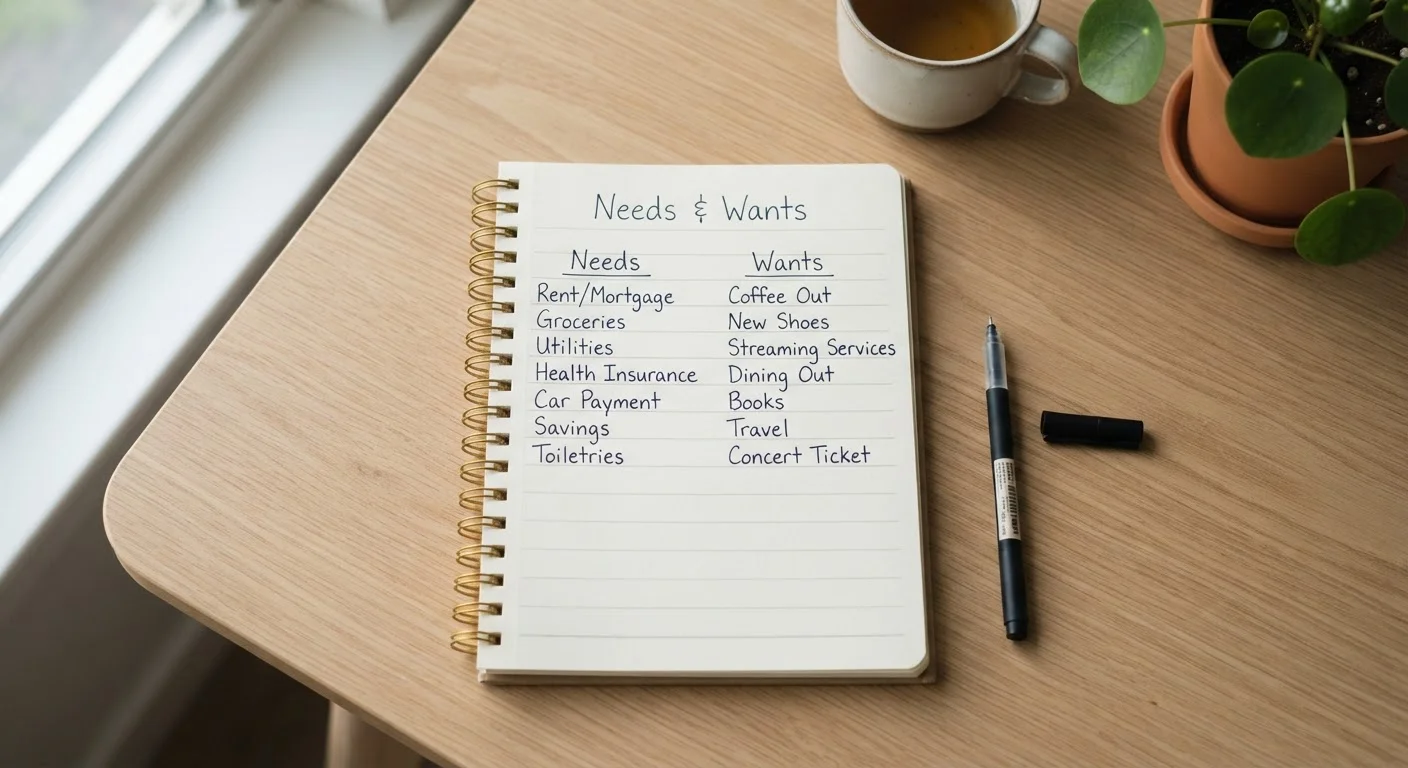
Why the Line Keeps Moving
Most people encounter the wants-versus-needs idea early - in a budgeting class, a personal finance book, or a parenting conversation. The concept sounds clean and binary. In practice, it isn't.
The line between wanting and needing something shifts based on income, geography, life stage, and social context. A gym membership is a want for most people, but for someone managing a chronic condition on a doctor's recommendation, it may represent a genuine health need. Reliable broadband is a luxury in some contexts and a hard workplace requirement in others. Air conditioning is optional in mild climates and a safety matter in extreme heat for vulnerable individuals.
This isn't a reason to give up on the distinction - it's a reason to apply it more honestly rather than defaulting to a fixed list. The goal is sharper thinking, not perfect categorization.
Context Changes the Calculus
There is no universal list of needs that applies to everyone. What constitutes a need depends on your income level, geographic location, job requirements, health situation, and family structure. Frameworks and category rules are useful starting points, but they should be adjusted to reflect your actual circumstances rather than applied rigidly.
The Rationalization Problem
One of the most useful things to understand about spending psychology is how easily wants get dressed up as needs. Researchers in behavioral economics have documented that people often reverse-engineer justifications for purchases they've already emotionally decided to make.
Common signals that rationalization may be at work include:
- Urgency framing: Telling yourself you have to buy something now, when the timeline is actually flexible.
- Comparison anchoring: Deciding a more expensive option is a need because a cheaper version feels unacceptable - even if the cheaper version would genuinely serve the function.
- Identity reasoning: Believing a purchase is required to do your job, fit in, or meet expectations - when that belief hasn't been tested.
None of these patterns make someone a bad or reckless spender. They're predictable human tendencies. Recognizing them is the practical starting point.
“The problem with the wants-versus-needs framework isn't the framework itself - it's that people apply it after the fact, once the emotional decision has already been made.”
— Dan Ariely, Behavioral economist and author of 'Predictably Irrational'
A Framework for Thinking It Through
Rather than consulting a fixed category list, a few questions applied consistently tend to produce clearer thinking:
- What specific problem does this solve? If you can't name a concrete problem, the purchase is almost certainly a want - and that's fine, as long as it's acknowledged.
- What's the realistic consequence of not buying it? Distinguish between inconvenience and genuine hardship. Both are real, but they carry different weight in a budget.
- Is there a lower-cost option that solves the same problem? If yes, the gap between the two is likely want territory. See our beginner's guide to evaluating product value for a more detailed approach to this question.
- Am I solving for function or for preference? Both are legitimate, but preferences belong in the wants column of your budget - not the needs column.
Applying these questions before a significant purchase takes a few minutes and can prevent significant regret. For large decisions - housing, vehicles, major appliances - the stakes are high enough to be worth the extra scrutiny. When it comes to transportation, for instance, you might genuinely need reliable transit but still face want-level choices within that need; our overview of leasing vs. buying walks through exactly that kind of layered decision.
Putting It Into a Budget Context
The wants-versus-needs distinction isn't just philosophical - it has direct structural uses in budgeting. The 50/30/20 budgeting framework explicitly divides after-tax income into needs (50%), wants (30%), and savings or debt repayment (20%). The framework only works if you assign categories honestly.
~1 in 3
Americans report living paycheck to paycheck
Multiple annual surveys, including those by LendingClub and PYMNTS, have consistently found that roughly a third of U.S. adults report spending most or all of their monthly income.
74%
Of adults who regret impulse purchases
A 2023 survey by Bankrate found nearly three-quarters of Americans reported making an impulse purchase they later regretted, with clothing, household items, and food topping the list.
Similarly, big life decisions often involve both a genuine need and a set of want-level choices layered on top of it. You may need housing, but the choice between renting and buying involves preferences, risk tolerance, and financial trade-offs that go well beyond the basic need. Our look at renting vs. buying a home explores that complexity in more depth.
The point isn't to restrict your spending to bare necessities. Wants matter. Spending on things that bring genuine enjoyment or quality of life is a legitimate use of money. What matters is doing it with clear eyes - knowing what you're buying and why, and making that choice deliberately rather than by default.
For a broader look at how to weigh competing spending priorities, see trade-offs every thoughtful spender should know how to make.
This article is for general informational and educational purposes only and does not constitute personalized financial advice. Consider consulting a qualified financial professional for guidance tailored to your situation.
Frequently Asked Questions
Ask what would realistically happen if you skipped the purchase. If the answer involves genuine hardship - losing your job, going without heat, lacking medication - it's likely a need. If the answer is discomfort or disappointment, it's likely a want. The key word is 'realistically.'
Yes. A smartphone was once a luxury item; today it's often required for job applications, banking, and health services. Circumstances, technology, and social infrastructure all shift what qualifies as a basic requirement. That's why rigid category lists can become outdated quickly.
No. Wants are a normal and healthy part of spending - they include recreation, hobbies, and quality-of-life improvements. The goal isn't to eliminate them, but to spend on them deliberately, with awareness of the trade-offs involved.
Significantly. What counts as a need can shift based on what you can realistically afford and what your environment demands. Someone in a rural area may genuinely need a car; someone in a dense city with transit may not. Context always matters more than universal rules.
For major decisions, the distinction helps separate baseline requirements from upgrades. You may need reliable transportation, but whether you need a new vehicle versus a used one, or leasing versus buying, involves want-level choices layered on top of a real need.
The content on this site is for informational purposes only and is not a substitute for professional advice. Always consult a qualified professional for guidance specific to your situation.