

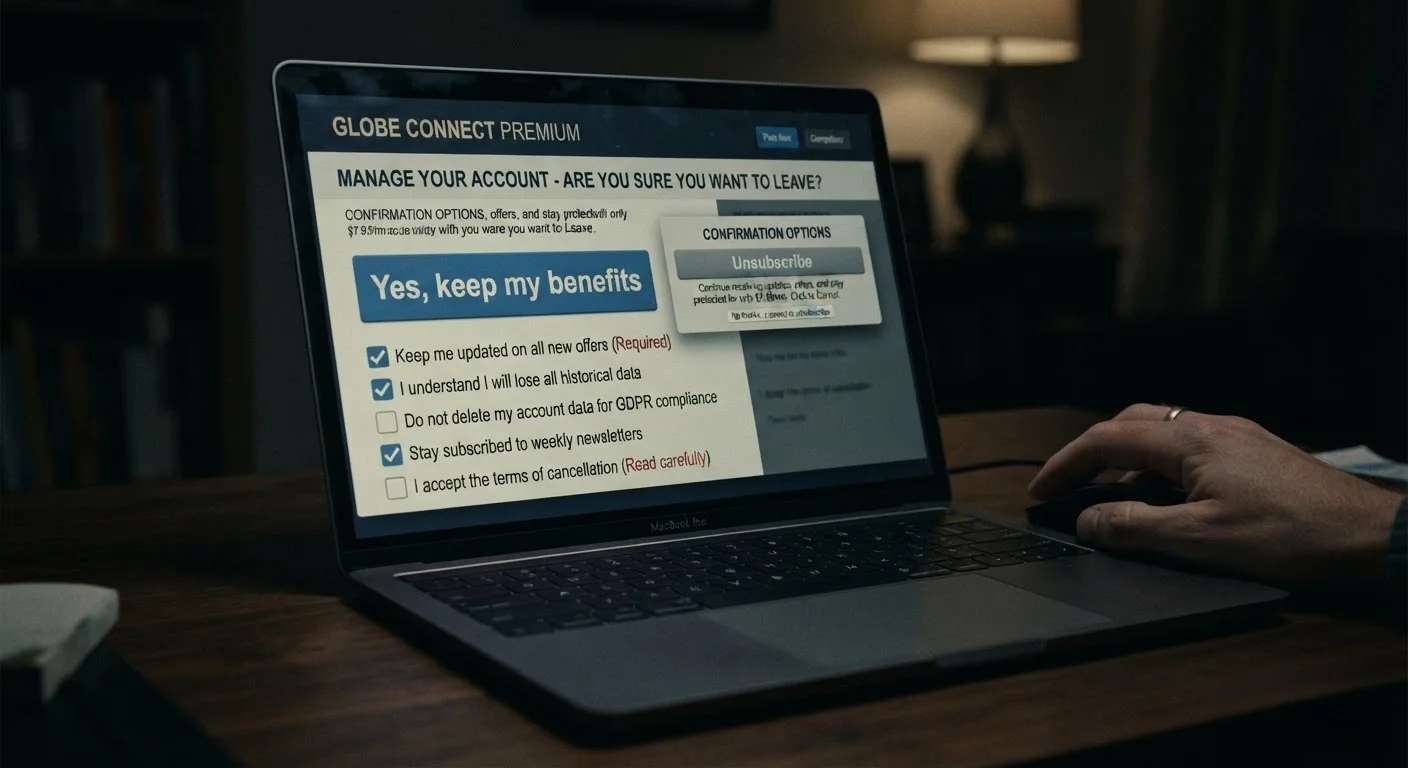
What Dark Patterns Look Like in Practice
Dark patterns show up across nearly every category of online commerce - retail checkout flows, subscription services, app permissions, and travel booking sites. Knowing the most common types is the first step toward not falling for them.
Hidden opt-ins and pre-checked boxes are among the oldest tactics. A retailer might add a newsletter subscription or a paid protection plan to your cart automatically, pre-checked, so that proceeding without noticing means you've agreed. The burden is placed on you to find and remove it.
Confirmshaming is the practice of labeling the opt-out choice with guilt-inducing language - for example, a pop-up that offers "Yes, save me money" versus "No, I don't want to save money." The design is engineered to make declining feel irrational or embarrassing.
Forced continuity occurs when a free trial rolls into a paid subscription without a clear, prominent reminder - and cancellation is deliberately buried. You may have technically consented during sign-up, but the design is structured to make you forget or give up trying to stop charges.
Misdirection and visual tricks guide your attention toward a company's preferred outcome. A brightly colored "Continue" button next to a gray, undersized "Cancel" link is a classic example. The hierarchy is designed to make one choice feel like the only choice.
For related context on how language itself can mislead consumers, see our article on reading between the lines of product marketing language.
76%
Consumers who encountered dark patterns in the past year
A 2022 study by the Princeton Center for Information Technology Policy found that a significant majority of users experienced at least one dark pattern during online shopping in the prior 12 months.
$5B+
In fines and settlements tied to deceptive subscription practices
The FTC and state regulators have collectively pursued billions in remedies from companies using manipulative enrollment and cancellation design tactics over the past decade.
29
Dark pattern types catalogued by researchers
Academic and regulatory researchers have identified nearly three dozen distinct interface manipulation techniques, ranging from misdirection to hidden costs and artificial urgency.
The Legal Landscape: What Protections Exist
Consumer protection law is increasingly catching up to dark pattern tactics, though enforcement remains uneven.
At the federal level, the FTC Act prohibits unfair or deceptive acts in commerce. The FTC has applied this authority to dark patterns, most notably in enforcement actions against companies that made subscriptions easy to start and nearly impossible to cancel. The agency has also published research and guidance specifically naming dark pattern categories as areas of concern.
The Restore Online Shoppers' Confidence Act (ROSCA) is a federal law that directly addresses negative option marketing - situations where inaction (like not canceling a trial) is treated as consent to be charged. ROSCA requires that material terms be clearly disclosed before a consumer provides billing information, and that cancellation be as easy as enrollment.
At the state level, California's Automatic Renewal Law and provisions within the California Consumer Privacy Act (CCPA) have set standards that influence how companies design interfaces nationally. Several other states have introduced or passed similar legislation.
Despite these frameworks, enforcement is reactive rather than preventive - regulators generally act after harm has occurred and complaints have been filed. Understanding your rights is essential, but recognizing patterns in real time offers more immediate protection.
Take a Screenshot Before You Click
If something in a checkout or enrollment flow looks suspicious - a pre-checked box, an unusual summary line, or a confusing cancellation warning - take a screenshot before proceeding. That documentation can be invaluable if you later need to dispute a charge with your bank or file a complaint with a consumer protection agency.
How to Protect Yourself Before and After
Awareness is your primary defense. When interacting with any checkout or sign-up flow online, slow down at moments where you feel pressured to act quickly - urgency is often manufactured, not real.
Before completing any transaction:
- Scroll through the entire checkout page before clicking a final button. Look for pre-checked boxes, bundled add-ons, or fine-print subscription terms.
- Search for the company's cancellation policy before signing up for a trial. If it's hard to find, that's informative.
- Check your email immediately after completing any transaction. A confirmation should clearly list exactly what you've agreed to pay and when.
If you've been caught by a dark pattern:
- Document the experience with screenshots before anything changes.
- Contact the company directly first, referencing the specific charge or enrollment.
- If that fails, dispute the charge with your bank or credit card issuer and file a complaint with the FTC or your state attorney general.
Being an informed consumer means knowing what to look for before you click. Our consumer checklist for major purchases outlines what to verify before agreeing to any significant transaction.
For a broader view of costs that don't appear at checkout, the hidden costs shoppers routinely overlook covers what to factor in before committing.
An online retailer adds travel insurance to a flight booking by default, already checked, with the opt-out hidden below several screens of passenger details.
A streaming service offers a 30-day free trial. When the trial ends, it charges the card on file monthly. The cancellation option requires navigating five separate screens and confirming a final "Are you sure?" prompt with no clear button.
A news website's cookie consent banner has a large "Accept All" button and a small, gray "Manage Preferences" link that leads to a page where each data category must be individually toggled off.
An e-commerce site's loyalty program sign-up includes a checked box that authorizes sharing your purchase history with third-party partners, buried in the terms.
Frequently Asked Questions
Some dark patterns can violate federal and state consumer protection laws, particularly when they involve deceptive trade practices. The FTC has taken enforcement actions against companies using dark patterns, and several states - including California - have enacted laws specifically targeting them. However, legality depends on the specific tactic and context; not every manipulative design element has been legally tested.
Start by checking your email for a confirmation receipt that may include a cancellation link. If the company's website makes cancellation difficult, contact your bank or credit card issuer to dispute recurring charges or request a block. You can also file a complaint with the FTC at ReportFraud.ftc.gov or your state attorney general's office.
A roach motel is a pattern where it's easy to get into a situation - like signing up for a free trial - but deliberately difficult to get out. A company might require you to call a phone number during specific hours, navigate through multiple confirmation screens, or complete a lengthy form just to cancel a subscription.
It depends on the company's policies and how clearly the charge was disclosed. If you were signed up for something without clear consent, contacting your credit card issuer about a chargeback is a reasonable first step. Documenting the flow you experienced - with screenshots - strengthens any dispute or regulatory complaint.
You can report deceptive design practices to the FTC at ReportFraud.ftc.gov, or to your state attorney general's consumer protection division. The Consumer Financial Protection Bureau (CFPB) handles complaints involving financial products and services. Screenshots or screen recordings of the design flow are valuable when filing.
The content on this site is for informational purposes only and is not a substitute for professional advice. Always consult a qualified professional for guidance specific to your situation.