

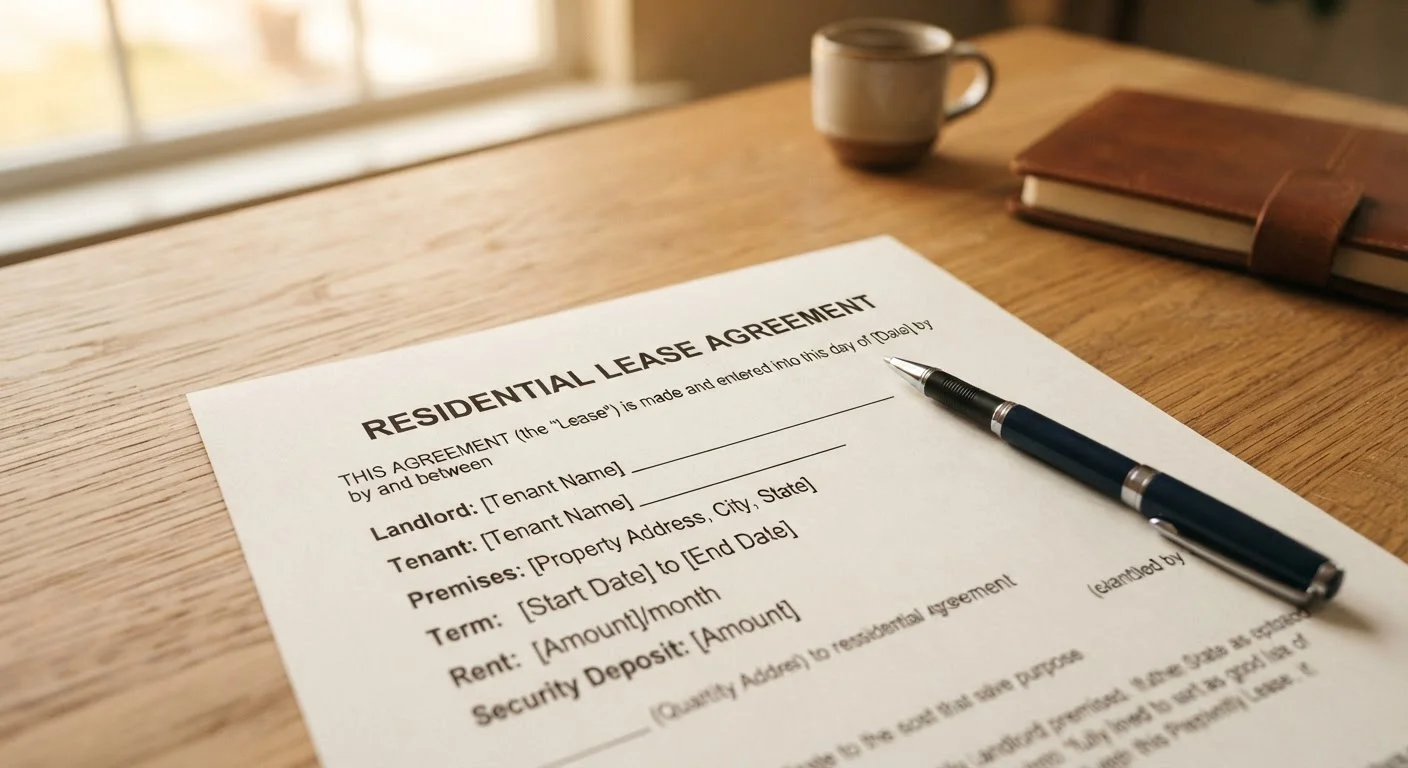
Why Reading Every Clause Actually Matters
Most renters skim a lease, sign it, and hope for the best. That approach can be expensive. A lease is a legally enforceable contract, and every clause — even dense boilerplate — carries real consequences if disputed. Understanding what you're agreeing to protects you from unexpected charges, restrictions, and liability.
If you're also weighing whether renting is right for you at all, our guide to lease structures breaks down the trade-offs between flexible and fixed-term arrangements before you commit.
~44M
Renter households in the United States
According to U.S. Census Bureau data, approximately 44 million households in the United States rent their primary residence.
1–2 months
Typical security deposit limit in most states
Many state landlord-tenant statutes cap security deposits at one to two months' rent, though limits vary by jurisdiction.
14–30 days
Typical window to return a security deposit
Most states require landlords to return security deposits within 14 to 30 days of move-out, with an itemized deduction statement.
The Core Clauses You'll Find in Almost Every Lease
Rent and Payment Terms
This section states the monthly rent amount, the due date (typically the first of the month), acceptable payment methods, and any grace period before a late fee applies. Pay close attention to how late fees are calculated — some leases charge a flat fee; others charge a percentage of rent per day overdue.
Security Deposit
The security deposit clause specifies how much is required upfront and the conditions under which it may be withheld at move-out. State law dictates the maximum deposit amount (often one to two months' rent) and how long landlords have to return it — typically 14 to 30 days after you vacate. Landlords must usually provide an itemized written statement of any deductions.
Lease Term and Renewal
This defines the start and end date of your tenancy. Fixed-term leases — commonly 12 months — lock in the rent and terms for that period. At expiration, many leases convert automatically to a month-to-month arrangement unless notice is given. Check whether renewal requires advance notice from you, and whether the landlord can alter terms at renewal.
Maintenance and Repairs
Leases divide maintenance responsibility between landlord and tenant. Landlords are generally required by law to maintain habitable conditions — working heat, plumbing, and structural safety. Tenants are typically responsible for minor upkeep and must promptly report damage. This clause also often specifies how repair requests must be submitted and typical response timelines.
Document the Unit Before You Move In
Walk through the rental with your landlord before move-in and document any existing damage with dated photos. Request that a move-in checklist be attached to your lease as a signed addendum. This creates a clear paper trail that protects your deposit when it's time to move out.
Clauses That Renters Frequently Misread
Subletting and Guest Policies
Many leases prohibit subletting without written landlord approval. Violating this clause can be grounds for eviction. Guest policies may also restrict how long visitors can stay — some leases define a guest as anyone staying more than 7 to 14 consecutive days, after which they may be considered an unauthorized occupant.
Pet Addenda
A no-pets clause is enforceable, but keep in mind that assistance animals are not legally classified as pets under federal fair housing law. If a pet is allowed, the addendum will specify any pet deposit, non-refundable pet fee, or monthly pet rent — all separate from your standard security deposit.
Early Termination
This clause outlines your financial exposure if you need to leave before the lease ends. Some leases include a buyout option — paying a set fee to end the tenancy cleanly. Others hold you liable for rent through the end of the term or until a replacement tenant is found. Before signing, understand exactly what leaving early will cost you.
Entry and Notice Requirements
Most states require landlords to give advance written notice — commonly 24 to 48 hours — before entering your unit for non-emergency reasons. Your lease should reflect this requirement. If it doesn't, state law still applies, but having it in writing creates a clearer record if a dispute arises.
What to Do Before You Sign
Read the entire lease before signing — not just the highlighted sections a landlord points to. If a clause is unclear, ask for clarification in writing. Some terms are genuinely negotiable, particularly in a less competitive rental market. Our article on negotiating lease terms explains which provisions landlords commonly adjust and how to approach those conversations.
If you're also evaluating a home purchase, it's worth understanding how a lease differs from a purchase contract. See our guide to reading a purchase agreement for that comparison.
When in doubt about whether a specific clause is enforceable in your state, contact a local tenant rights organization or a licensed attorney. Knowing what you've signed is the single most effective protection you have as a renter.
This article is for general informational purposes only and does not constitute legal advice. Lease terms and landlord-tenant laws vary significantly by state and locality. Consult a qualified attorney or tenant rights organization for guidance specific to your situation.
Frequently Asked Questions
Most leases include an early termination clause that outlines your financial liability — often two months' rent or forfeiture of your security deposit. Some states require landlords to make a reasonable effort to re-rent the unit before charging you for the remaining term. Review your lease's specific language and check your state's landlord-tenant laws.
No. A signed lease is a contract, and its terms cannot be altered unilaterally during the lease period without mutual written agreement. Landlords can propose new terms when the lease comes up for renewal, at which point you can negotiate or decline to renew.
Allowable deductions typically include unpaid rent, damage beyond normal wear and tear, and cleaning costs if the unit is left in poor condition. Normal wear and tear — minor scuffs, faded paint — generally cannot be charged to tenants. Deduction rules and return timelines differ by state, so research your local laws.
Verbal rental agreements can be legally binding in some states for month-to-month tenancies, but they are difficult to prove and enforce. For any tenancy longer than one year, most states require a written agreement under the Statute of Frauds.
Joint and several liability means that when multiple tenants sign a lease, each person is individually responsible for the full rent amount. If one roommate doesn't pay, the landlord can pursue any or all co-signers for the entire balance owed.
Generally, yes — a no-pets clause in a private rental is enforceable in most states. However, assistance animals and emotional support animals are protected under federal fair housing law, and landlords must provide reasonable accommodations regardless of a no-pet policy.
The content on this site is for informational purposes only and is not a substitute for professional advice. Always consult a qualified professional for guidance specific to your situation.