

Summary
28 items · 45-90 minutes
Why a Move-In Inspection Matters
Your security deposit - often equal to one or two months' rent - is at stake from the moment you pick up the keys. Without a documented record of your rental's condition at move-in, you have little recourse when a landlord deducts for damage that was already there when you arrived.
A move-in inspection report creates a shared, signed baseline. It protects you from being held responsible for someone else's wear and tear, and it gives your landlord a clear record too. As explained in our guide to what landlords can and cannot keep from your security deposit, documented pre-existing damage is generally not deductible - but only if you can prove it existed before you moved in.
If you're brand new to renting, this step fits into the broader process covered in The First-Time Renter's Roadmap. Think of the inspection as your final due-diligence step before settling in.
Smartphone or Digital Camera
Capture timestamped photos and video of every room and any pre-existing damage.
Written Inspection Form
Provide a room-by-room written record that both tenant and landlord can sign.
Flashlight or Headlamp
Illuminate closets, utility spaces, and under-sink areas where lighting is limited.
Small Plug-In Device or Phone Charger
Test every electrical outlet in the unit to confirm it is functional.
Cloud Storage or Email
Back up all photos and written records off-device for safekeeping throughout your tenancy.
Tape Measure
Measure rooms and doorways to confirm furniture will fit before move-in day.
How to Use This Checklist
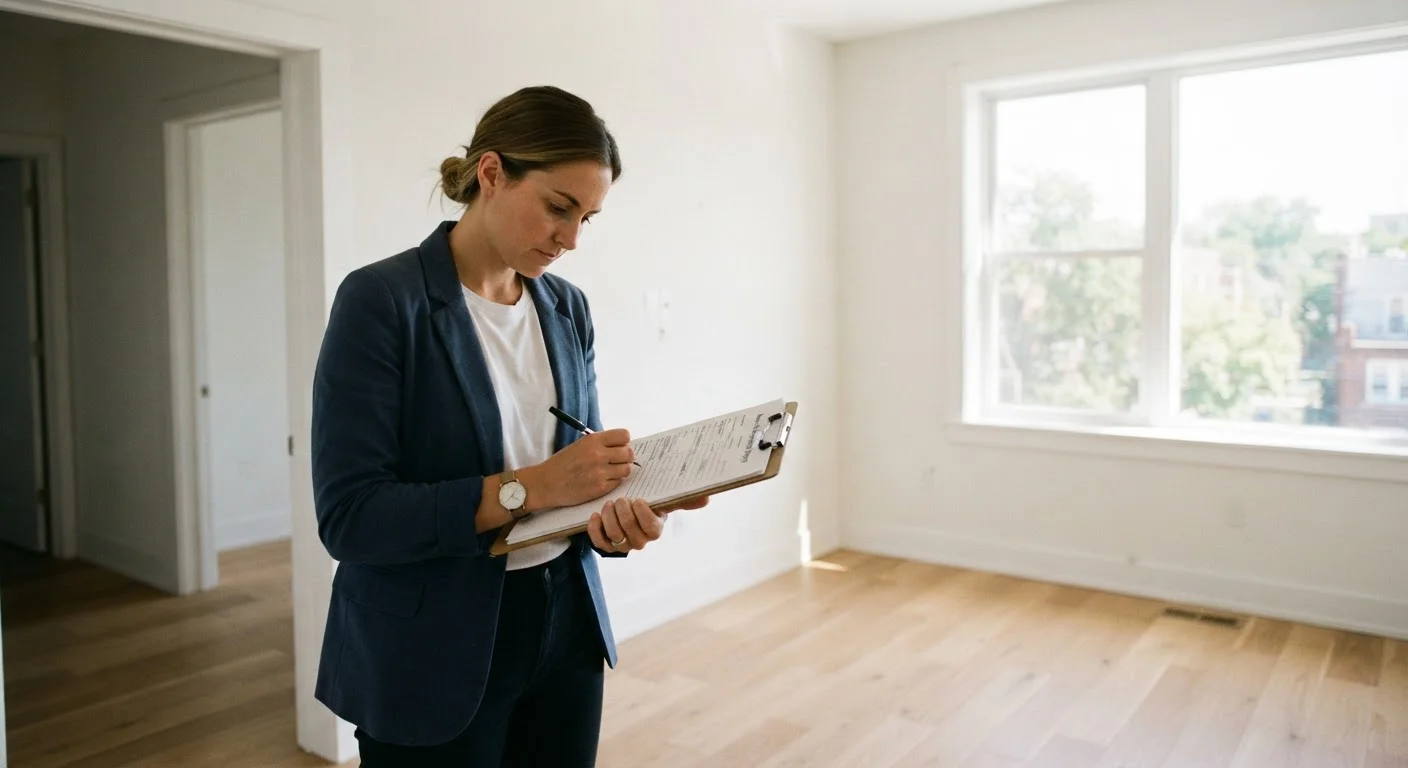
Walk through every room systematically before you bring in a single box. Bring your phone or a camera, the checklist below, and ideally a second set of eyes. For each item, note its condition using simple terms: Good, Fair, or Damaged - and describe any damage specifically (e.g., "3-inch scratch on hallway baseboard, lower right").
Photograph or video every room from multiple angles, including close-ups of any damage. Name your files by room and date. Once complete, submit a copy to your landlord in writing - email creates a time-stamped record - and ask them to countersign the report. Keep your signed copy somewhere safe for the duration of your lease.
Don't Skip the Landlord Co-Signature
An inspection report you've completed alone carries far less weight in a dispute than one your landlord has reviewed and signed. If your landlord is unavailable on move-in day, submit the completed report by email immediately after your walkthrough and ask for written acknowledgment. A time-stamped email trail can serve as supporting evidence if disputes arise later.
Not sure what questions to ask your landlord during or after the inspection? Our article on questions worth asking a landlord before you commit covers what to raise before and at signing.
Before You Walk In
Walls, Floors, and Ceilings
Kitchen
Bathrooms
Electrical, Plumbing, and HVAC
Common Areas and Exterior (if applicable)
Documentation and Sign-Off
After the Inspection: Next Steps
Once you've completed the walkthrough and submitted your report, follow up in writing within 24 hours if you haven't received a signed acknowledgment. Keep all correspondence - texts, emails, and notes from in-person conversations - organized in a dedicated folder.
If you notice issues that weren't visible on move-in day (a heating unit that fails in winter, for example), report them promptly in writing and keep a copy. Timely reporting generally strengthens your legal position as a tenant.
Report All Issues Promptly and in Writing
Any damage or maintenance problem discovered after move-in day should be reported to your landlord in writing as soon as it's found - not just verbally. Delays in reporting can complicate your position if you're later charged for the issue. Written reports (email is ideal) create a dated record that protects both parties and can be critical if you need to involve a local housing authority or small claims court.
For renters interested in understanding how move-in documentation compares to the due diligence process in homeownership, our home-buyer's due diligence checklist offers a useful contrast.
This article provides general informational guidance for renters and is not a substitute for legal advice. Tenant rights and landlord obligations vary by state and locality. Consult a qualified attorney or local tenant rights organization if you have specific legal questions about your rental situation.
The content on this site is for informational purposes only and is not a substitute for professional advice. Always consult a qualified professional for guidance specific to your situation.