

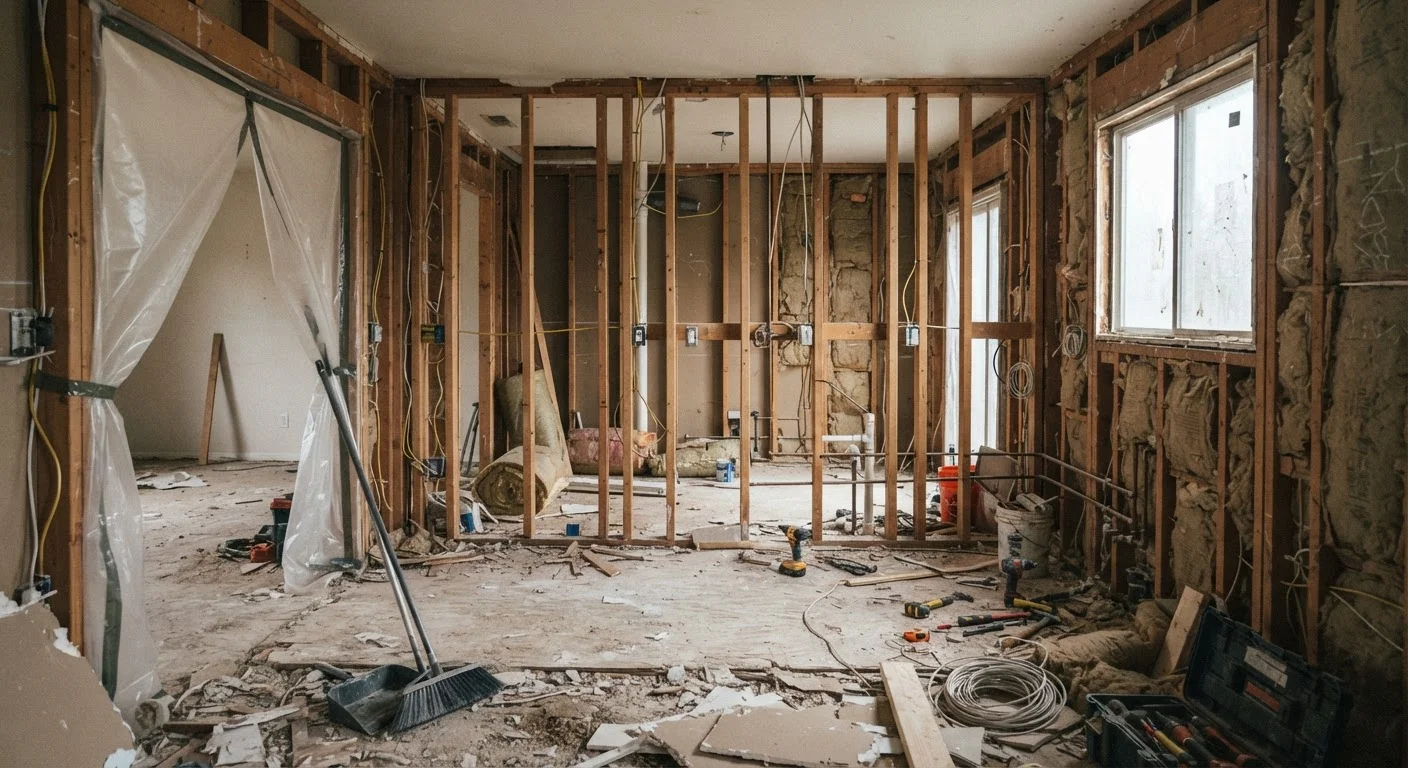
The Gap Between Renovation Expectations and Reality
Most homeowners begin a renovation project focused on the outcome - the finished kitchen, the updated bathroom, the more efficient home. What catches many off guard is just how much the process itself reshapes daily life. Meals get complicated, sleep gets interrupted, routines fall apart, and timelines stretch. The good news: most of these disruptions are predictable. Understanding them ahead of time lets you set up contingency plans rather than scrambling mid-project.
Our complete renovation planning guide covers the full arc of a project, from budgeting to contractor coordination. This article zeroes in on a specific, often-underestimated challenge - the daily life disruptions that catch homeowners by surprise - so you can walk into any of these projects with clear eyes.
Disruption Varies by Home and Scope
The timelines and disruptions described in this article reflect typical scenarios, not guaranteed outcomes. Every home is different - older construction, unusual layouts, or unexpected discoveries behind walls can extend any project. Always ask your contractor for a realistic timeline and discuss contingency plans before work begins. Local permit requirements and inspection schedules can also add days or weeks to a project's duration.
Projects That Disrupt More Than You'd Expect
Full Kitchen Gut-Outs
A complete kitchen renovation - new layout, cabinets, countertops, appliances - typically involves tearing the room down to the studs. During that window, you'll have no sink, no stove, no oven, and no counter space. What surprises most families is the duration: depending on scope, a kitchen can be non-functional for four to eight weeks, and delays from back-ordered appliances or inspections can extend that further.
Before demo day, set up a temporary food station elsewhere in the home. Stock it with a countertop appliance or two, paper plates, and pantry staples that don't require cooking. Factor meal delivery and restaurant costs into your renovation budget - they add up quickly over multiple weeks.
A kitchen can remain non-functional for four to eight weeks - plan your temporary food setup before demo begins.
Single-Bathroom Overhauls
In homes with only one full bathroom, a tile-and-fixture overhaul creates an urgent problem: where does the household go? Even a straightforward retile can take one to two weeks once you factor in subfloor prep, waterproofing, tile setting, and grout cure time. More involved projects - moving plumbing, replacing a tub with a walk-in shower - routinely run three to four weeks.
Options worth arranging in advance include a gym membership for showering access, staying with nearby family, or negotiating with your contractor about scheduling work so at least the toilet remains functional each evening. If your project touches the supply lines or drain stack, expect at least some full shut-down days.
In a one-bathroom home, a tile overhaul can leave the household without facilities for one to four weeks.
HVAC System Replacements
Replacing a central heating or cooling system is often scheduled during mild weather - but that's not always possible, and even mild seasons can deliver uncomfortable days. The installation itself typically takes one to two days, but supply chain delays or permit requirements can push the start date into an uncomfortable stretch. During the changeover, the home may have no conditioned air at all.
If the project falls during summer or winter, arrange portable heating or cooling units in advance. Keep pets and vulnerable household members in mind - extreme indoor temperatures are a genuine health concern, not just an inconvenience. Consult with your contractor on timing and have a backup plan ready before the old system is removed.
Plan portable heating or cooling before the old HVAC unit is removed - there's always a gap between systems.
Whole-Home Flooring Replacement
Replacing flooring across multiple rooms - or the whole house - requires moving furniture out of each space before work begins. Depending on the material being installed, rooms may be off-limits for 24 to 72 hours after installation for adhesive cure or acclimation. In a fully occupied home, this creates a rolling disruption as crews move room to room.
Dust generated by removing old flooring, particularly hardwood sanding or tile demolition, penetrates far beyond the work zone. Temporary plastic barriers help, but expect dust management to be an ongoing chore. Plan for furniture storage - either in a garage, a pod, or another area of the home - well before installation day.
Whole-home flooring projects create rolling room-by-room displacement that can span one to two weeks.
Window Replacements (Whole-House Scale)
Replacing windows in a single room is manageable. Replacing every window in a house, however, means the home is open to outside air - and whatever weather comes with it - in multiple locations simultaneously. In winter or during allergy season, that's a meaningful problem. Installation crews typically work one window at a time, but a full-home replacement can span two to three days, and older homes with unusual frame sizes may encounter special-order delays running several weeks.
Security is another consideration: a home with partially replaced windows and temporary coverings is more vulnerable overnight. Coordinate with your installer on daily completion schedules. Some homeowners also find the noise of frame removal and installation more disruptive than anticipated, especially if working from home. For energy efficiency context, common myths about energy-efficient upgrades can help you evaluate whether window replacement will deliver the savings you're expecting.
Whole-house window replacement leaves your home open to outside air and weather for multiple consecutive days.
Electrical Panel Upgrades
Upgrading an electrical panel requires the utility company to disconnect power to the home while the new panel is installed and inspected. In most cases, this means a full-day outage - no lights, no outlets, no refrigeration, no powered devices. What homeowners often don't anticipate is that scheduling the utility disconnect can add days or weeks to the project timeline, and inspections may require a second outage window.
Treat a panel upgrade day like a planned power outage: charge devices in advance, plan cold meals or takeout, and make arrangements for anyone who depends on powered medical equipment well in advance of the shut-off date.
A panel upgrade means a full-day power outage - plan meals, devices, and medical equipment needs ahead of time.
Before starting any of these projects, it's also worth reviewing which projects require a permit - skipping required approvals can stall work mid-stream, compounding disruption considerably. And if you're weighing whether to take on part of the work yourself, the hidden costs of DIY renovations offers a realistic look at what the savings actually involve.
Living Through It Without Losing Your Mind
The homeowners who manage renovation disruption best share a common trait: they treat the construction period as its own logistical project. That means setting up a temporary kitchen with a microwave, electric kettle, and mini-fridge before demolition starts. It means booking hotel nights or a short-term rental for the days when a critical system goes down. It means communicating with your contractor about daily work windows so the household can plan around noise and dust.
For those newer to homeownership, understanding maintenance fundamentals before renovating can prevent the kind of surprises that turn a planned two-week project into a two-month ordeal. Solid preparation - both practical and psychological - is what separates a stressful renovation from a manageable one.
Build a Disruption Buffer Into Your Timeline
When a contractor gives you a project timeline, add 20 to 30 percent as a personal buffer before making commitments that depend on completion - hosting events, listing the home, or returning borrowed furniture. Supply delays, inspection holds, and unforeseen structural issues are common enough that building in buffer time is considered standard practice by experienced renovators, not pessimism.
The content on this site is for informational purposes only and is not a substitute for professional advice. Always consult a qualified professional for guidance specific to your situation.