

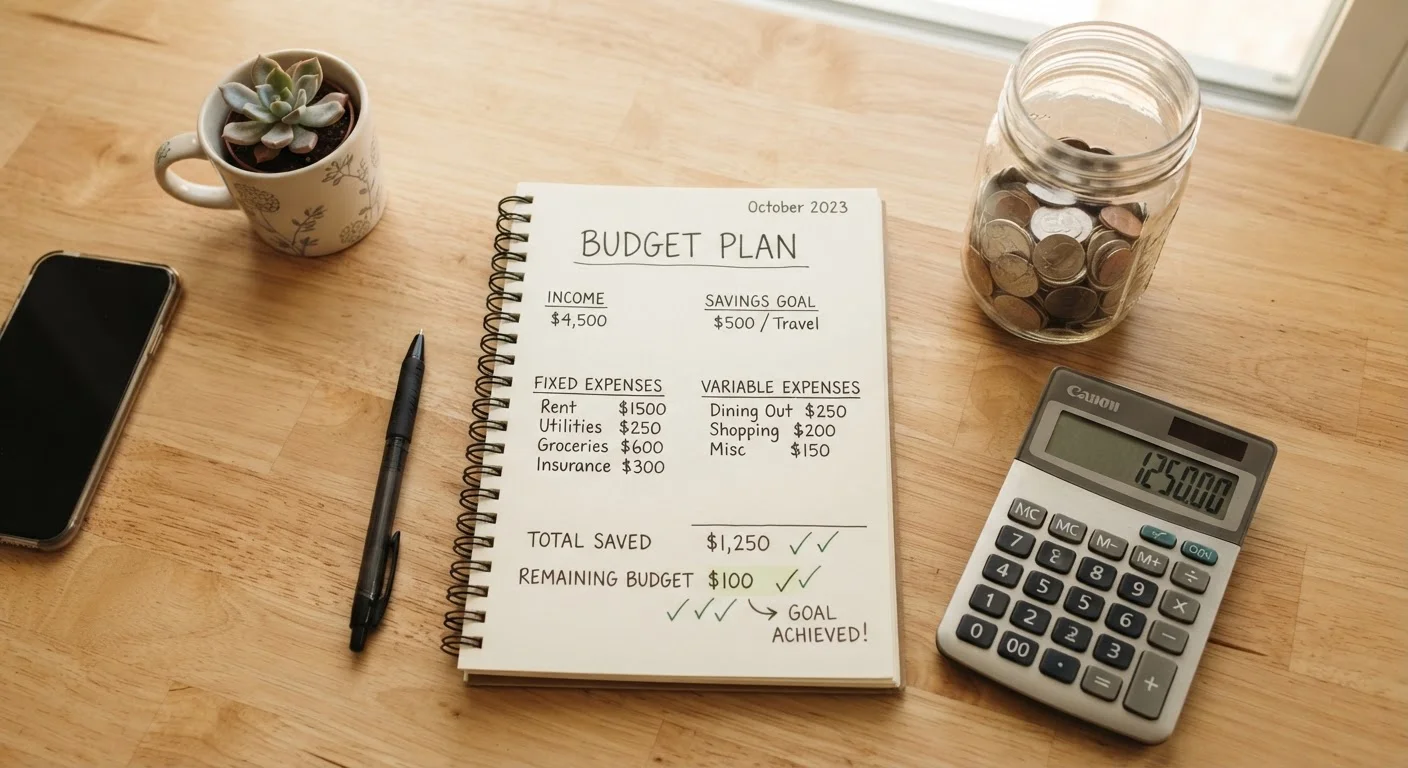
Why Saving and Debt Repayment Both Matter
Many people feel forced to choose: pay off debt first, or start saving? The reality is that treating these as mutually exclusive goals often leads to worse outcomes. Ignoring savings entirely while eliminating debt leaves you exposed to unexpected expenses - and one car repair or medical bill can send you right back into borrowing. Ignoring debt while only saving means interest charges quietly erode your financial progress every month.
The most durable approach treats both as active, simultaneous priorities - with clear rules about how much attention each receives at any given time. This guide walks through the mechanics of each goal, how they interact, and how to build a coherent plan that moves you forward on both fronts. If you're just beginning, our foundational introduction covers the core concepts before you dive in here.
Keep your emergency fund in a separate account from your checking - ideally one that takes one to two business days to transfer. The small friction discourages spending it on non-emergencies.
Behavioral research consistently shows that physical and structural separation between accounts reduces impulsive withdrawals, preserving the fund for genuine crises.
When you eliminate a debt entirely, immediately redirect its minimum payment amount toward the next target debt rather than absorbing it into general spending.
This 'payment stacking' technique - sometimes called the debt snowball roll-up - accelerates payoff timelines without requiring any increase in total monthly outlay.
Understanding the Interest Math
Before allocating a single dollar, it helps to understand what interest is actually costing you. When you carry a balance on high-interest debt - credit cards commonly carry rates between 20% and 30% annually - every dollar left unpaid compounds against you. Meanwhile, a standard high-yield savings account may return considerably less. The gap between what debt costs and what savings earns is the core tension in any combined plan.
This doesn't mean saving is pointless. It means the order of magnitude of interest rates matters when deciding how aggressively to split your available dollars. A low-rate federal student loan at 5% behaves very differently from a 24% credit card balance. Understanding your own rate landscape is step one. Pull together every debt you hold, its balance, and its annual percentage rate (APR). This snapshot forms the foundation of an intelligent strategy. For a structured way to assess where you stand today, the financial health audit checklist is a practical starting point.
3-6 months
Recommended emergency fund coverage
A guideline widely cited by consumer financial educators, including the Consumer Financial Protection Bureau (CFPB), for covering essential living expenses.
20-30%
Typical credit card APR range in the U.S.
Federal Reserve data on consumer credit has tracked average credit card interest rates rising steadily in recent years, making high-interest debt one of the most costly financial burdens.
$1,000
Common starter emergency fund target
Many personal finance frameworks use this as a practical first milestone before redirecting surplus dollars toward aggressive debt repayment.
Building Your Emergency Fund While in Debt
Financial planners widely recommend maintaining an emergency fund covering three to six months of essential living expenses. When you're carrying debt, building to that full amount right away may not be realistic - and that's okay. A more practical first milestone is a smaller buffer, commonly cited at $1,000 to $2,000, established before you direct extra dollars toward aggressive debt payoff.
Why save anything before attacking debt? Because without a financial cushion, an unexpected expense becomes a new debt. That cycle can undo months of repayment progress. Think of the starter emergency fund as debt-prevention infrastructure - its job is to keep you from borrowing again, not to generate returns.
Once that initial buffer is in place, you can redirect more of your monthly surplus toward debt. After your highest-cost debts are eliminated, resuming contributions toward a full emergency fund becomes the logical next priority. Our detailed guide on prioritizing saving versus debt payoff walks through the decision framework in depth.
Choosing a Debt Payoff Strategy
Once your emergency buffer is established and you have a clear picture of your debts, the next decision is which payoff method to follow. Two structured approaches have proven track records:
- Debt Avalanche: Direct extra payments to the highest-APR balance first while making minimums on all others. This minimizes total interest paid over time.
- Debt Snowball: Direct extra payments to the smallest balance first regardless of rate. Eliminating accounts quickly can provide motivational momentum.
Neither method is universally superior - the best approach is one you'll actually stick with. Research in behavioral economics suggests that for some borrowers, the psychological wins from the snowball method support longer-term consistency, even if the avalanche is mathematically optimal. A side-by-side comparison of the avalanche and snowball methods can help you decide which fits your situation.
Creating a Combined Action Plan
With the concepts in place, here is a practical sequence for structuring your plan:
- Map your cash flow. Calculate monthly take-home income minus fixed and necessary variable expenses. What remains is your working surplus. The personal budgeting complete roadmap covers this in detail.
- Fund your starter emergency reserve. Direct surplus toward this goal until you reach your initial target (e.g., $1,000-$2,000), held in a separate, accessible account.
- Eliminate high-interest debt aggressively. Apply the avalanche or snowball method to balances with the highest cost. Maintain minimum payments on all other debts throughout.
- Build emergency savings toward 3-6 months of expenses. Once high-cost debt is cleared, redirect that freed-up cash into growing your cushion and, eventually, longer-term savings goals.
- Automate where possible. Scheduled transfers and automatic minimum payments reduce the chance of missed steps and decision fatigue.
This sequence isn't rigid - life introduces complications - but it gives you a logical default. Budgeting principles that support this approach are explored in our budgeting basics hub.
Adjusting the Plan When Life Changes
A financial plan isn't a one-time document - it needs periodic review. Income changes, new expenses, interest rate shifts, and evolving goals all warrant reassessment. If you receive a raise or bonus, consider splitting the windfall: a portion toward debt principal, a portion toward savings. If you face a financial setback, the emergency fund does its job - you draw on it, then rebuild it before resuming aggressive debt payoff.
Over time, as high-cost debt decreases, the math shifts. The urgency to pay down low-rate debt competes more directly with the opportunity cost of not investing. At that stage, consulting a licensed financial professional can help you evaluate whether remaining dollars are better directed toward debt payoff, retirement contributions, or other goals. For now, focus on the fundamentals: protect yourself with a cushion, systematically reduce what you owe, and revisit the plan regularly. When you're ready to think beyond debt and savings, the everyday investing hub offers accessible guidance on the next step.
This article is for general informational and educational purposes only and does not constitute personalized financial, investment, tax, or legal advice. Please consult a qualified financial professional before making decisions based on your individual circumstances.
The content on this site is for informational purposes only and is not a substitute for professional advice. Always consult a qualified professional for guidance specific to your situation.