

Option A
Zero-Based Budgeting
The meticulous, dollar-by-dollar planning method.
Best for: People with variable expenses who want granular control over every dollar they earn each month.
Option B
Envelope Method
The tactile, cash-first spending system.
Best for: Hands-on spenders who benefit from physical limits and struggle to stop overspending in key categories.
How Each System Works
Despite sharing the same goal - keeping spending intentional - zero-based budgeting and the envelope method operate very differently in practice.
Zero-based budgeting (ZBB) starts with your total monthly income and requires you to assign every dollar to a category - housing, groceries, savings, debt repayment, entertainment - until the remaining balance is exactly zero. Nothing is left undesignated. If income is $4,200, the plan must account for all $4,200 before the month begins. If circumstances change mid-month, the budget is adjusted accordingly. The result is a living document rather than a set-it-and-forget-it plan. For a deeper dive into building this kind of plan from scratch, see Building Your First Budget From a Blank Slate.
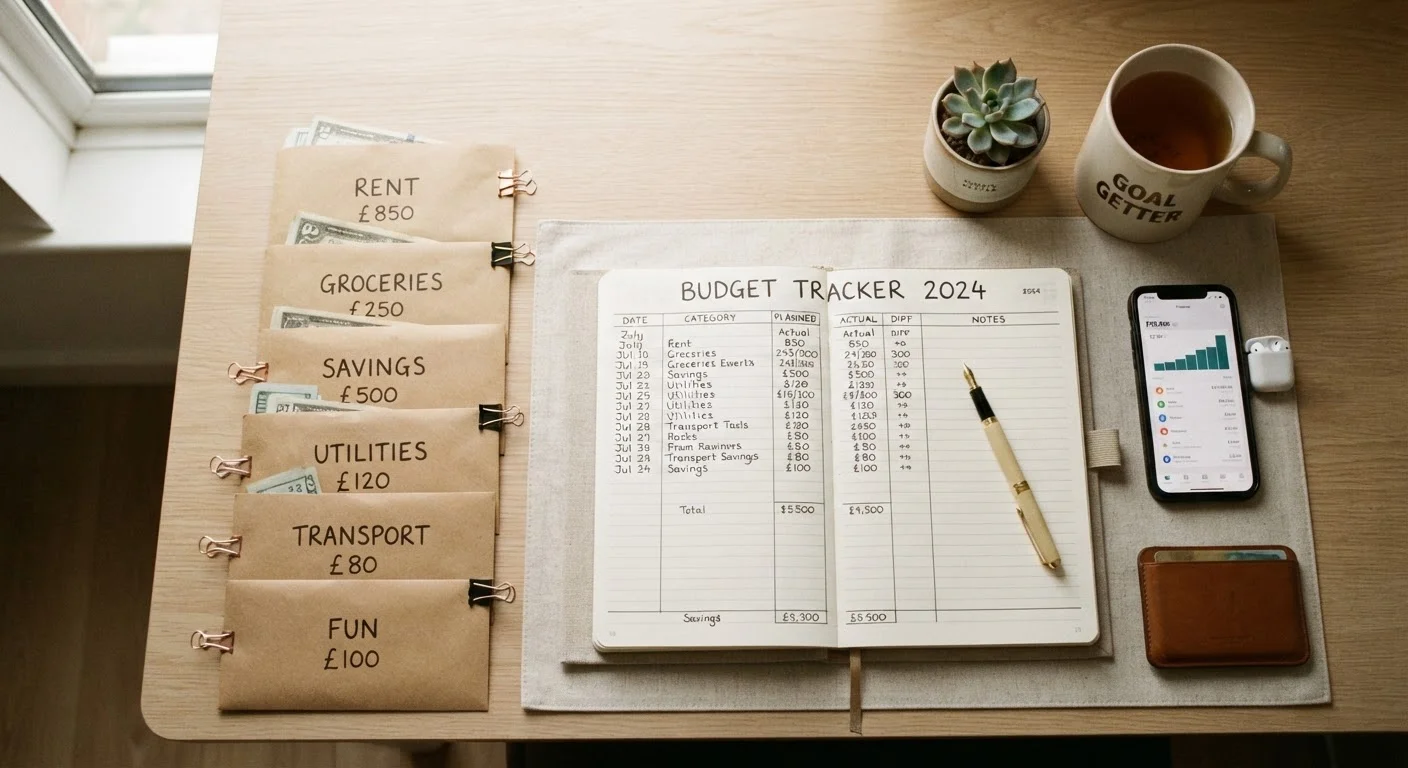
The envelope method takes a more physical approach. You divide your take-home pay into labeled envelopes - one per spending category. When an envelope is empty, spending in that category stops for the month. Traditionally, this uses actual cash. Many people today use digital envelope apps that simulate the same constraint without requiring physical currency.
| Criterion | Zero-Based Budgeting | Envelope Method |
|---|---|---|
| Core mechanic | Assign every dollar a job | Divide cash into spending envelopes |
| Cash required? | No - works digitally | Traditional: yes; digital apps: no |
| Monthly setup time | Moderate to high | Low to moderate |
| Best for variable income | Yes - rebuilt each month | Less flexible |
| Handles online spending | Easily | Requires adaptation |
| Psychological spending brake | Moderate | Strong (especially with cash) |
| Learning curve | Steeper | Gentle |
Both approaches share one critical trait: they require conscious, proactive decision-making about money before it is spent - not after.
Strengths and Limitations of Each Approach
Zero-based budgeting's primary strength is its adaptability. Because you rebuild the budget each month, it naturally responds to changing income, new expenses, or shifting financial goals. It also pairs well with digital spreadsheets and budgeting apps, making it accessible to people who prefer tracking money online. Its limitation is time: building a thorough zero-based budget monthly takes genuine effort, and skipping even one month can cause the system to break down.
The envelope method's greatest advantage is its psychological clarity. Handing over physical cash - and watching an envelope thin out - creates a visceral awareness of spending that no app notification fully replicates. Research in behavioral economics consistently supports the idea that paying with cash tends to make spending feel more real, which can reduce impulsive purchases. The drawback is practicality: carrying cash everywhere is inconvenient, and the method doesn't naturally handle online purchases, subscriptions, or automatic bill pay without adaptation.
A Note on Digital Envelope Tools
Several budgeting apps simulate the envelope method digitally, letting users allocate funds into virtual categories without handling physical cash. These tools can bridge the gap for people who prefer cashless living but want envelope-style spending limits. If you use one, treat each digital envelope with the same discipline you would apply to a physical one - the behavioral benefit depends on respecting the limit.
It's worth noting that neither method is inherently superior for building savings or paying off debt. What matters is consistency. For a broader look at how budgeting and saving goals interact, see how emergency funds and budgets work together.
Choosing the Right System - or Combining Both
The most effective budgeting system is the one you'll actually maintain. If you enjoy working with spreadsheets and have income that varies month to month, zero-based budgeting gives you the flexibility to plan accurately each cycle. If you're a tactile thinker who's struggled to enforce limits on discretionary spending, envelope-style constraints - physical or digital - can be a meaningful behavioral tool.
Many households find success with a hybrid: using zero-based budgeting logic to plan total monthly spending, then channeling specific high-risk categories (dining out, clothing, entertainment) into envelope-style limits. This preserves the precision of zero-based planning while adding the hard boundaries the envelope method is known for.
Before committing to either approach, it helps to audit how you currently spend. A monthly budget setup checklist can help you gather the income and expense data you need to make either method work. For an even wider comparison of budgeting philosophies, see how envelope, zero-based, and percentage methods compare side by side.
~33%
Americans with a detailed household budget
Gallup polling has consistently found that roughly one in three U.S. adults maintains a detailed monthly budget, suggesting most households operate without a formal spending plan.
18%
Average U.S. personal savings rate decline since 1970s
The U.S. Bureau of Economic Analysis has tracked a long-term decline in the personal saving rate from double digits in the late 1970s to low single digits in many recent years, underscoring the relevance of structured budgeting.
This article is for general informational purposes only and does not constitute personalized financial advice. Consult a qualified financial professional for guidance specific to your situation.
The content on this site is for informational purposes only and is not a substitute for professional advice. Always consult a qualified professional for guidance specific to your situation.