

Why Category Coverage Matters
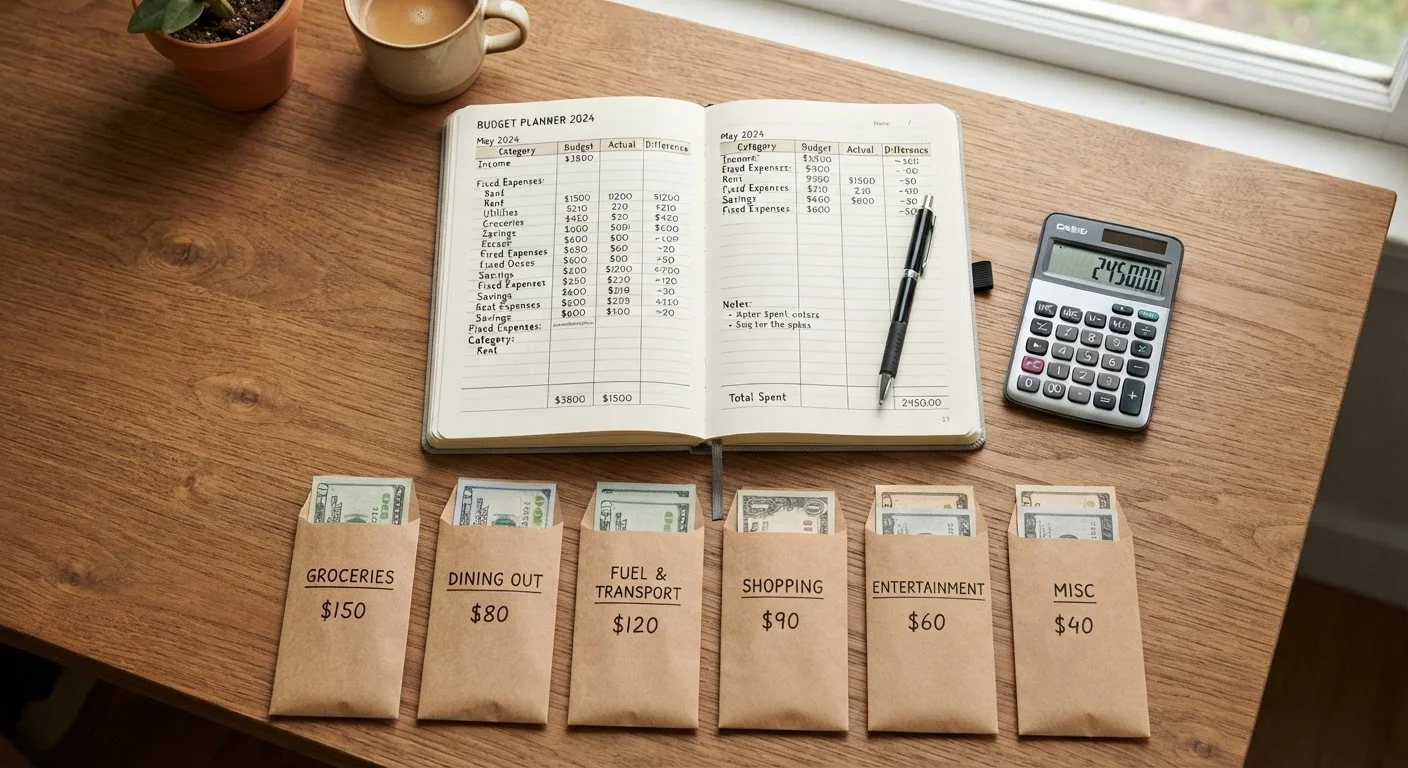
Most budgets fail not because of bad math, but because of missing categories. When an expense doesn't have a designated line in your plan, it typically gets paid anyway - draining cash you thought was available for something else. The fix isn't cutting back harder; it's accounting for more.
Whether you're setting up your first budget or revisiting one that keeps falling apart, starting with a complete category list gives every dollar a place to go. The categories below aren't exhaustive for every household, but they represent the core spending areas that most budgets need to cover. For a plain-language breakdown of terms like fixed, variable, and discretionary, see our budgeting glossary.
Housing
Housing is typically the largest single line item for American households. This category should cover rent or mortgage payments, property taxes (if not escrowed), homeowner's or renter's insurance, and any HOA fees. Don't forget utilities - electricity, gas, water, and trash - as well as internet service, which is a practical necessity for most households today.
A commonly cited guideline suggests keeping total housing costs at or below 30% of gross income, though individual circumstances vary widely. What matters most is that every housing-related cost has its own place in your plan rather than being lumped into a vague "bills" category.
Every housing-related cost needs its own place in your plan - not a vague 'bills' catch-all.
Food
Food spending splits naturally into two sub-categories: groceries (food prepared at home) and dining out. Many people significantly underestimate their restaurant and takeout spending. Tracking these separately helps reveal where money is actually going and makes it easier to adjust if needed.
Include coffee shops, work lunches, and food delivery apps in the dining-out line - these smaller purchases add up quickly and are frequently overlooked.
Tracking groceries and dining out as separate lines often reveals surprising patterns in food spending.
Transportation
Transportation extends well beyond a car payment. A complete transportation category includes fuel, auto insurance, registration fees, tolls, parking, and public transit passes. Vehicle maintenance - oil changes, tires, brake service - also belongs here.
For more on managing the full cost of vehicle ownership, the car ownership hub covers what drivers need to know. Routine maintenance costs are predictable enough to estimate annually and divide across 12 months.
A car payment is just one piece - fuel, insurance, and maintenance must all be budgeted for.
Irregular and Periodic Expenses
This is the category that derails more budgets than any other. Irregular expenses - car repairs, medical copays, home maintenance, annual subscriptions, holiday gifts, back-to-school costs - don't arrive every month, but they arrive. When they're not planned for, they feel like emergencies even though they're entirely predictable in aggregate.
Create a single "sinking fund" line (or multiple sub-lines) and contribute a fixed amount monthly. Over time, the cash accumulates and these costs stop disrupting your plan. For how an emergency fund fits alongside this strategy, see how emergency funds and budgets work together.
Irregular costs aren't true surprises - they're predictable expenses that need monthly planning.
Healthcare
Healthcare spending includes insurance premiums (if paid directly and not deducted pre-tax from a paycheck), prescription costs, dental and vision expenses, and routine copays. Out-of-pocket costs can vary significantly, but most households have some recurring healthcare spending worth estimating.
If you have a high-deductible health plan paired with a Health Savings Account (HSA), budget for your regular HSA contribution here as well. This is a tax-advantaged savings vehicle for qualified medical expenses - though consulting a tax professional about your specific situation is advisable.
Healthcare costs go beyond insurance premiums - copays, prescriptions, and dental all need budget lines.
Savings and Debt Repayment
Savings and debt repayment are expenses like any other - they should be funded first, not treated as optional line items. This category includes retirement contributions, emergency fund deposits, and any targeted savings goals (a home down payment, for example). Minimum debt payments are non-negotiable; any extra payments toward high-interest balances should also be planned rather than improvised.
Treating savings as an expense - often called "paying yourself first" - is a well-established principle of personal finance. It removes the temptation to spend what was meant to be saved.
Savings should be treated as a fixed expense, not whatever happens to be left at month's end.
Discretionary Spending
Discretionary spending - entertainment, hobbies, clothing, subscriptions, personal care, and similar wants - is a legitimate budget category. Excluding it doesn't eliminate the spending; it just means the money leaves without a plan. Assigning a realistic amount to discretionary expenses creates a boundary that's easier to respect than a blanket restriction.
This is also the category most responsive to adjustment when budgets need to flex - such as after a major life change that shifts income or expenses. Thoughtful frameworks for smarter spending decisions can help you get more value from your discretionary dollars.
Budgeting for discretionary spending honestly is more effective than pretending you won't spend on wants.
Putting the Categories to Work
Listing categories is only the first step - what makes a budget functional is honest numbers beside each one. Review the past two to three months of bank and credit card statements to find your actual averages, not what you wish you spent. For irregular categories, divide the expected annual cost by 12 and set aside that amount each month.
Start With What You Actually Spend
When assigning amounts to each category, base your numbers on real spending history rather than aspirational targets. Pull two to three months of statements and calculate actual averages - then decide where to adjust. A budget built on wishful numbers rarely holds. The monthly budget setup checklist walks through this process step by step.
Once your categories are mapped, you'll need a consistent method to track them. Our comparison of spreadsheets, apps, and pen-and-paper tracking can help you find the right fit. And if your income varies month to month, budgeting on an irregular income offers a framework designed for that reality.
This article is for general informational and educational purposes only and does not constitute personalized financial advice. Consult a qualified financial professional for guidance specific to your situation.
The content on this site is for informational purposes only and is not a substitute for professional advice. Always consult a qualified professional for guidance specific to your situation.