

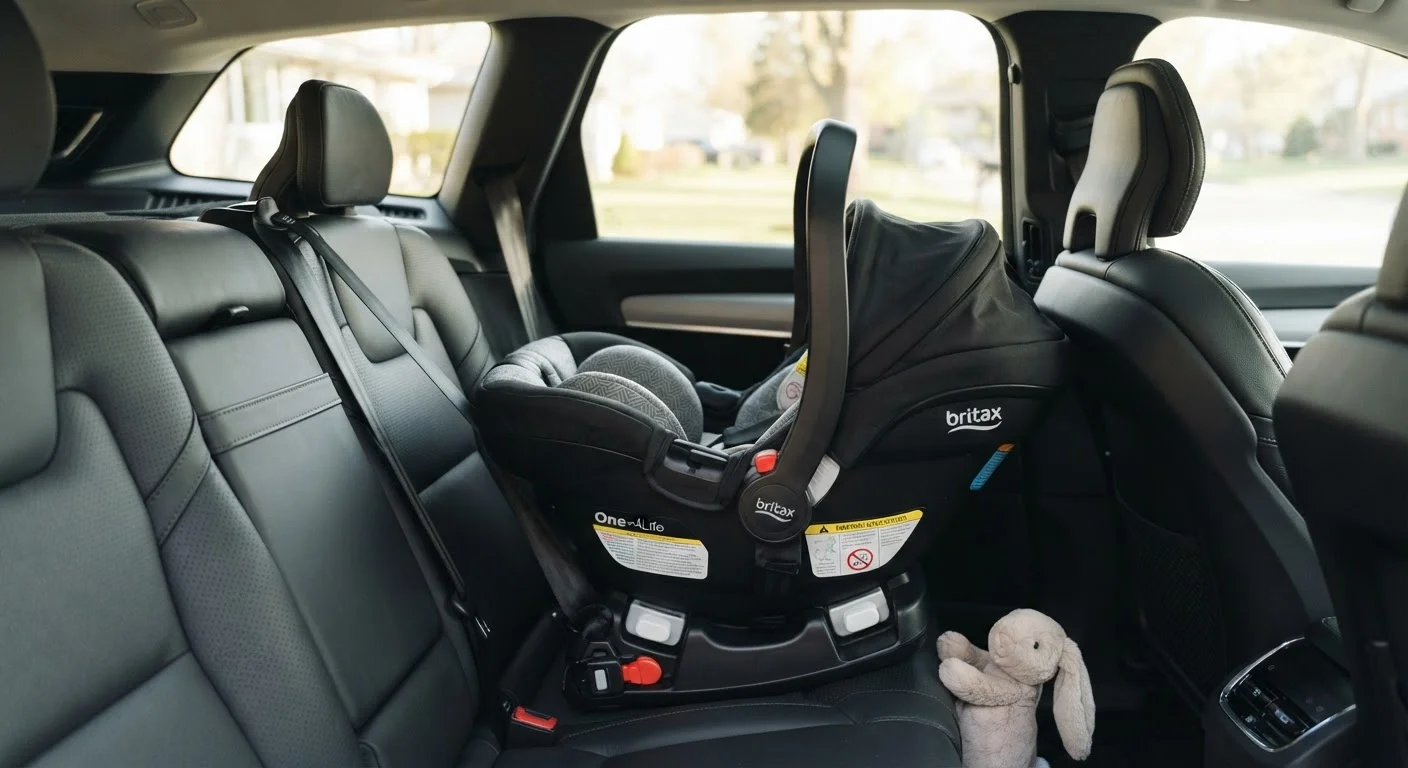
Why Car Seat Stage Progression Matters
Motor vehicle crashes remain a leading cause of injury death for children in the United States, according to the Centers for Disease Control and Prevention (CDC). Proper restraint use - matched to a child's age, height, and weight - is one of the most effective interventions available to parents and caregivers.
Car seat safety is built around a four-stage progression: rear-facing, forward-facing with a harness, booster seat, and finally the vehicle's built-in seat belt alone. Each transition should be driven by the child's physical size and the seat's published limits, not by birthday milestones or social pressure. Skipping or rushing through a stage meaningfully increases injury risk.
59%
Car seats used with a critical misuse
A NHTSA observational study found the majority of car seats are used with at least one significant error affecting crash protection.
71%
Reduction in fatal injury risk for infants
According to NHTSA, infant car seats reduce the risk of fatal injury by approximately 71% compared with no restraint use.
54%
Reduction in fatal injury risk for toddlers
NHTSA data indicates forward-facing seats with harnesses reduce the risk of fatal injury by about 54% for toddlers aged 2-4.
Rear-Facing Seats: Infancy Through Toddlerhood
Rear-facing seats are the starting point for every child. In a frontal crash - the most common severe collision type - a rear-facing seat cradles and moves with the child, distributing crash forces across the back, shoulders, and buttocks rather than concentrating stress on the neck and spine.
Infant-only seats are designed for newborns and smaller babies and typically have a lower weight ceiling, usually 22-35 pounds depending on the model. Convertible seats can be used rear-facing from birth through much higher weight limits, sometimes 40-50 pounds, before being turned forward-facing.
The American Academy of Pediatrics (AAP) recommends keeping children rear-facing until they reach the maximum height or weight limit for their specific seat. Many children can remain rear-facing well past age two. Once the top of the child's head is within one inch of the seat's shell or they exceed the weight limit, it is time to move forward.
After installing a rear-facing seat, grab it at the belt path - not the top - and attempt to move it side to side and front to back. It should not shift more than one inch in any direction.
Excessive seat movement is the single most common installation error found during inspection events, and checking at the belt path gives the most accurate read on stability.
When in doubt about whether your child has outgrown a stage, look up the seat's manual rather than relying on age guidelines printed on store packaging - limits vary significantly by model.
Manufacturer-published limits are the authoritative measure; packaging summaries often reflect the lowest-limit variants and can lead parents to transition children too early.
Forward-Facing Seats With a Harness
When a child outgrows the rear-facing limits, a forward-facing seat with an internal harness is the appropriate next step. The five-point harness distributes crash energy across the chest, shoulders, and hips - the sturdiest parts of a child's body - and prevents ejection or excessive forward movement.
Children should remain harnessed until they reach the seat's maximum harness weight or height limit, which on many seats is 65 pounds or higher. A common mistake is moving to a booster because a child seems too big or too old, when the seat's actual limits have not been reached.
Harness fit matters as much as the seat itself. The chest clip should sit at armpit level, straps should lie flat without twists, and the pinch test - trying to pinch excess webbing off the shoulder - should yield no slack. Bulky coats compress in a crash and create dangerous slack; dress children in thin layers and place coats over the harness if needed.
Never Place a Puffy Coat Under the Harness
Thick winter coats compress dramatically under crash forces, creating slack in the harness that reduces its protective effect. Remove bulky outerwear before buckling a child in. To keep a child warm, buckle the harness first, then lay the coat over the child like a blanket, or use a thin fleece underneath the harness.
Booster Seats and the Transition to a Seat Belt
A booster seat's purpose is to position the vehicle's seat belt correctly on a child's body. Without a booster, a standard lap-and-shoulder belt typically crosses a smaller child's abdomen and neck rather than the pelvis and chest - dramatically increasing internal injury risk in a crash.
High-back boosters are generally preferred for vehicles without adequate head restraints or for younger children who need head and neck support. Backless boosters are appropriate for older, larger children in vehicles with built-in head restraints that reach the child's ears.
The National Highway Traffic Safety Administration (NHTSA) and AAP recommend children use a booster until the seat belt fits correctly on its own - meaning the shoulder belt crosses the chest and collarbone (not the neck), the lap belt lies low across the upper thighs (not the belly), the child sits with their back fully against the seat, and knees bend naturally at the seat edge. For most children this occurs somewhere between 4 feet 9 inches and 4 feet 11 inches in height, often between ages 8 and 12. Many state laws require boosters only until age 8, but physical fit - not age - should guide the decision. As children grow into responsible drivers themselves, understanding restraint principles pays forward; see our overview of graduated licensing research for how safety habits developed early affect teenage driving outcomes.
Installation Essentials and Common Mistakes
Studies consistently find that a majority of car seats are used or installed with at least one significant error. The most frequent problems include excessive seat movement (more than one inch side-to-side or front-to-back at the belt path), harness straps that are too loose, incorrect recline angle for rear-facing seats, and chest clips positioned too low.
Every car seat can be installed using either the vehicle's seat belt or the LATCH system (Lower Anchors and Tethers for Children), where available. LATCH has a combined weight limit - child plus seat - that varies by vehicle and seat; check both manuals. Above that limit, use the seat belt instead. Always use the top tether for forward-facing seats, even when using LATCH - it significantly reduces head movement in a crash.
Free car seat inspection stations are operated by certified Child Passenger Safety Technicians (CPSTs) at hospitals, fire stations, health departments, and community events across the country. NHTSA's website maintains a locator tool. An inspection typically takes 30-45 minutes and is offered at no charge at many locations. If the vehicle or seat changes, a re-inspection is worthwhile.
Checking Fit, Expiration, and Crash Replacement
Car seats are not lifetime products. Plastics degrade over time, and safety standards evolve. Manufacturers print an expiration date - typically six to ten years from the date of manufacture - on the seat's base or shell. Using an expired seat is not recommended; the structural integrity can no longer be verified.
After any crash that is moderate to severe - generally defined as one in which an airbag deployed, the vehicle was towed away, a door was damaged, or anyone in the vehicle was injured - the car seat should be replaced even if visible damage is absent. The forces involved may have stressed internal components in ways that are not visible.
After a minor crash meeting all five of NHTSA's criteria (low speed, no door damage, no airbag deployment, no injuries, vehicle was drivable), replacement may not be necessary, but consulting the seat manufacturer is advisable. Keep the original packaging and manual; they are needed for installation guidance and to verify expiration and recall status. Registering the seat with the manufacturer ensures recall notices reach you. If you're also navigating other vehicle decisions, the Buying a Car hub includes guidance on evaluating family-vehicle safety features.
This article provides general educational information about child passenger safety. Always consult your car seat's manual, your vehicle owner's manual, and a certified Child Passenger Safety Technician for guidance specific to your child and vehicle.
The content on this site is for informational purposes only and is not a substitute for professional advice. Always consult a qualified professional for guidance specific to your situation.