

Our Verdict
Extended warranties on used cars can provide real financial protection against major mechanical failures, but only if you understand exactly what the contract covers and excludes before purchasing. The value depends heavily on the vehicle's reliability history, the remaining factory warranty period, and whether the contract terms are genuinely comprehensive rather than exclusion-heavy. Treat the written contract - not the dealer's verbal assurances - as the authoritative document.
Best suited for buyers of higher-mileage or out-of-warranty used vehicles who want predictable repair costs and are purchasing from a provider whose contract terms they've independently reviewed.
What 'Extended Warranty' Actually Means
The term extended warranty is used loosely in the automotive industry, but it's worth understanding the distinction. True manufacturer-backed extended warranties - sometimes called extended service plans - are sold by the automaker or an authorized affiliate. The more common products offered by dealerships or third-party companies are technically vehicle service contracts (VSCs), which are private agreements, not warranty instruments under federal law.
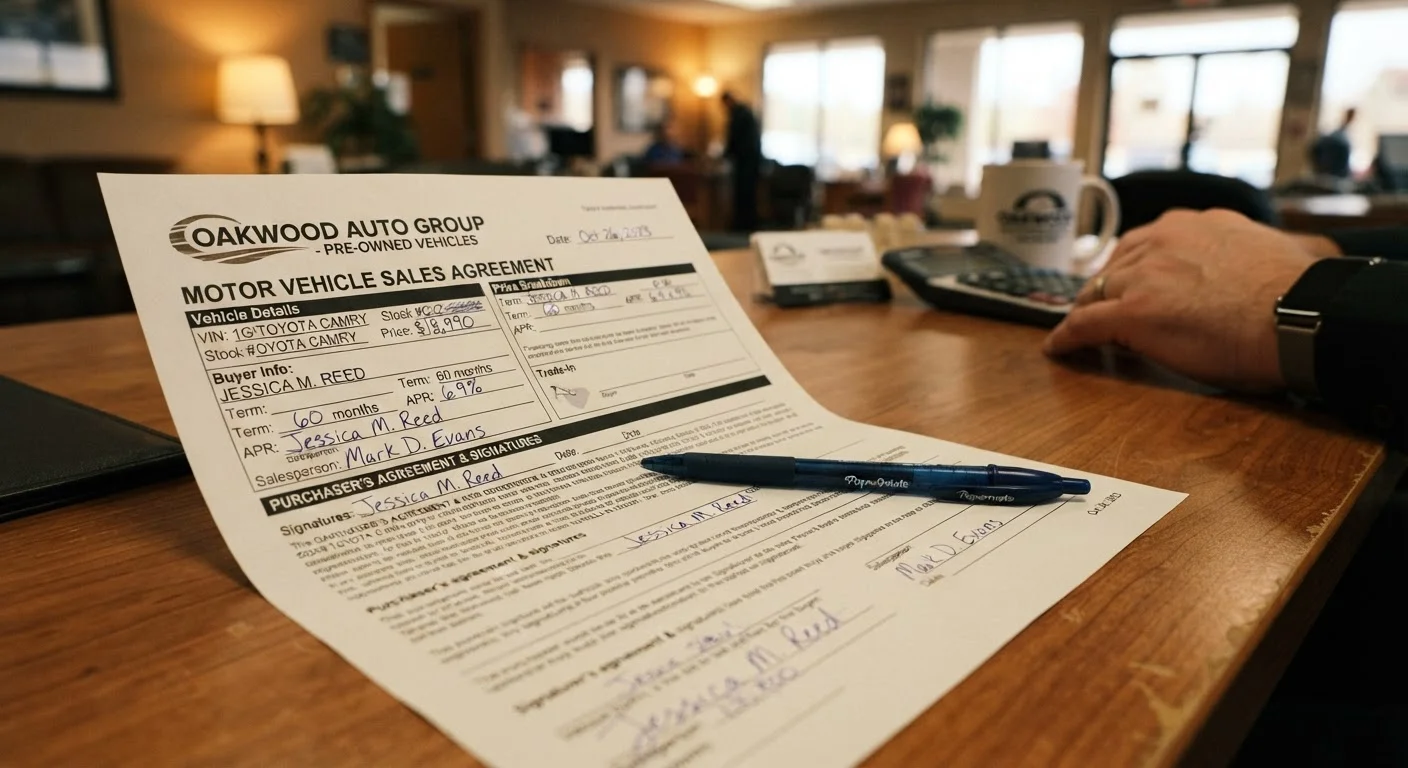
This distinction matters because VSCs are regulated differently by state, and the financial stability of the provider directly affects whether claims get paid. Before anything else, confirm who is administering the contract - the dealer, a third-party company, or the automaker - and research the administrator's reputation and financial backing. See how dealers typically present these products at signing for context on the broader finance office landscape.
What Coverage Typically Includes
Most extended warranties or VSCs are written as either stated component coverage (listing exactly what's covered) or exclusionary coverage (covering everything except a named list of excluded items). Exclusionary contracts are generally more comprehensive, but the exclusion list still requires careful reading.
Common inclusions across most mid- to upper-tier plans:
- Engine internals: pistons, crankshaft, camshaft, and related lubricated parts
- Transmission components
- Drive axles and differential
- Electrical systems, including the alternator and starter
- Cooling system components such as the water pump and radiator
- Air conditioning compressor
- Fuel system components (varies by plan)
These represent the highest-cost repairs, which is where coverage provides the most financial value. For comparison, a breakdown of extended versus factory warranty coverage can clarify what you might already be protected against.
Shields against high-cost unexpected mechanical repairs
Major drivetrain failures - transmission rebuilds, engine work - can cost thousands of dollars out of pocket. A comprehensive VSC absorbs most of that cost, providing budget predictability for owners who can't absorb large unplanned expenses.
Transferable coverage can support resale value
Many extended warranties allow the remaining coverage to transfer to a new owner, which can be an attractive selling point. This may make a covered vehicle easier to sell privately compared to one without any protection.
Roadside assistance often included
A number of VSCs bundle roadside assistance - towing, lockout service, and trip interruption benefits - at no additional cost, which adds practical value beyond just repair coverage.
Peace of mind for higher-mileage vehicles
Older vehicles with significant mileage face statistically higher repair frequency. For buyers who depend on their vehicle daily, knowing covered repairs won't derail their finances reduces stress meaningfully.
Common Exclusions to Watch For
No extended warranty covers everything. Even well-written exclusionary contracts carve out significant categories. Understanding these before you sign is critical.
Typical exclusions include:
- Wear items: Brake pads, rotors, tires, clutch components, filters, and wiper blades are almost universally excluded.
- Pre-existing conditions: Damage or mechanical issues that existed before the contract start date are not covered. This is sometimes enforced aggressively through inspection reports or maintenance record reviews.
- Maintenance services: Oil changes, coolant flushes, and scheduled services are not part of a service contract.
- Cosmetic damage: Rust, paint, upholstery, and trim are rarely included in standard plans.
- Consequential damage: If a covered failure leads to secondary damage - for example, a blown head gasket overheating an engine - some contracts limit what they'll pay toward the resulting repair.
If you're considering a certified pre-owned vehicle, CPO programs offer factory-backed coverage with defined terms that may make a separate VSC redundant.
Exclusions often undercut the perceived coverage
Wear items, pre-existing conditions, and consequential damage are routinely excluded, meaning many real-world repair scenarios fall outside the contract. A plan that sounds comprehensive may pay out far less than expected.
Claims can be disputed or denied
Administrators have financial incentive to interpret contract language narrowly. Disputes over what constitutes a covered failure, or whether a condition was pre-existing, are common consumer complaints with third-party VSC providers.
May duplicate existing factory warranty coverage
If a vehicle still has time remaining on its original manufacturer's powertrain or bumper-to-bumper warranty, purchasing a VSC immediately means paying for overlapping coverage during that period.
Provider insolvency risk is real
Third-party VSC administrators are not government-backed. If the company goes out of business before your contract expires, claims may go unpaid and recovering money can be difficult, particularly without a strong state regulatory framework.
Repair authorization adds friction in emergencies
Requiring pre-authorization before repairs can create logistical problems when a vehicle breaks down away from home or outside normal business hours, potentially leaving the owner responsible for immediate costs.
The Claims Process: What to Expect
Coverage on paper is only useful if claims are approved and paid efficiently. The claims process introduces several practical friction points buyers should anticipate.
Always Get Pre-Authorization Before Repairs
Most vehicle service contracts require you to call the claims line and receive a repair authorization number before any work begins. Failure to do this - even if the repair seems clearly covered - gives the administrator grounds to deny the claim entirely. Store your contract number and claims contact information somewhere accessible, such as your phone or glove compartment.
Authorization before repair: Most VSCs require you to contact the administrator before authorizing any repair work. Skipping this step - even in an emergency - can result in a denied claim. Keep the contract's claims number accessible.
Repair facility restrictions: Some contracts only reimburse work done at franchised dealerships or ASE-certified shops within the administrator's network. Others allow any licensed mechanic but require prior approval. Know your contract's rules before a breakdown occurs.
Deductibles: These range from zero to several hundred dollars per visit or per repair. A per-visit deductible applies once per shop visit regardless of how many systems are repaired; a per-repair deductible applies to each individual repair.
~55%
VSC holders who file at least one claim
Industry estimates suggest roughly half of vehicle service contract holders make at least one claim during the coverage period, though actual claim rates vary by vehicle age and mileage.
$4,000+
Average cost of a transmission repair
According to automotive repair data aggregators, full transmission replacements on passenger vehicles commonly exceed $4,000 at franchised dealerships, illustrating the risk a VSC is designed to offset.
Making an Informed Decision
An extended warranty's value is situational. For a vehicle still within its factory powertrain coverage period, a VSC may provide little benefit during the overlap. For a high-mileage vehicle with no remaining factory warranty, the financial risk of a major mechanical failure is real.
Key questions before purchasing:
- Is this an exclusionary or stated-component contract?
- Who administers the plan, and what is their track record with claims?
- What are the deductible terms and repair facility requirements?
- Does coverage overlap with any remaining factory warranty?
- What is the cancellation and refund policy?
The car buying guides provide additional context for evaluating costs and trade-offs throughout the purchase process. And if you're buying a used vehicle and want to understand your legal baseline protections, reviewing how lemon laws apply to your situation is a worthwhile step alongside any warranty decision.
This article is for general informational purposes only and does not constitute financial or legal advice. Contract terms vary significantly; always read the full agreement before purchasing any vehicle service contract.
The content on this site is for informational purposes only and is not a substitute for professional advice. Always consult a qualified professional for guidance specific to your situation.