

Summary

18 items · 30–60 minutes

Why Choosing the Right Mechanic Is Worth the Effort

For most American drivers, car repairs represent one of their larger unplanned expenses. A 2023 survey by AAA found that roughly one in three drivers couldn't afford an unexpected repair bill of $500 or more without going into debt. Beyond the cost, a poor repair can create new problems or leave an underlying issue unresolved — putting your safety at risk on the road.

The good news: vetting a mechanic isn't complicated once you know what to look for. Whether you're establishing a relationship with a neighborhood shop or searching for a specialist for a specific problem, the checklist below gives you a repeatable process. Use it before handing over your keys — not after.

If you're evaluating a mechanic as part of a used-car purchase, our guide to pre-purchase inspections explains what a qualified independent mechanic should look for and how to interpret their findings.

Credentials & Qualifications

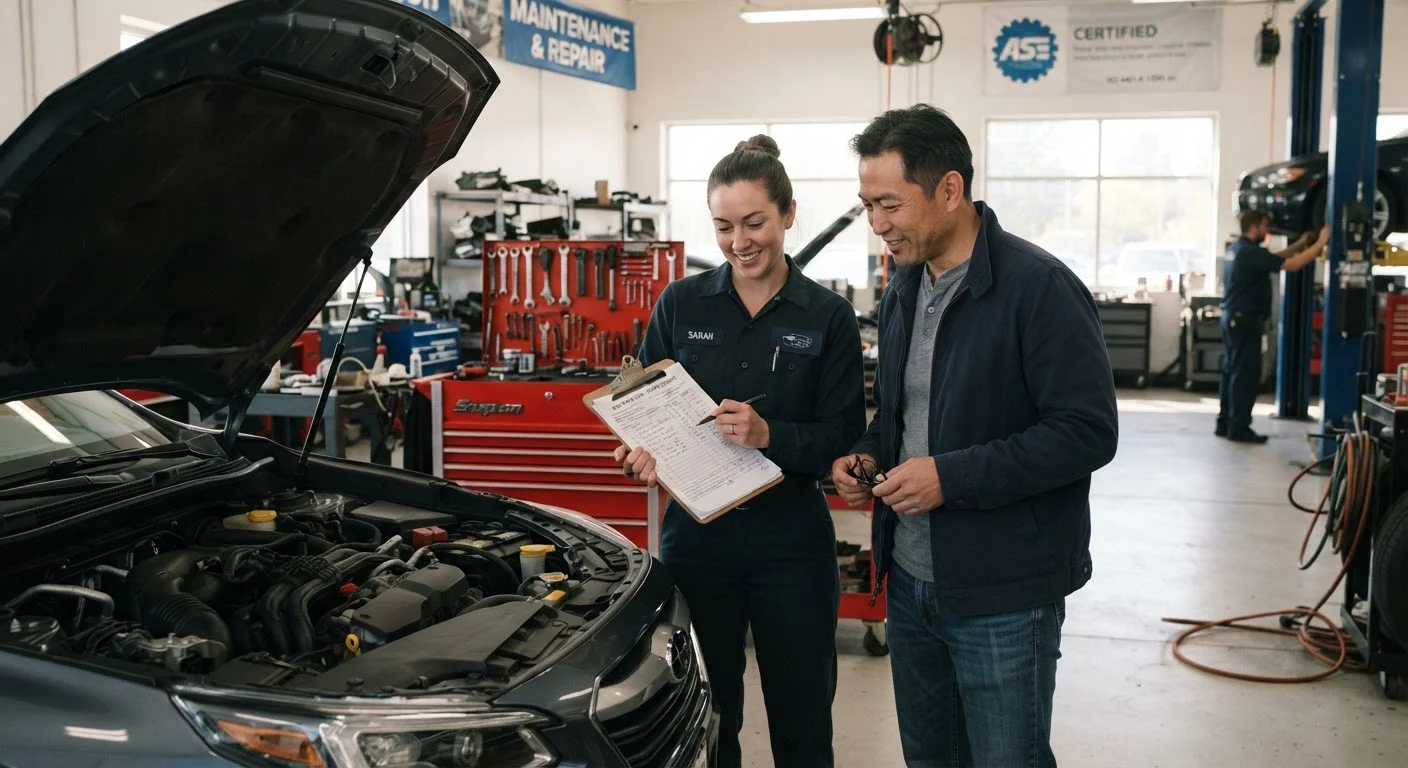
Look for ASE (Automotive Service Excellence) certification displayed in the shop — it means technicians have passed standardized competency exams in specific repair areas. Must
Confirm the shop holds a valid state business license and, where required, any emissions or inspection certifications specific to your state. Must
Ask whether the shop has experience with your specific make and model, particularly if you drive a European import or late-model EV. Should
Check whether the shop is affiliated with a recognized trade association, such as the Automotive Service Association (ASA), which requires members to uphold a code of ethics. Nice to have

Reputation Research

Search the shop's name on the Better Business Bureau website and check for unresolved complaints or a pattern of negative responses. Must
Read online reviews across at least two platforms (Google, Yelp) and focus on patterns — consistent praise for honesty or consistent complaints about overcharging matter more than any single review. Should
Ask friends, family, or coworkers in your area for a personal referral, which remains the most reliable indicator of consistent quality. Should

Transparency & Estimates

Request a written estimate — including parts, labor, and fees — before authorizing any work; reputable shops provide this as standard practice. Must
Ask whether the estimate is a firm quote or an approximation, and clarify the shop's policy if costs exceed the original estimate during the repair. Must
Get estimates from at least two shops for any repair exceeding $200 to establish a reasonable benchmark for fair pricing. Should
Confirm whether parts are OEM (original equipment manufacturer), aftermarket, or remanufactured, and ask the shop to explain which is being used and why. Should

During the Repair

Request your old parts back when a component is replaced — a shop that completed the work should be able to return them; if they can't, ask for an explanation. Must
Ask the shop to call you before adding any work beyond what was originally authorized, rather than presenting surprises on your final invoice. Must
Clarify the warranty on both parts and labor before pickup — most reputable shops offer at minimum a 12-month or 12,000-mile warranty on repairs. Should

Red Flags to Watch For

Be cautious if a shop provides a verbal-only estimate and resists putting anything in writing — this offers you no protection if a dispute arises. Must
Walk away if a shop pressures you to authorize major repairs immediately without allowing time to get a second opinion or consider the decision. Must
Take note if a shop is consistently unable to explain what's wrong in plain terms or shows reluctance to show you the problem area on the vehicle. Should
Be skeptical of unusually low estimates that seem out of step with other quotes — they sometimes reflect inferior parts or labor that won't hold up. Should

Tools That Make the Process Easier

A few resources streamline your evaluation before you ever walk through a shop's door.

Required

ASE's Mechanic Locator

Use the official ASE website to find certified shops and technicians by ZIP code, verifying credentials before you visit.

Required

Better Business Bureau (BBB)

Search a shop's name to review its complaint history and rating, and check whether the business has resolved past disputes.

Required

Your Vehicle Owner's Manual

Reference the manufacturer's recommended service schedule so you can confirm that what a shop recommends actually aligns with factory guidance.

Optional

RepairPal or Similar Labor Cost Estimators

General-purpose tools that provide regional labor and parts cost ranges, useful for benchmarking an estimate before agreeing to work.

Once you've confirmed credentials and gathered estimates, pay attention to how the shop communicates. A trustworthy mechanic explains the diagnosis in plain language, shows you the affected component if practical, and gives you time to decide — rather than pressuring you on the spot. That same principle applies when negotiating at a dealership: preparation and clear communication protect you in both settings.

Verbal Agreements Offer Little Protection

In the event of a billing dispute, a verbal agreement is nearly impossible to enforce. Always insist on written documentation — estimate, authorization, and final invoice — before and after any repair. Keep copies for your records; this paper trail is your primary recourse if work is disputed or a warranty claim arises.

For readers keeping an older vehicle on the road, finding a reliable long-term mechanic is especially valuable. Our article on keeping a high-mileage car running well pairs well with this checklist — consistent, trusted maintenance is one of the key habits that extends vehicle life.

Share

Cars & Driving Editorial Team · Contributor

Cars & Driving Editorial Team is the collective byline for our editorial team and contributor network. Articles published under this byline or an editorial pen name are researched, written, and reviewed according to our editorial standards for clarity, consistency, and independence before publication.

The content on this site is for informational purposes only and is not a substitute for professional advice. Always consult a qualified professional for guidance specific to your situation.