

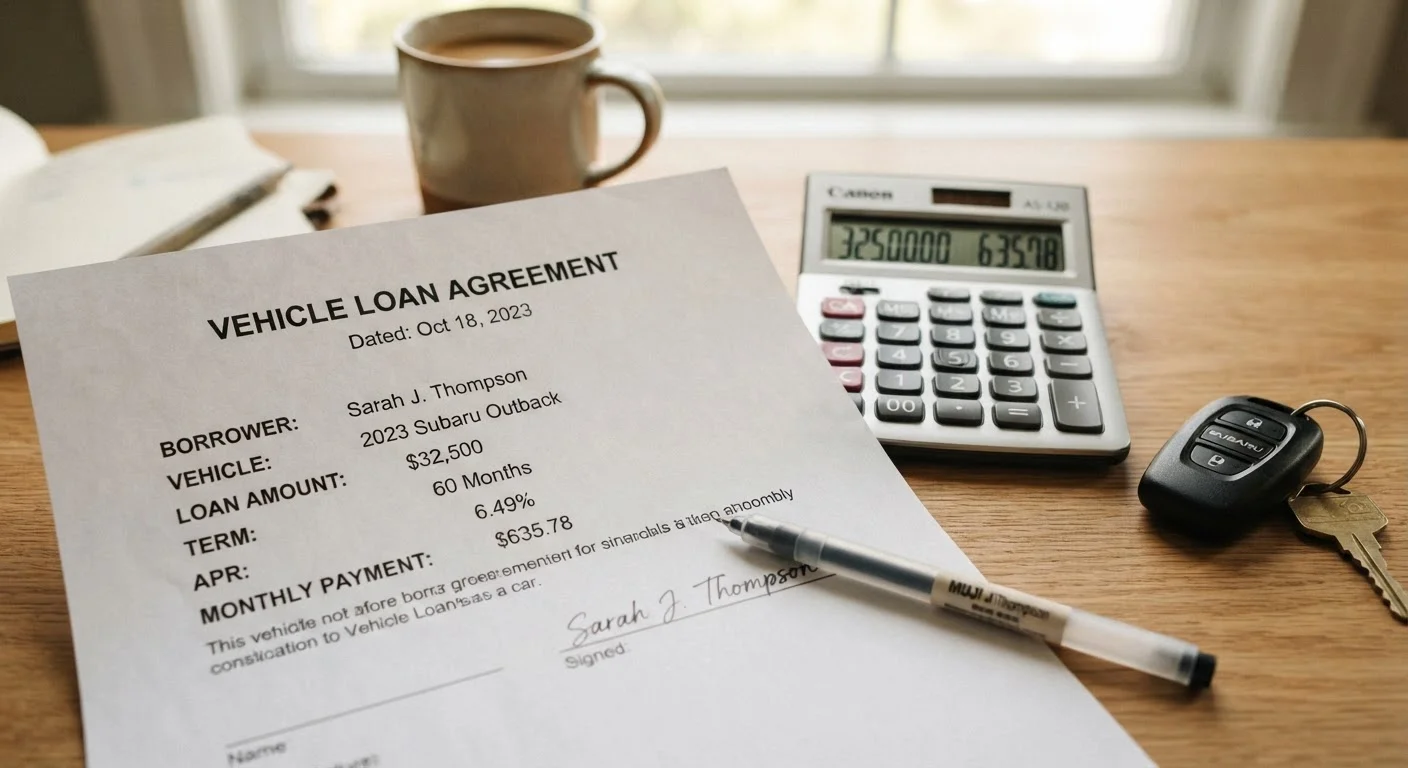
How Interest Accrues on a Simple Interest Loan
Most auto loans in the United States are structured as simple interest loans. This means interest is calculated each day on the current outstanding principal balance - not on any previously accumulated interest. The daily interest charge equals your APR divided by 365, multiplied by the remaining balance.
As you make monthly payments, a portion reduces the principal and a portion covers the interest that has accrued since your last payment. Because tomorrow's interest is calculated on a smaller balance after each payment, your interest charges gradually decrease over the life of the loan. This is why early payments have an outsized impact on total cost - they reduce the balance that generates future charges.
Simple Interest vs. Compound Interest
Unlike credit cards or some savings products, auto loans generally do not compound interest - meaning you are not charged interest on unpaid interest. This makes auto loan math more straightforward to follow. However, late or missed payments can still result in additional fees and may affect the principal balance depending on lender policies.
For a fuller explanation of financial terms like APR and amortization, the Key Terms Every Borrower Should Know reference is a useful companion to this article.
The Amortization Effect: Why Early Payments Are Mostly Interest
Even though your monthly payment amount stays fixed, the split between principal and interest shifts throughout the loan. In the early months, a disproportionate share of each payment goes toward interest. As the principal balance falls, more of each subsequent payment reduces what you actually owe.
This pattern - called amortization - is why paying off a loan early or making extra principal payments can be effective strategies for reducing total interest paid. A borrower who makes one additional principal payment per year on a typical 60-month loan may pay it off several months early and save a meaningful amount in interest costs, depending on their rate and balance.
72 months
Most common new-car loan term in recent years
Industry data from sources including the Consumer Financial Protection Bureau has shown 72-month terms becoming the norm for new vehicle purchases in the U.S.
~30%
Share of auto borrowers estimated to be underwater
Analyses of auto loan data have suggested that a significant portion of vehicle owners owe more on their loan than their car is currently worth, partly due to extended loan terms.
1-2%
Typical APR difference credit score can create
Lenders commonly offer meaningfully different rates based on credit tier; even a one-percentage-point difference in APR can translate to hundreds of dollars in total interest on a mid-sized loan.
Loan Term vs. APR: The Tradeoff Borrowers Often Overlook
It is tempting to focus exclusively on APR when comparing loan offers, but loan term is equally important. A longer repayment period - say, 72 or 84 months - reduces the monthly payment, which can feel more affordable. However, because interest accrues over a longer period, the total cost of the loan increases substantially.
Consider two loans on the same $28,000 principal at the same APR: a 48-month term versus a 72-month term. The 72-month option produces lower monthly payments, but the borrower pays far more total interest over the life of the loan. The monthly savings may not offset the additional total cost, particularly as vehicles depreciate - meaning the car's value may drop faster than the loan balance, a situation sometimes called being underwater on a loan.
When evaluating financing, it is worth comparing dealer financing versus bank or credit union offers, since institutions may structure terms differently.
What Affects Your APR - and What Doesn't Change the Math
Lenders determine your APR based on factors including your credit score, the loan-to-value ratio, the vehicle's age, and current market interest rate conditions. A stronger credit profile typically qualifies for a lower rate, which directly reduces the total cost of borrowing.
However, once a rate is set, the underlying math is fixed. Add-on products offered at signing - such as extended warranties or credit insurance - may increase the financed amount and therefore the total interest paid, even if the APR itself doesn't change. Understanding what you are financing is as important as the rate. For more on what dealers commonly offer at the finance office, see our guide to dealer add-ons at signing.
Reviewing the key terms in your purchase agreement before signing helps ensure you understand exactly what is being financed and at what cost.
This article provides general financial education and is not personalized financial or lending advice. Consult a qualified financial professional for guidance specific to your situation.
Frequently Asked Questions
APR stands for Annual Percentage Rate. It represents the yearly cost of borrowing, including the interest rate and certain lender fees, expressed as a single percentage. It allows you to compare financing offers on a standardized basis. For a plain-language breakdown, see our <a href="/finance/saving-and-debt/key-terms-every-borrower-and-saver-should-know">borrower glossary</a>.
A longer loan term spreads payments over more months, reducing each individual payment - but it also means interest accrues over a greater period. Even at the same APR, a 72-month loan will cost meaningfully more in total interest than a 48-month loan on the same principal.
The vast majority of U.S. auto loans use simple interest, calculated daily on the outstanding principal balance. This is different from compound interest, where interest is charged on previously accumulated interest. With simple interest, every principal payment you make immediately reduces future interest charges.
Yes. Making additional payments directed toward principal reduces your outstanding balance, which lowers future interest charges. Even occasional extra payments can shorten your payoff timeline and reduce total interest paid. Always confirm with your lender that extra payments are applied to principal.
An amortization schedule is a table showing each scheduled payment broken down into its principal and interest components. Early in the loan, a larger share goes toward interest; later payments shift more toward principal. Most lenders can provide this schedule on request.
The content on this site is for informational purposes only and is not a substitute for professional advice. Always consult a qualified professional for guidance specific to your situation.