

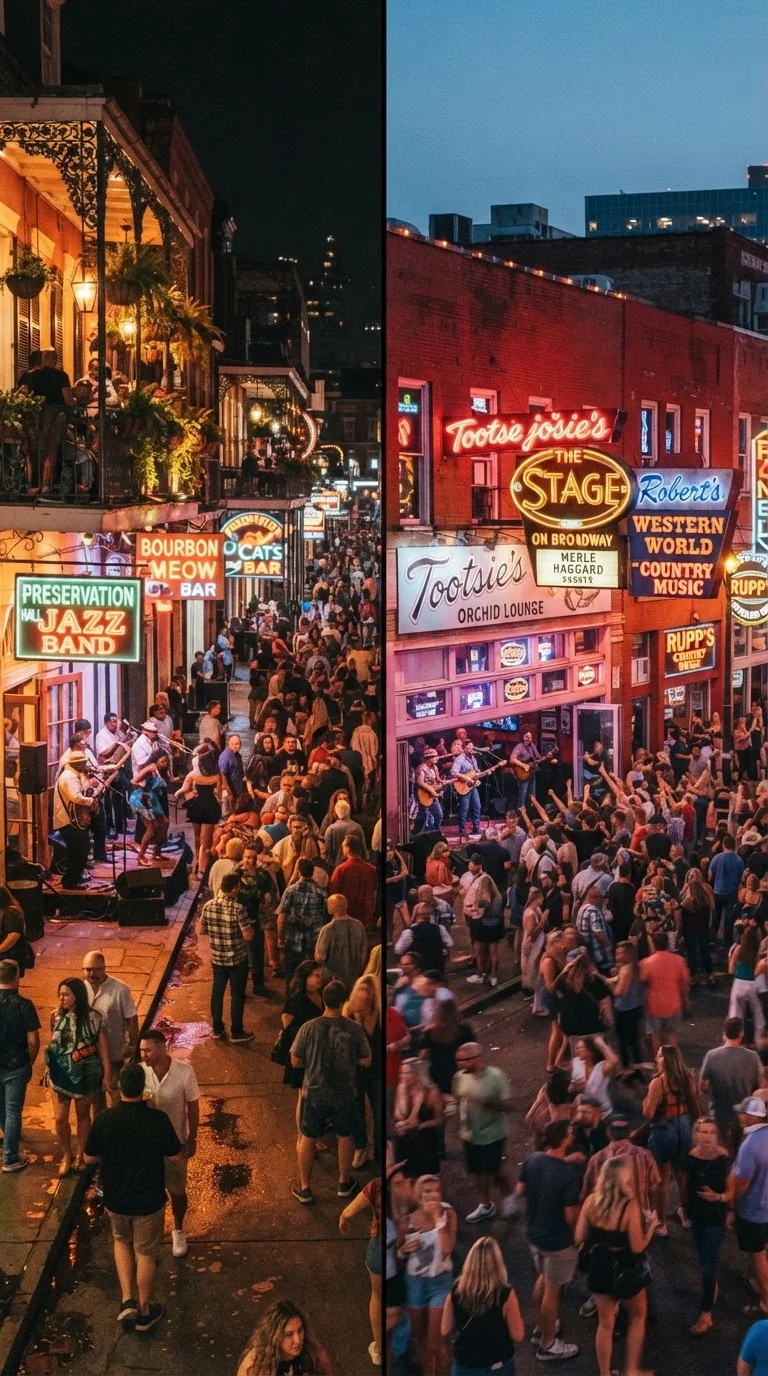
Option A
New Orleans, Louisiana
The soulful, centuries-old city that never stops celebrating.
Best for: Travelers who crave immersive history, Creole cuisine, jazz culture, and a distinctly European-flavored American city experience.
Option B
Nashville, Tennessee
The energetic, fast-growing bachelorette-and-boots capital of the South.
Best for: Visitors looking for live country music, a booming food scene, walkable nightlife, and a more polished modern city atmosphere.
The Atmosphere: Slow Burn vs. Full Throttle
New Orleans moves at its own pace - and that's the point. The city's culture rewards wandering: ducking into a neighborhood bar mid-afternoon, catching a brass band emerge from a side street, lingering over beignets in a courtyard. The French Quarter is the most visited district, but the real soul of the city lives in the Marigny, the Garden District, and the Tremé, where locals have built one of America's most distinctive urban cultures over more than 300 years.
Nashville operates at a different frequency. The city has grown rapidly over the past decade, and that energy is palpable on Lower Broadway, where honky-tonks blast live country music from noon until the early hours. It's louder, flashier, and designed for maximum entertainment throughput - which is thrilling if that's what you're after. Beyond the tourist corridor, Nashville has cultivated genuinely interesting neighborhoods like East Nashville and 12South with strong local identities.
| Criterion | New Orleans | Nashville |
|---|---|---|
| Primary music genre | Jazz, blues, zydeco | Country, Americana, rock |
| Food identity | Creole & Cajun cuisine | New Southern & hot chicken |
| City pace | Relaxed, neighborhood-driven | Energetic, visitor-forward |
| Historical depth | 300+ years of layered history | Rich music heritage, rapid modern growth |
| Best season to visit | October-April | September-November, February-April |
| Walkability | High in French Quarter & Garden District | High downtown, varies by neighborhood |
| Nightlife character | Street-level, spontaneous | Concentrated strip, high-energy bars |
Food Culture: Creole Roots vs. New Southern Ambition
New Orleans has one of the most codified and celebrated food traditions in North America. Dishes like gumbo, jambalaya, red beans and rice, and a proper po'boy aren't just menu items - they're cultural touchstones with specific regional rules and deep community meaning. The city's French, African, Spanish, and Native American culinary influences have been simmering together for centuries, producing a cuisine that's genuinely hard to replicate anywhere else.
Nashville's food scene is younger but seriously ambitious. The city has attracted nationally recognized chefs and a wave of inventive restaurants across every price point. Nashville hot chicken - a fiery, cayenne-forward fried chicken preparation - has achieved near-mythological status and sparked imitations across the country. The dining landscape here is evolving fast, which makes it exciting even if it lacks the same deep-rooted culinary identity.
Top 3
US food destination ranking for New Orleans
New Orleans is consistently placed among the top food cities in the US by travel and culinary publications, reflecting its internationally recognized Creole dining tradition.
14M+
Annual visitors to Nashville
Nashville's tourism authority has reported visitor counts exceeding 14 million annually in recent years, reflecting the city's dramatic rise as a domestic travel destination.
1925
Year the Grand Ole Opry began broadcasting
The Grand Ole Opry's first live radio broadcast established Nashville's enduring identity as the capital of country music in the United States.
Music: Jazz Birthplace vs. Country Capital
Music isn't just entertainment in either city - it's the organizing principle of cultural identity. New Orleans is the birthplace of jazz, and that heritage continues to breathe through the city's streets, clubs, and annual festivals. The New Orleans Jazz & Heritage Festival draws hundreds of thousands of visitors each spring, but even on a regular Tuesday, live music spills out of clubs along Frenchmen Street with an authenticity that's hard to manufacture.
Nashville earned its title as Music City through country music history rooted in the Grand Ole Opry, which has been broadcasting live radio since 1925. The city's music infrastructure - studios, publishers, songwriters, and touring acts - remains enormous. For country and Americana fans, Nashville offers a depth of musical experience that goes well beyond Lower Broadway's tourist bars.
Both cities reward visitors who dig past the obvious. The best music experiences in each are often found in smaller, neighborhood venues rather than the big marquee spots.
Practical Considerations: Cost, Crowds, and When to Go
Neither city is a budget destination by default, though both offer ways to explore affordably if you plan carefully. Hotel prices in New Orleans spike sharply around Mardi Gras (typically February or early March) and Jazz Fest (late April into early May). Nashville sees its biggest crowds during CMA Fest in June and around major sporting events, which have multiplied as the city's pro sports presence has grown.
Weather is a genuine factor. New Orleans summers are notoriously hot and humid, with hurricane season running June through November. Fall and spring offer the most comfortable visiting conditions. Nashville summers are also warm but generally less extreme; winters are mild by Northern standards and can be a genuinely underrated time to visit with smaller crowds and lower prices.
Both cities are walkable in their core districts, though a car or rideshare is helpful for exploring beyond downtown. New Orleans's streetcar lines add a charming, practical transit option through the Garden District and uptown.
Check Official Sources Before You Travel
Entry conditions, festival dates, and local event schedules can change. Before your trip, verify current travel advisories, event information, and any local conditions through official city tourism boards and the U.S. Travel Association. Prices and availability vary widely by season and should always be confirmed directly with providers.
The content on this site is for informational purposes only and is not a substitute for professional advice. Always consult a qualified professional for guidance specific to your situation.